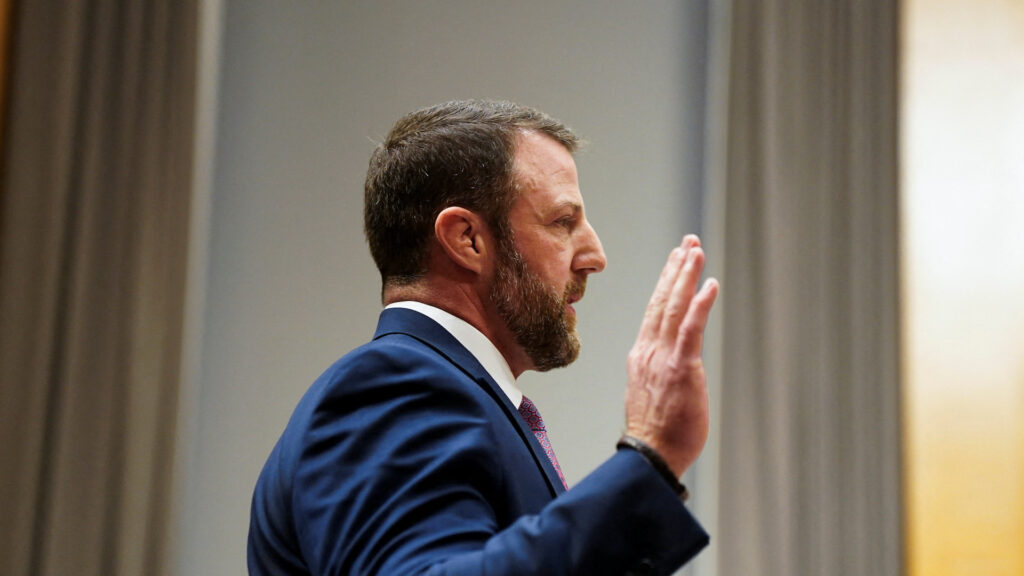
Markwayne Mullin, recently appointed as the head of the Department of Homeland Security (DHS) under former President Donald Trump’s administration, is poised to play a crucial role in shaping the country’s approach to national security and immigration enforcement. This appointment comes amid a controversial push by Trump to intensify the crackdown on migrants entering the United States.
Mullin, a Republican congressman from Oklahoma, has garnered attention for his staunch conservative views, particularly on immigration and border security. His leadership style and policy preferences suggest a continuation and potential intensification of the stringent immigration policies characteristic of Trump’s previous term.
Born and raised in Oklahoma, Markwayne Mullin has a background deeply rooted in local business and politics. Prior to his congressional career, he was known as a successful businessman in the construction and plumbing industries, which contributed to his public image as a pragmatic and results-oriented leader.
Mullin’s political journey has been marked by unwavering support for strict border enforcement, opposition to sanctuary cities, and advocacy for increased funding and resources for immigration control agencies such as U.S. Customs and Border Protection (CBP) and Immigration and Customs Enforcement (ICE).
His tenure in Congress has seen him push for legislative measures aimed at enhancing border security infrastructure, tightening immigration laws, and reducing the number of undocumented immigrants residing in the country. These stances have made him a popular figure among conservative voters who favor tougher immigration controls.
Critics, however, argue that Mullin’s policies and rhetoric contribute to a climate of fear and division, potentially exacerbating humanitarian issues faced by migrants and asylum seekers. Human rights groups have expressed concern about the impact of aggressive enforcement tactics on vulnerable populations.
As the head of DHS, Mullin will oversee not only immigration enforcement but also a broad range of responsibilities including cybersecurity, counterterrorism, disaster response, and transportation security. His leadership will thus be critical in addressing the multifaceted challenges that affect national safety.
One of the major tasks awaiting Mullin is managing the operational and political complexities of the southern border. The increase in migrant arrivals has put pressure on government facilities and resources, prompting calls for reform and innovation in how border security is managed.
Mullin’s approach is expected to maintain the hardline stance championed by Trump, focusing on deterrence, expedited removal, and increased border patrol presence. This includes employing technology such as surveillance drones, enhanced physical barriers, and improved coordination among federal, state, and local law enforcement agencies.
The appointment also signals a broader political message from Trump aimed at energizing his base with promises to tackle what he describes as a crisis stemming from lax immigration policies of previous administrations.
In summary, Markwayne Mullin’s appointment as homeland security chief underscores a continued priority on border security and immigration enforcement within the Trump political agenda. His background as a conservative politician with a business-oriented mindset positions him to aggressively pursue policies that prioritize national security interests from the viewpoint of his supporters.
However, the path forward under Mullin’s leadership is likely to be contentious given the polarized nature of immigration debates in the U.S. The balance between enforcement and humanitarian considerations will remain a key testing ground for his administration’s effectiveness and public reception.
As the new DHS chief, Mullin’s actions and policies will not only impact migrants and border communities but also the broader national discourse on security and immigration reform. His tenure could set precedents for how future administrations address these enduring and complex issues.