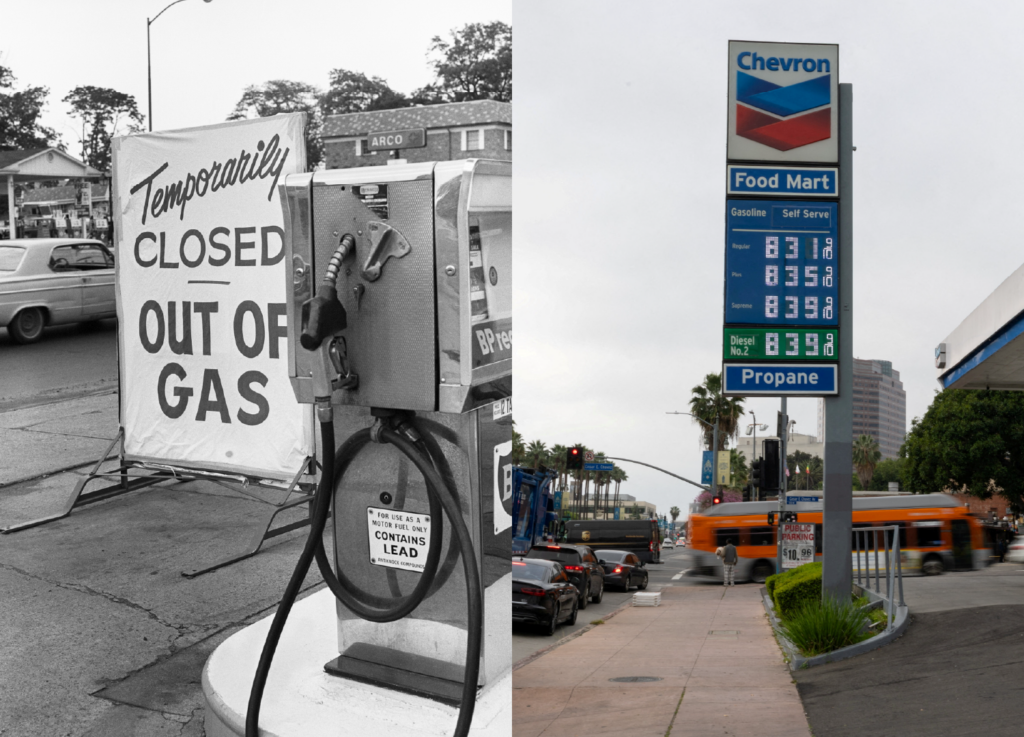
The global oil market, a cornerstone of the world economy, has faced significant challenges at various points in history. Two of the most impactful periods are the 1973 oil embargo and the current global oil crisis. Each event reshaped the geopolitical and economic landscapes, though the scale and context differ greatly.
The 1973 oil embargo was initiated by the Organization of Arab Petroleum Exporting Countries (OAPEC) in response to Western support for Israel during the Yom Kippur War. This embargo resulted in the removal of approximately 4.5 million barrels of oil per day from the global supply. The immediate effect was a sharp spike in oil prices, leading to economic turmoil, inflation, and a realization of the West’s vulnerability regarding energy dependence.
Fast forward to today, the world faces an oil crisis with a supply disruption almost five times greater, at 20 million barrels per day. This significant reduction in supply stems from complex factors including geopolitical conflicts, sanctions, production cuts, and disruptions caused by events such as global pandemics and regional instability.
Comparing the two crises highlights several critical differences:
1. Scale of Disruption: The current crisis’s removal of 20 million barrels per day from global supply dwarfs the 4.5 million barrels removed during the 1973 embargo. This magnitude represents a more substantial challenge to global energy security.
2. Geopolitical Complexity: While the 1973 embargo was a more straightforward geopolitical maneuver centered around the Middle East conflict, today’s crisis involves multifaceted issues ranging from sanctions on major producers to shifting alliances and supply chain vulnerabilities.
3. Economic Impact: Both crises caused economic shocks. However, today’s markets are integrated and highly sensitive to supply fluctuations, resulting in more volatile energy prices and greater economic uncertainty.
4. Energy Diversification and Policy Response: Post-1973, many countries invested significantly in energy diversification, efficiency, and alternative sources. Despite these efforts, the current crisis underscores continuing dependency on oil and the challenges in transitioning to sustainable energy.
5. Technology and Market Dynamics: Advances in technology, such as fracking and renewable energy development, have altered production and consumption patterns. Yet, these have not fully insulated the world from shocks comparable to or worse than the 1973 embargo.
In summary, while the 1973 oil embargo was a pivotal moment exposing global vulnerability to oil supply disruptions, the current crisis is far more severe in scale and complexity. It reflects ongoing geopolitical tensions and the intricate interplay between energy markets and global economic stability. The lessons from 1973 remain relevant as nations grapple with ensuring energy security, promoting sustainable development, and managing geopolitical risks in an interconnected world.