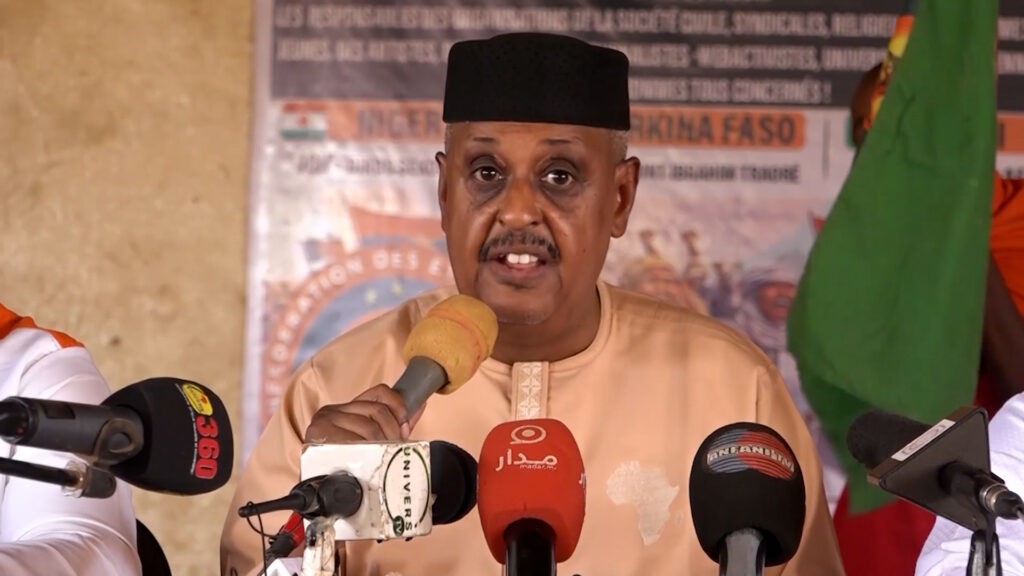
Abdourahamane Oumarou, a prominent civil society leader from Niger, has issued a bold call for mass protests across the Sahel region, specifically targeting Burkina Faso, Mali, and Niger. His statement, declaring “Sahel is no longer fooled,” resonates deeply amid ongoing political and social unrest in these countries.
The Sahel, a semi-arid region of Africa that spans several countries, including Niger, Mali, and Burkina Faso, has been grappling with numerous challenges such as persistent insurgencies, political instability, economic hardships, and social discontent. These issues have resulted in widespread dissatisfaction with existing governments and have often led to calls for change from various civil segments.
Oumarou’s call to action is significant as it comes from a respected figure in Niger’s civil society, which plays a crucial role in advocating for human rights, transparency, and democracy in the region. By urging citizens to unite in mass protests, he is emphasizing the collective power of the people to demand accountability and better governance.
His message, “Sahel is no longer fooled,” underscores a growing awareness and refusal among the population to accept ineffective leadership and external interference that has historically hindered progress. The phrase captures a turning point where citizens are becoming increasingly vocal and active in shaping their political futures.
The proposed protests aim to highlight grievances such as corruption, inadequate public services, security failures, and the neglect of citizens’ basic needs. These demonstrations could put pressure on the local governments and regional authorities to enact reforms and engage more transparently with their populations.
This call for protests also reflects the broader regional dynamics, where recent coups and political upheavals in the Sahel have created a volatile environment. Civil society’s role in these situations is vital as it often serves as a bridge between the government and the people, pushing for peaceful solutions and inclusive dialogue.
International observers and regional organizations have been monitoring developments in the Sahel closely, concerned about the potential for increased instability. The protests, if widespread and sustained, could influence the political landscape significantly.
In conclusion, Abdourahamane Oumarou’s call for mass protests in Burkina Faso, Mali, and Niger signals a profound shift in the Sahel’s socio-political climate. It reflects growing demands for change, justice, and improved governance. As the situation evolves, the resilience and determination of the Sahel’s people in asserting their rights and visions for their countries will be critical.
The world watches as the Sahel strives to overcome its challenges and forge a path toward stability and democratic progress.