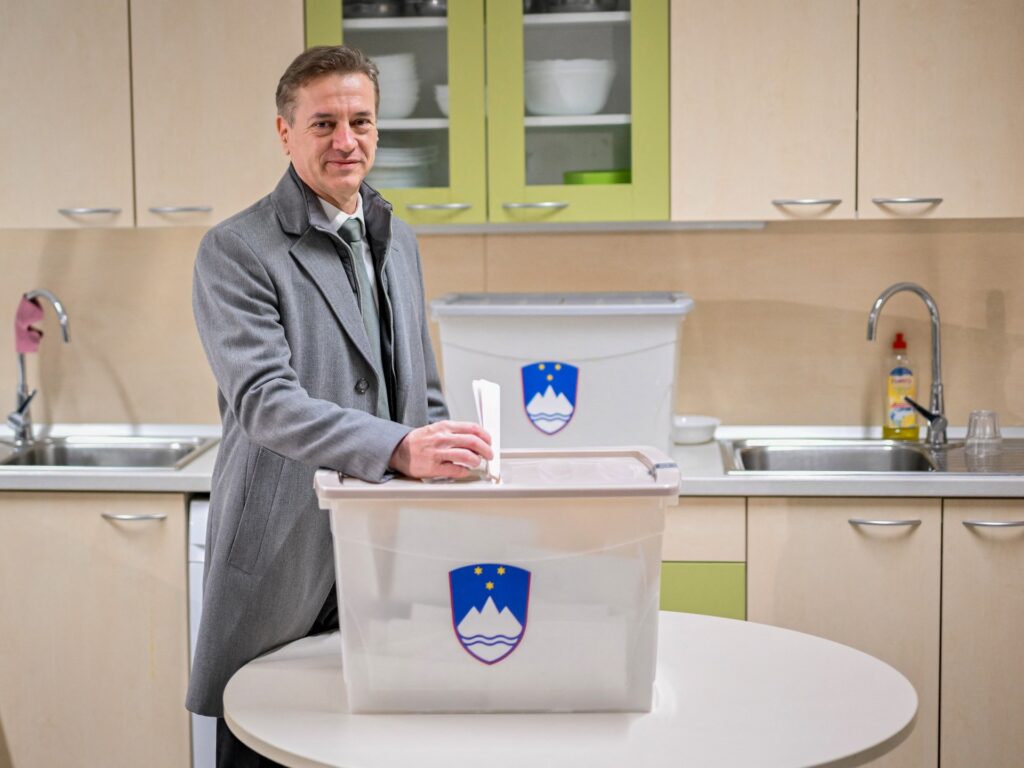
In the recent parliamentary elections in Slovenia, the competition between liberal and conservative parties has resulted in an exceptionally close race. Both camps are neck and neck, making it difficult for either to claim a clear majority in the 90-member National Assembly.
The preliminary results indicate a nearly equal distribution of votes between the two political blocs. This balance is a significant development in Slovenian politics, reflecting a divided electorate and promising a challenging period ahead for government formation.
Neither the liberal nor the conservative parties secured more than 45 seats, the threshold needed to form a majority in the 90-seat parliament. With such an outcome, the two main factions will be forced to negotiate and form coalitions with smaller parties to establish a stable government.
The election’s tight results underscore the polarized political climate in Slovenia, where ideological divisions are pronounced. Liberals typically advocate for progressive reforms, greater European integration, and social policies emphasizing inclusivity and human rights. Conservatives, on the other hand, tend to focus on traditional values, national sovereignty, and economic liberalism.
Experts suggest that the stalemate in parliament could lead to a period of political uncertainty. Coalition talks may be protracted, as parties work to reconcile differing priorities and policies. This process can delay legislative initiatives and slow governance.
The inability of any single party to command a majority is indicative of broader trends across Europe, where voter preferences have become fragmented, and populist movements have challenged established political orders.
In Slovenia, the current election outcome highlights the need for political compromise and collaboration. Government formation will likely involve negotiations with smaller parties, including centrist and regional groups, that could tip the balance of power.
Observers are watching closely to see how party leaders approach these discussions and whether they can put aside ideological differences to focus on national stability and effective governance.
The new parliament will face crucial tasks, including addressing economic recovery post-pandemic, tackling climate change commitments, and managing social welfare programs. A divided assembly may find it difficult to pass significant reforms without broad consensus.
Voters in Slovenia have expressed mixed feelings about the election’s outcome. Some are hopeful that a coalition government could bring balanced policies and greater inclusiveness. Others fear that political gridlock might stall progress and deepen divisions.
The close vote also raises questions about Slovenia’s future direction on the European stage. Both liberals and conservatives have distinct visions for the country’s role within the European Union, influencing foreign policy and economic strategies.
As coalition discussions get underway, the international community is watching Slovenia’s political developments with interest. Stability in Slovenia is important for regional security and economic cooperation in Central Europe.
In conclusion, the recent parliamentary elections in Slovenia have resulted in a near deadlock between liberal and conservative parties. Without a clear majority in the 90-member assembly, the road ahead will require negotiation, compromise, and coalition-building to ensure effective governance. The coming weeks will be critical in shaping the country’s political landscape and determining its future policy direction.