Slovenia is heading into a crucial election where the governing liberals, led by incumbent Prime Minister Robert Golob, face a formidable challenge from right-wing populists under the leadership of Janez Jansa. This election represents a pivotal moment for the country as voters decide between contrasting political visions for the nation’s future.
Robert Golob’s liberal coalition has held power and is campaigning on promises of progressive reforms, economic development, and maintaining Slovenia’s position within the European Union. His approach is generally pro-European and focuses on modernization and green policies.
In stark contrast stands Janez Jansa, a pro-Trump figure who has been a polarizing force in Slovenian politics. Jansa and his right-wing populist movement emphasize national sovereignty, stricter immigration policies, and a more skeptical stance toward the EU. His political style has been characterized by a strong nationalist rhetoric that resonates with a segment of the electorate dissatisfied with the status quo.
The election is expected to be extremely close, with neither side projected to achieve an outright majority. Analysts suggest that the outcome will likely depend on coalition-building efforts post-election, as both leaders aim to secure allies among smaller parties to form a government.
Voters face a clear choice between continuing on a liberal, pro-European Union path under Golob or shifting towards a more nationalist, populist agenda with Jansa. Both leaders have significant support bases, reflecting the deep divisions within Slovenian society.
The campaign has seen heated debates on issues such as economic management, the direction of foreign policy, social values, and the rule of law. The election’s result will have far-reaching implications not only domestically but also for Slovenia’s role within the broader European context.
Observers highlight that the inability of either front-runner to secure a majority may lead to a period of political uncertainty and complex negotiations. This could affect policymaking and the government’s ability to act decisively in the months following the election.
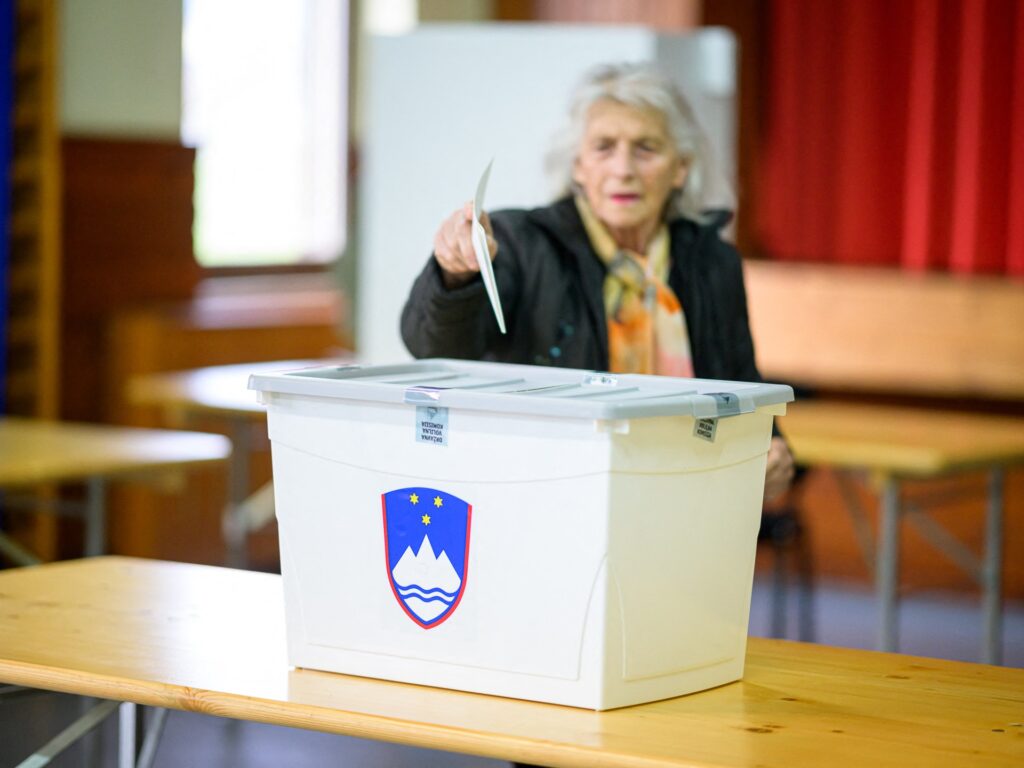
As polling stations prepare to open, the Slovenian electorate is weighing a decisive moment that could shape the trajectory of the country for years to come. The international community watches closely, understanding that Slovenia’s political direction will influence regional stability and European integration efforts.
In summary, Slovenia’s election is a tightly contested battle between liberal and right-wing populist forces, with incumbent PM Robert Golob facing off against Janez Jansa. Neither is expected to win outright, setting the stage for critical coalition talks and a test of the nation’s political resilience.