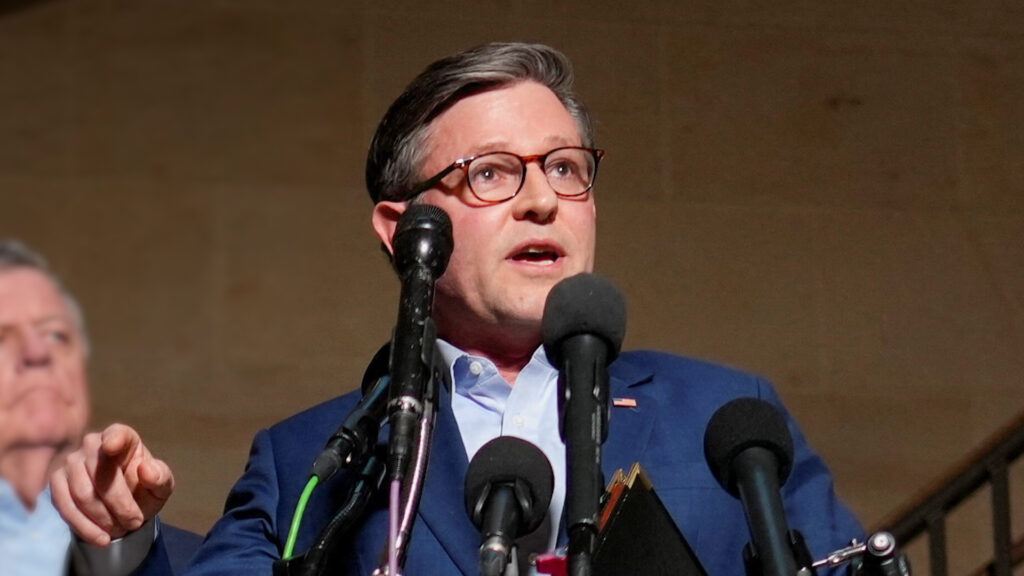
In a recent statement that has stirred considerable attention, Senior US Republican and Speaker of the House Mike Johnson expressed that the United States was compelled to attack Iran following a prior assault by Israel. Johnson’s remarks to reporters underscored the alignment of US actions with the strategic need to safeguard American interests in the region.
The assertion by Johnson marks a significant moment in the ongoing tensions between the US, Iran, and Israel, highlighting the intricate dynamics of Middle Eastern geopolitics. According to Johnson, the US attack was not an isolated act but a consequential response aimed at protecting vital national interests and maintaining regional stability.
This development comes amid heightened concerns over Iran’s activities in the Middle East, including its nuclear program and support for various groups deemed hostile by the US and its allies. The timing of the US strike, following an Israeli attack, suggests a coordinated effort to counter perceived threats from Iran.
Mike Johnson’s comments may signal a more assertive US stance, potentially escalating military engagements and diplomatic tensions. The statement is likely to influence ongoing discussions in Washington and among international partners about how best to handle the complexities posed by Iran’s actions.
Analysts note that this approach reflects a broader strategy to convey a unified front between the US and Israel, emphasizing mutual security interests. It also highlights the challenges faced by diplomats striving to balance deterrence with the risk of further conflict.
The US government’s decision to strike Iran following Israel’s attack could have far-reaching implications, impacting global energy markets, regional alliances, and the overall security landscape in the Middle East.
Furthermore, it raises questions about the legal and ethical frameworks guiding military responses in the context of international relations and the doctrine of self-defense.
As the situation evolves, the international community watches closely, with many calling for restraint and dialogue to prevent escalation. The US Speaker’s frank admission offers insight into the rationale behind such decisions, shedding light on the complex calculus that influences military and diplomatic strategies.
In conclusion, Mike Johnson’s statement that the US had to attack Iran after Israel’s strike reflects the intertwined nature of US and Israeli security policies. It underscores the ongoing volatility in the Middle East and the delicate balance of power that affects global peace and security.