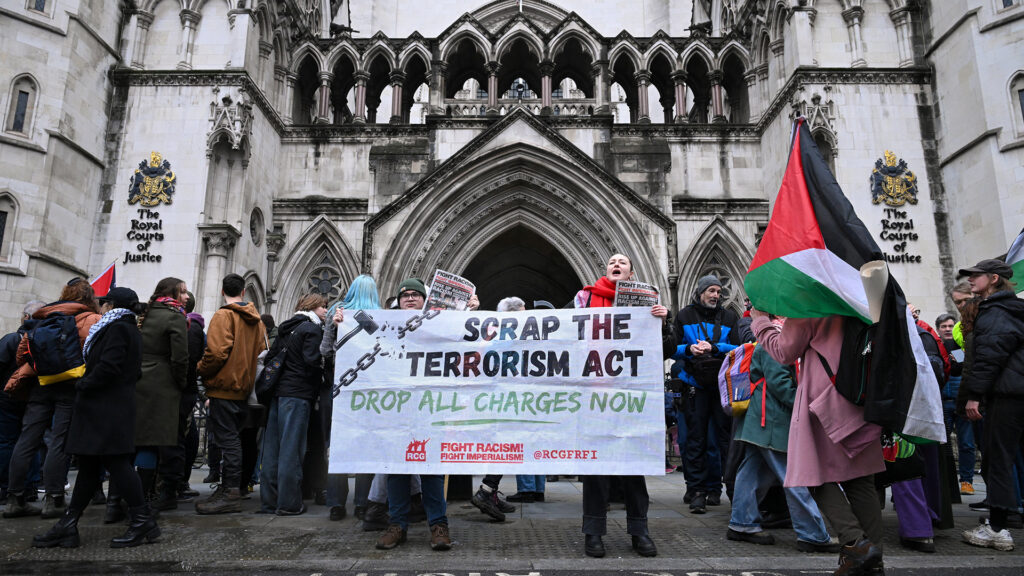
In a significant legal decision, the United Kingdom’s High Court has declared that the government’s ban on Palestine Action was unlawful. Palestine Action, an activist group known for its direct actions and protests related to Palestinian rights, had faced prohibition by the UK government. This ruling marks a critical precedent in the balance between state security measures and the right to protest.
The case focused on whether the government had followed appropriate legal protocols and whether the ban infringed upon fundamental rights. The High Court found that the government failed to justify adequately the ban and did not provide sufficient evidence or a legal basis for restricting the group’s activities.
Palestine Action gained international attention through campaigns targeting UK-based companies and institutions allegedly involved in supporting or benefiting from the Israeli occupation of Palestinian territories. Their tactics often included peaceful sit-ins and attempts to disrupt the operations of such companies.
The government argued that Palestine Action’s activities threatened national security and public order. However, the court found these claims to be unsubstantiated and emphasized that any limitation on free expression and assembly must meet strict legal standards.
Legal experts have highlighted that this ruling reinforces the importance of judicial oversight over government actions, especially concerning protest movements. It also serves as a reminder that the right to peaceful protest is a cornerstone of democratic societies.
The Palestine Action group welcomed the decision, viewing it as a victory for civil liberties and democratic rights. They affirmed their commitment to continuing their activism within the bounds of the law.
This judgment may impact future government decisions regarding bans on activist groups, underscoring the need for transparent and lawful procedures. It also raises questions about the balance between national security and human rights in an era where activism increasingly challenges state policies.
Commentators note that the ruling aligns with broader legal trends emphasizing proportionality and necessity when restricting civil rights. It sends a message to authorities that bans should not be used as a tool for suppressing dissent without compelling justification.
The case has invigorated debates within the UK about the role and limits of government power, the protection of civil liberties, and the response to activism related to international conflicts. It also shines light on the ongoing tensions surrounding the Palestinian cause and the global responses to it.
Stakeholders anticipate that the government might appeal the decision, but the immediate effect is the lifting of the ban on Palestine Action. This will allow the group to resume their activism publicly and legally.
In conclusion, the UK’s High Court ruling against the government ban on Palestine Action is a landmark affirmation of the right to protest and a caution against the misuse of state power. It highlights the judiciary’s crucial role in safeguarding democratic freedoms and upholding the rule of law.