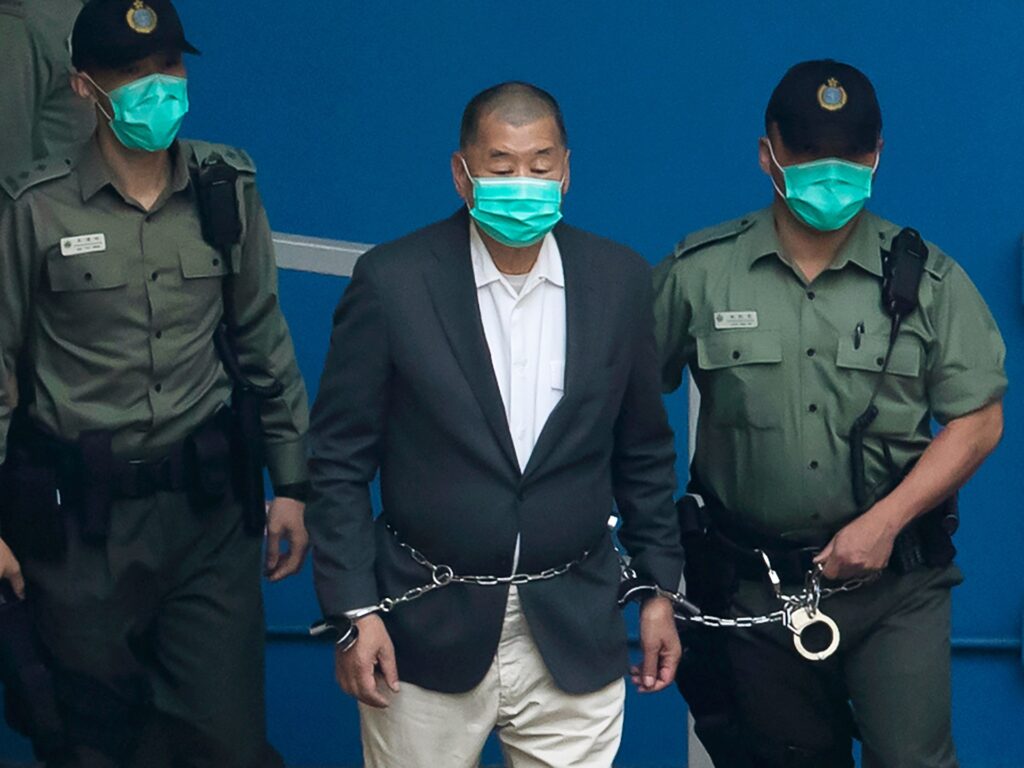
In a highly controversial legal development, Hong Kong authorities have sentenced Jimmy Lai, a prominent media mogul, following his conviction on charges related to national security. Lai, known for his outspoken criticism of the Chinese government and his role as the founder of the pro-democracy newspaper Apple Daily, has long been a vocal advocate for press freedom and democracy.
The conviction and subsequent sentencing have sparked widespread international condemnation. Free speech advocates, human rights organizations, and global political leaders have collectively voiced their concerns, arguing that the charges against Lai undermine fundamental freedoms and the rule of law in Hong Kong.
Lai’s case is emblematic of the ongoing tensions between pro-democracy movements in Hong Kong and the Chinese government’s increasing control over the region. Since the introduction of the national security law in Hong Kong in 2020, several activists, journalists, and opposition figures have been targeted under the law, raising alarms about the erosion of civil liberties.
The national security law, promulgated by Beijing, criminalizes acts considered to be secession, subversion, terrorism, and collusion with foreign forces. Critics argue that the law’s vague definitions and broad application give the government sweeping powers to suppress dissent.
Jimmy Lai was arrested in 2020 under this law and accused of conspiring to collude with foreign forces to endanger national security. His arrest was seen by many as an attempt to silence one of the most influential voices for democracy in Hong Kong.
Lai’s media empire, particularly Apple Daily, played a critical role during the 2019 anti-government protests, providing extensive coverage and critical analysis of the authorities. The newspaper was forced to shut down in 2021 following pressure from authorities and the freezing of its assets.
International responses have been robust. The United States, European Union, United Kingdom, and various human rights groups have condemned the sentencing, calling it a grave violation of press freedom and an attack on the democratic principles that Hong Kong was promised under the “one country, two systems” framework.
The sentencing of Jimmy Lai is seen as a significant indicator of the Beijing government’s intent to consolidate control over Hong Kong, restricting freedom of expression and political dissent.
Despite international outcry, Hong Kong authorities maintain that the enforcement of the national security law is crucial for maintaining stability and safeguarding sovereignty. They have dismissed criticisms as interference in China’s internal affairs.
Lai’s case has become a rallying point for activists and advocates worldwide, symbolizing the struggle for free speech and democratic values in face of escalating authoritarianism.
The international community continues to watch closely, debating potential diplomatic responses, sanctions, and support for Hong Kong’s civil society.
Jimmy Lai’s sentencing underscores the challenges facing Hong Kong’s unique status and the broader implications for freedoms in the region. Many fear this sets a precedent for further crackdowns on dissent and signals a shift away from the liberties Hong Kong residents have long enjoyed.
As the city navigates this complex political landscape, the future of media independence and civil rights remains uncertain, with Lai’s case serving as a poignant reminder of the stakes involved in the ongoing struggle for democracy in Hong Kong.