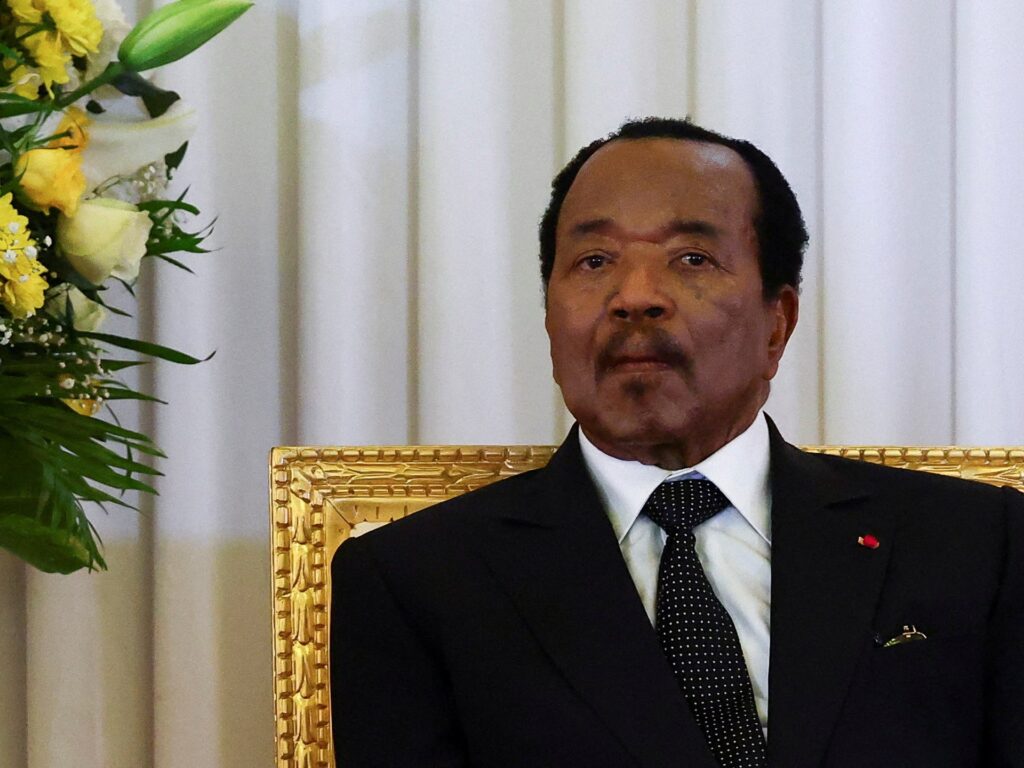
Cameroon, a country often spotlighted for its political stability in a tumultuous region, is currently facing growing speculation and concern regarding its true centers of power. The prolonged and frequent absences of President Paul Biya, who has been in power for over four decades, have intensified questions about who is really calling the shots in the country.
President Biya, one of Africa’s longest-serving leaders, has been criticized for his opaque governance style and lack of transparency. In recent years, his health and ability to manage the state have been subjects of intense speculation. These absences have prompted a closer examination of the individuals and structures that might be influencing Cameroon’s political scene behind the scenes.
Biya’s absences have become more frequent, with reports suggesting that he spends significant time abroad, ostensibly for medical reasons. This has fed rumors and increased public anxiety about the existence of a shadow government or powerful advisors who are effectively running the country.
The political landscape in Cameroon is complex, with influential military figures, party elites, and family members potentially shaping the governance outside of public scrutiny. The ruling party, the Cameroon People’s Democratic Movement (CPDM), holds significant control, but there are indications that power could be fragmented among competing factions within or around the party.
Moreover, the political opposition has struggled to present a coherent alternative, contributing to a climate of uncertainty and speculation. Some analysts believe that Biya’s absence is creating a power vacuum that risks destabilizing one of Central Africa’s most geopolitically significant countries.
The ongoing Anglophone crisis in Cameroon further complicates the political dynamics. The conflict between the government and separatists in the English-speaking regions has been a major challenge for Biya’s administration. The President’s absence during critical moments has amplified concerns about the government’s ability to manage the crisis effectively.
There is also a generational aspect to the issue, as many Cameroonians watch and wonder about the future leadership of their country. Paul Biya, who assumed office in 1982, has not publicly signaled any plans for succession, leaving a cloud of uncertainty over Cameroon’s political future.
International observers have noted the need for greater transparency and clearer governance mechanisms in Cameroon to ensure stability. The absence of clear communication about the state’s leadership raises questions about the legitimacy and effectiveness of current ruling arrangements.
In conclusion, while President Biya remains the official head of state, his prolonged and frequent absences have triggered debates over who truly holds power in Cameroon. These dynamics not only impact national governance but also have broader implications for regional stability in Central Africa. As Cameroonians await clarity, the question remains: who is really calling the shots, and what does the future hold for Cameroon’s political landscape?