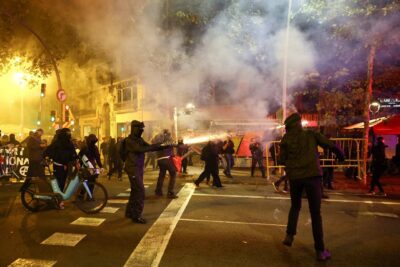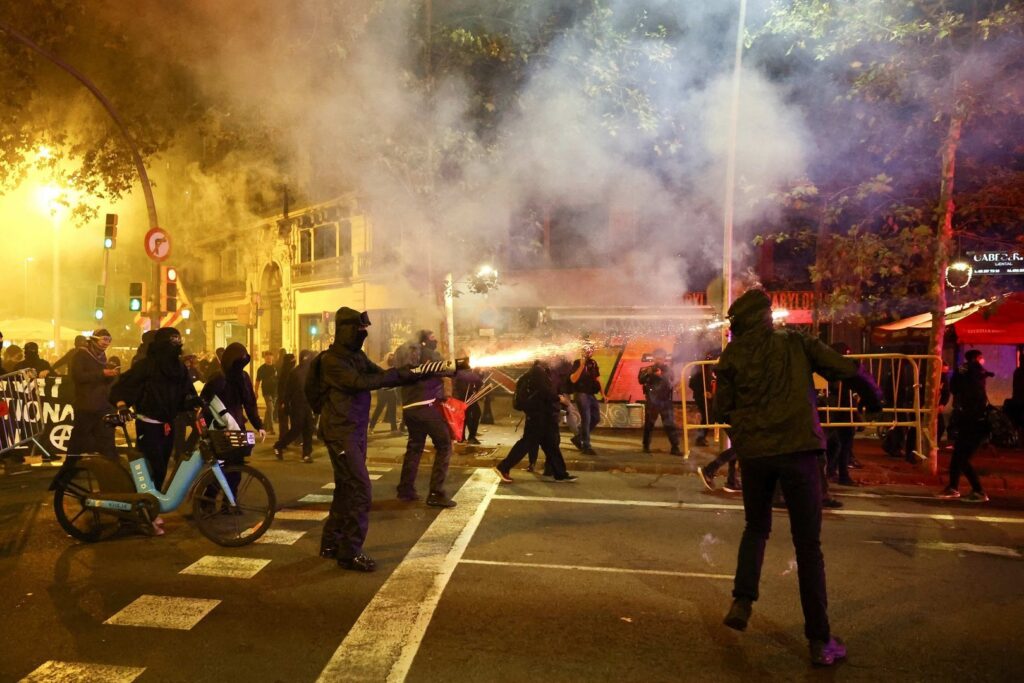
Barcelona witnessed significant unrest as protests turned violent in the wake of Spain’s general strike. Demonstrators expressing their dissatisfaction hurled fireworks at police forces, escalating tensions on the streets. The chaos intensified as protesters set rubbish bins ablaze, adding to the volatile atmosphere. This general strike, part of a broader call for social and economic reforms across Spain, saw widespread participation, but in Barcelona, it was marked by particularly aggressive demonstrations. Authorities are now grappling with how to respond to the dual challenges of maintaining order and addressing the grievances motivating the strike. The unrest highlights the deep divisions and frustrations among segments of the population concerning governmental policies and economic conditions. Police presence was significantly increased in the area to contain the unrest and prevent further escalation of violence. Despite these efforts, the situation remained volatile for several hours, drawing national attention to Barcelona’s political climate. This episode underscores the ongoing struggle within Spain to balance peaceful protest with public safety and order. Local businesses and residents were affected by the disturbances, with reports of property damage and interruptions to daily life. The general strike, meant to be a peaceful demonstration, serves as a potent reminder of the challenges facing Spain as it navigates social change and economic pressures. Stakeholders from across the spectrum are calling for dialogue and solutions to prevent such events from recurring. The government has acknowledged the strike’s impact and expressed a commitment to engaging with unions and protest groups to find a constructive path forward. Meanwhile, community leaders emphasize the importance of peaceful protest as a democratic right but condemn the violence that unfolded. Barcelona’s experience during this general strike is a flashpoint in broader national debates about workers’ rights, economic inequality, and political representation. As investigations continue, the focus remains on rebuilding trust between citizens, law enforcement, and government institutions. The events in Barcelona have sparked discussions on the effectiveness of current strategies to handle civil unrest and the necessity for reforms. The general strike and subsequent violence may influence upcoming policy decisions and political discourse in Spain. Public opinion appears divided, with some sympathizing with the protestors’ causes and others concerned about the methods employed. Experts suggest that addressing underlying socio-economic issues is crucial to preventing future unrest. Meanwhile, efforts to repair damage and restore normalcy are underway, reflecting the resilience of the local community. The incident is a reminder of the volatile potential of industrial action when combined with heightened political tensions. It also illustrates the importance of channeling dissent through peaceful and constructive means. Observers will be closely watching how authorities manage the aftermath and what lessons are learned moving forward. The general strike in Spain, and particularly the violence in Barcelona, is a significant event that adds complexity to the nation’s ongoing challenges. It invites reflection on the balance between protest rights and public order in a democratic society. As the city recovers, the focus shifts to dialogue, reform, and reconciliation to prevent such outbreaks in the future.