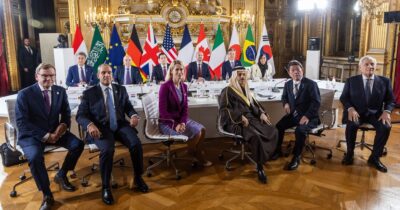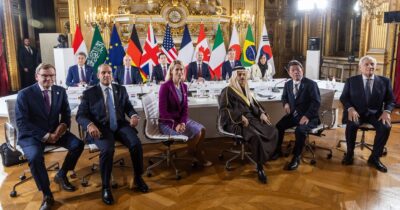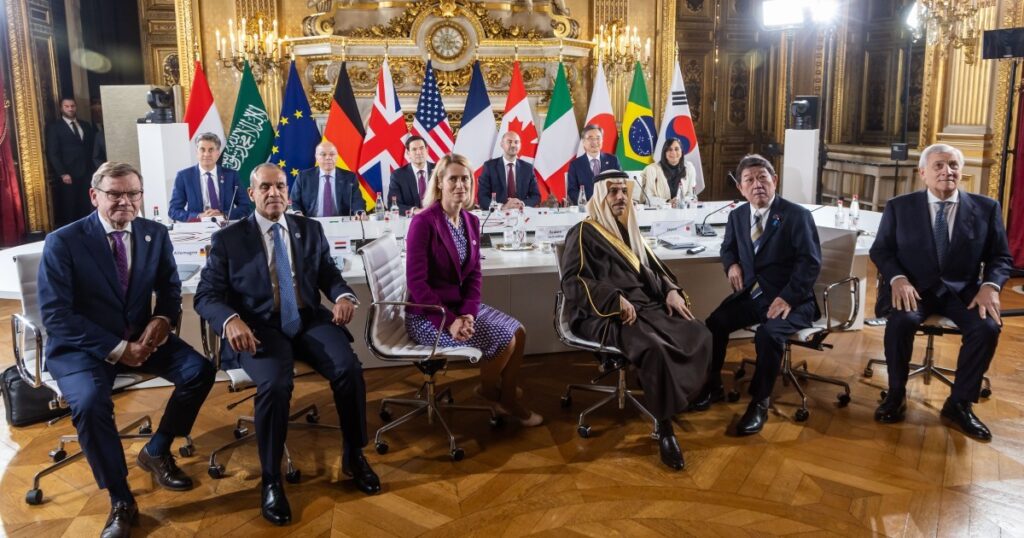
In the lead-up to critical discussions aimed at addressing the ongoing Russia-Ukraine conflict, Germany has asserted the imperative role of Europe in the international diplomatic process. This statement comes as G7 foreign ministers convene in Paris to strategize and coordinate their approach before the United States hosts a pivotal round of negotiations in Abu Dhabi.
Germany’s message underscores a broader geopolitical viewpoint that Europe, being directly impacted by the conflict, must be a central player at the negotiation table. This position was prominently communicated as part of Germany’s diplomatic efforts during the G7 summit, highlighting Europe’s intertwined security and political interests in the outcome of these talks.
The G7 meeting brings together foreign ministers from the world’s largest advanced economies, including the United States, Canada, France, Italy, Japan, the United Kingdom, and Germany. The ministers are focused on presenting a united front and preparing a cohesive strategy to engage with Russia and Ukraine during the upcoming discussions.
The US-mediated talks scheduled in Abu Dhabi aim to find pathways to de-escalate tensions and explore options for conflict resolution. With Europe house to many countries directly affected by the conflict’s fallout, Germany’s insistence that “Europe belongs at this table” emphasizes the continent’s desire to have a decisive influence on the process.
This approach reflects the complexities of international diplomacy, where multiple stakeholders with varied interests strive for a balance between pursuing peace and safeguarding strategic interests. Germany’s call also suggests an acknowledgment of Europe’s longstanding experience in managing regional conflicts and its commitment to upholding stability.
The upcoming negotiations are expected to be challenging, given the entrenched positions and the ongoing humanitarian and political crises triggered by the conflict. Europe’s active engagement is seen as a vital component to ensuring that any agreements are informed by the realities on the ground and the aspirations of the affected populations.
In summary, Germany’s position ahead of the US-mediated talks represents a clear demand for Europe’s voice to be heard and respected in the efforts to resolve the Russia-Ukraine conflict. The G7 foreign ministers’ meeting in Paris serves as the preparation ground for this initiative, where collective strategies will be honed to support effective dialogue in Abu Dhabi.