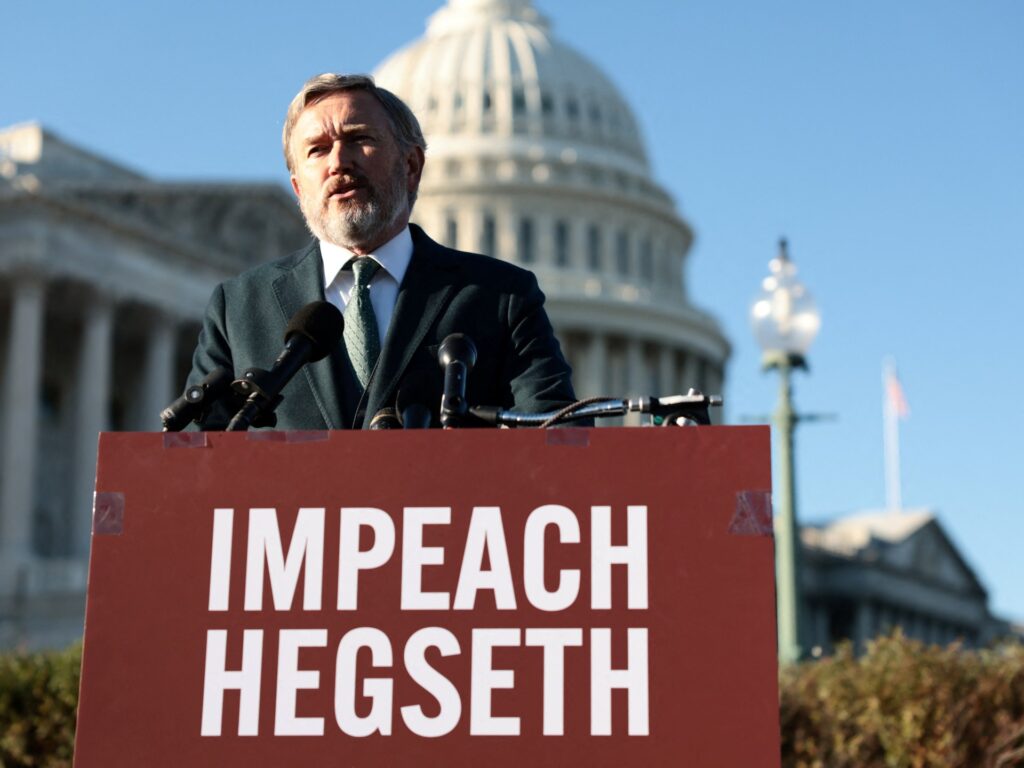
In a significant political move, outgoing Republican Congressman Thomas Massie has filed a resolution calling for the impeachment of Defense Secretary Pete Hegseth. The resolution comes amid serious accusations that Hegseth issued unlawful orders during his tenure. Massie, known for his staunch conservative views and independent streak, has urged Congress to take decisive action against Hegseth, asserting that the Defense Secretary’s conduct undermines the integrity of the Department of Defense and threatens national security.
The allegations against Hegseth include claims that he overstepped legal boundaries in his command decisions, prompting debates among lawmakers, military experts, and legal analysts. Critics argue that allowing such behavior to go unchecked could set a dangerous precedent for executive overreach in military affairs.
Massie’s resolution seeks not only to remove Hegseth from office but also to reinforce the principle that no official is above the law, especially those entrusted with the nation’s defense. The Congressman emphasized the importance of accountability and transparency in government operations, which he believes Hegseth’s actions have compromised.
Supporters of Hegseth, however, caution against rushing to judgment without a thorough investigation. They argue that some decisions made during critical situations may be misinterpreted and that due process must be followed to ensure fairness.
The filing of this resolution marks a rare and high-profile challenge to a sitting Defense Secretary. If the resolution gains traction in Congress, it could lead to hearings and a full impeachment process, which would place Hegseth’s future in the administration in jeopardy.
Political analysts view Massie’s initiative as reflective of broader partisan tensions and scrutiny of the current administration’s defense policies. The case has ignited discussions around military authority, civilian oversight, and the limits of power within the Pentagon.
As Congress deliberates, the outcome of this resolution could have far-reaching implications for civil-military relations and the governance of the United States’ defense apparatus. Stakeholders from various sectors await further developments with keen interest, understanding that the resolution may influence the direction of U.S. defense leadership and policy-making in the months to come.