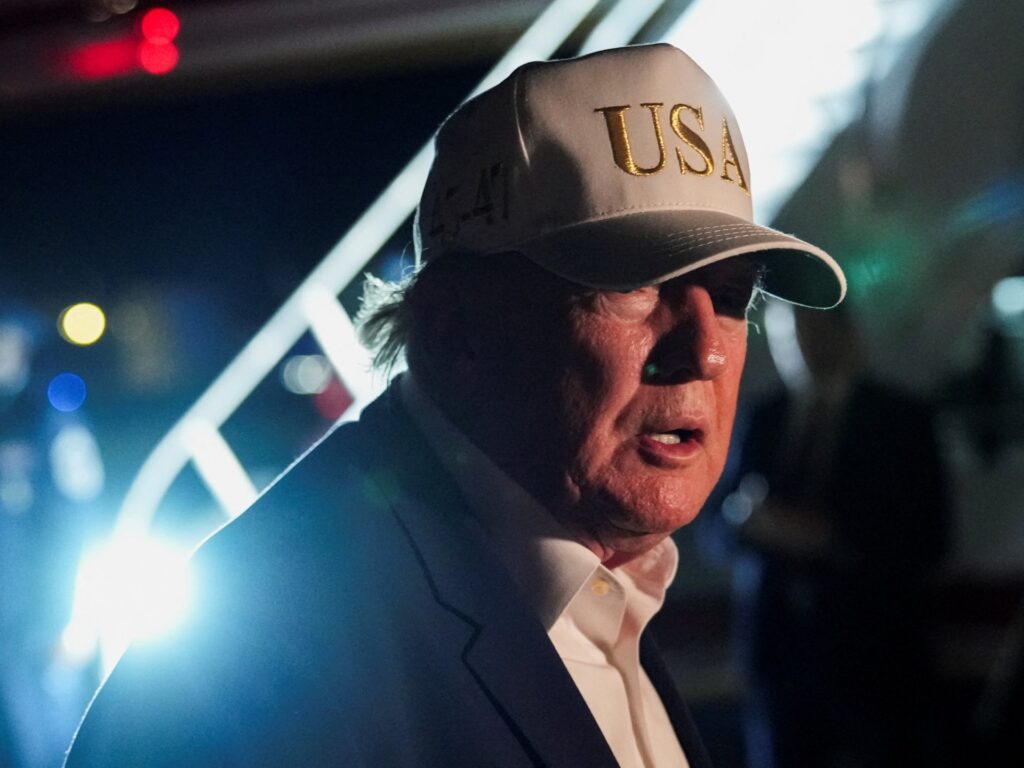
In a surprising shift, former President Donald Trump has reversed his previous stance and now alleges that there was fraud involved in the recent US midterm elections. This marks a notable change from his earlier comments, signaling a renewed focus on contesting election outcomes. Trump’s allegations have ignited a fresh wave of debate and controversy amidst an already polarized political climate.
Democratic Senate leader Chuck Schumer promptly responded to Trump’s claims, condemning what he termed “poll denialism.” Schumer criticized the former president’s accusations as baseless and an avoidable return to unfounded claims that undermine trust in the electoral process.
The midterm elections, which traditionally serve as a referendum on the sitting president’s party, saw significant voter engagement and were widely covered across the nation. Election officials and independent observers have repeatedly affirmed the integrity and fairness of the voting and counting processes.
Trump’s assertions have sparked reactions across the political spectrum. Supporters of the former president argue that his stance reflects concerns about election security and transparency. However, many election experts and political analysts caution against unsubstantiated claims, warning they can erode public confidence in democratic institutions.
Schumer emphasized the importance of upholding faith in the electoral system and urged all political figures to avoid contributing to divisiveness by promoting claims without evidence. He pointed out that while robust debate about election processes is healthy, it must be grounded in facts to maintain democratic norms.
The allegations have also led to calls for closer scrutiny of election protocols and potential reforms. Some lawmakers are advocating for enhanced measures to ensure transparency and security in future elections, hoping to dispel doubts and strengthen voter confidence.
Meanwhile, civil rights groups and voting rights advocates have expressed concern that the propagation of fraud allegations without clear evidence could disenfranchise voters and suppress participation.
Public opinion appears divided, with polls indicating a split in voter belief about the legitimacy of the midterm results, partly influenced by high-profile claims such as Trump’s.
As the nation looks ahead to the next electoral cycle, the discourse surrounding election integrity is expected to remain a contentious issue. The debate highlights the challenges faced by the American democratic system in balancing transparency, security, and public trust.
Ultimately, Trump’s reversal and the subsequent political fallout underscore the polarized nature of American politics and the ongoing struggle to preserve confidence in democratic processes amidst rising skepticism and misinformation.