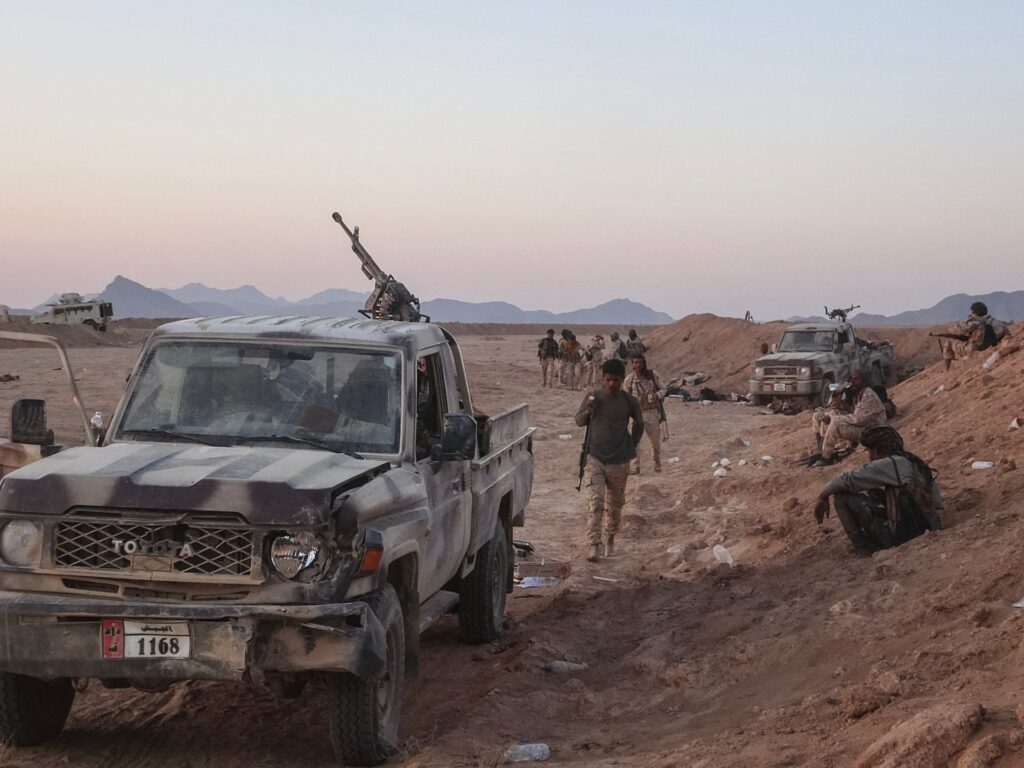
The ongoing conflict in Yemen has once again intensified as government forces report fresh advances across several key fronts. This development comes amid a surge in cross-border attacks carried out by Houthi militants, which have escalated tensions and led to heavy clashes in recent days.
According to military sources within the Yemeni government, the forces have succeeded in regaining strategic positions and pushing forward against Houthi fighters. These advances are being hailed as significant progress in the government’s efforts to reclaim control over contested regions.
The Houthis, a rebel group that has been engaged in a protracted conflict with the Yemeni government and its allies, resumed their attacks targeting border areas with increased frequency and intensity. These cross-border assaults have reportedly included artillery strikes and drone attacks, contributing to the heightened state of conflict.
Military officials indicate that the renewed clashes have been the fiercest in weeks, with both sides sustaining casualties. The fighting has primarily concentrated along frontlines where control has frequently shifted during the conflict, highlighting the volatility of the situation on the ground.
The recent surge in violence exacerbates an already dire humanitarian situation in Yemen, which has been devastated by years of war. Civilians in affected areas continue to face displacement, food insecurity, and limited access to essential services.
International observers and humanitarian organizations have expressed deep concern over the escalation, calling for an immediate ceasefire and renewed efforts toward a peaceful resolution. Diplomatic efforts aimed at brokering negotiations between the warring parties have so far struggled to gain traction amid the intensifying violence.
Analysts suggest that the recent advances by government forces may reflect a strategic push to capitalize on shifting dynamics within the conflict. However, the resumption of Houthi attacks underscores the challenges of achieving lasting peace in a highly fragmented and complex war environment.
Both sides remain entrenched in their positions, and the risk of further escalations poses a significant threat to regional stability. The international community continues to monitor developments closely, urging all parties to engage in dialogue and prioritize the welfare of Yemen’s population.
As fighting persists, the future of Yemen hangs in the balance, with hopes pinned on diplomatic breakthroughs that can end the cycle of violence and pave the way for sustainable peace and reconstruction.