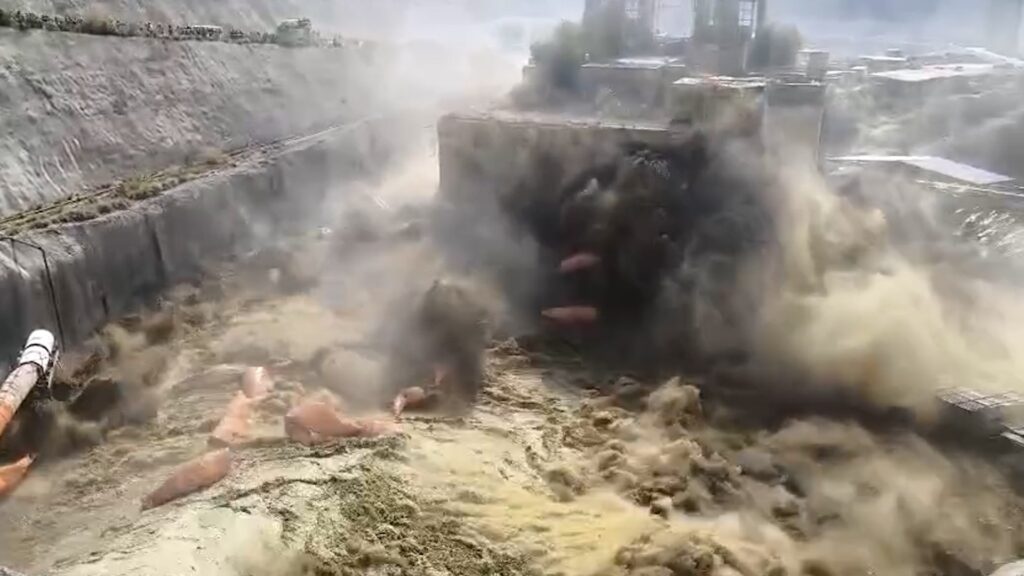
A significant structural failure was reported at the Tarbela Dam T-5 hydropower project in Pakistan, with the partial collapse of a protective barrier leading to a surge in floodwater. This unforeseen incident has raised concerns about the safety and stability of the infrastructure aimed at enhancing Pakistan’s hydroelectric capacity.
The Tarbela Dam, one of the largest earth-filled dams in the world, is undergoing expansion to increase power generation. The T-5 hydropower project is a major component of these efforts, designed to boost the dam’s output and support Pakistan’s growing energy needs.
Authorities have confirmed that the collapse occurred at the partially-constructed section of the protective barrier, which is intended to safeguard the dam and surrounding areas from floodwaters. The breach allowed an uncontrolled flow of water, causing an abrupt rise downstream, which may result in flooding of neighboring communities if not contained promptly.
Emergency response teams are actively working to mitigate the effects and prevent further damage. Efforts include reinforcing remaining structures, repairing the damaged barrier, and monitoring water levels across affected areas. Local residents have been warned to stay alert and prepared for possible evacuations.
Experts emphasize the importance of rigorous safety protocols and structural integrity in large-scale infrastructure projects like the Tarbela Dam expansion. This incident underscores the challenges faced in such undertakings, including technical, environmental, and logistical risks.
Government officials have pledged a thorough investigation to ascertain the precise causes of the collapse. Preliminary reports suggest possible issues with construction materials or design flaws, but a detailed inquiry is underway.
The partial collapse disrupts the ongoing construction timeline, potentially delaying the project’s completion and the anticipated increase in electricity generation. Given Pakistan’s reliance on hydropower for sustainable energy, any setback poses concerns for energy security and economic stability.
In response, the National Disaster Management Authority (NDMA) and Water and Power Development Authority (WAPDA) are coordinating closely to manage the crisis. Measures include enhancing flood forecasting capabilities and improving the resilience of existing infrastructure.
This event serves as a critical reminder of the vulnerabilities inherent in infrastructure development amid complex environmental conditions. It highlights the need for continuous risk assessment, investment in safer engineering practices, and comprehensive emergency preparedness.
As recovery and repair efforts continue, the focus remains on safeguarding lives, protecting property, and restoring the dam’s functionality. The outcome of the investigation will guide future construction and operational protocols to avoid repeat incidents.
The Tarbela Dam project remains central to Pakistan’s strategy for renewable energy. Ensuring its safe completion is vital to meeting the country’s growing power demands and supporting sustainable development goals.
Stakeholders and the public await updates as authorities provide further information on the state of the dam, impact assessments, and the steps being taken to prevent similar occurrences in the future.