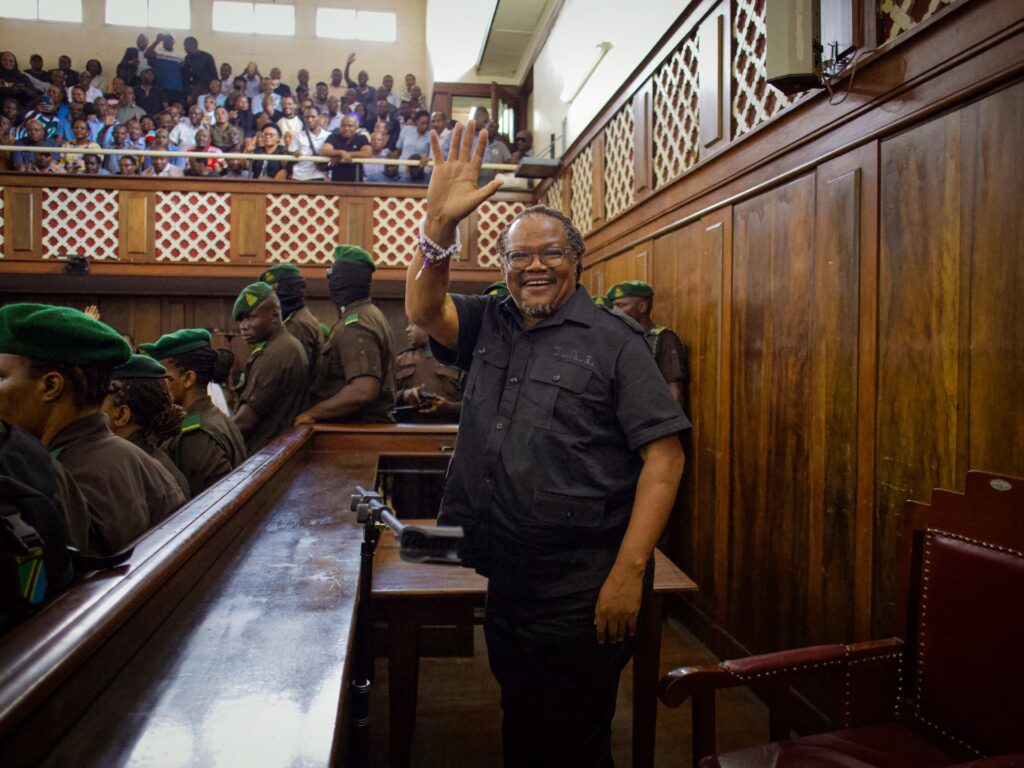
In a significant judicial ruling, a Tanzanian court has sentenced opposition leader Tundu Lissu to jail on charges of incitement, while simultaneously dismissing the more severe treason charge. This development has notable implications for Tanzania’s political landscape and the fate of one of its prominent opposition figures.
Tundu Lissu, a well-known opposition politician and lawyer, has been at the forefront of challenging the current Tanzanian government. His arrest and subsequent charges stirred considerable attention both domestically and internationally. The treason charge, initially levied against Lissu, carried the potential for the death penalty, which had raised fears among human rights advocates and political observers about the use of heavy-handed measures to suppress dissent.
The dismissal of the treason charge represents a critical turning point in Lissu’s case. By lifting this charge, the court has effectively spared Lissu from facing the death penalty, a prospect that had heightened tensions around the case. Instead, the conviction on incitement – a lesser yet serious offense – has resulted in a jail sentence.
Incitement charges in Tanzania often relate to actions or statements perceived by authorities as encouraging public disorder or threatening the state’s stability. In this case, the court found sufficient grounds to convict Lissu of inciting acts against the government or the public peace, although the exact details leading to his conviction have not been fully outlined in public reports.
This verdict has drawn mixed reactions. Supporters of the government view the sentence as a lawful enforcement against destabilizing activities, emphasizing the need for national security and order. Conversely, Lissu’s supporters and human rights organizations have condemned the ruling, claiming it undermines democratic freedoms and stifles legitimate political opposition.
International observers and advocacy groups have expressed concern over the implications for political pluralism in Tanzania. They argue that while the dismissal of the treason charge is a relief, the broader context of Lissu’s prosecution highlights ongoing challenges for opposition figures operating within restrictive environments.
Lissu’s imprisonment marks a continuation of pressure on opposition members in Tanzania, where political tensions have escalated in recent years. The ruling may affect upcoming electoral processes and the general political climate, potentially discouraging dissent and debate.
Despite the setback, Lissu remains a significant figure in Tanzanian politics. His legal team and allies are expected to appeal the incitement conviction, seeking to overturn the jail sentence and restore his political rights.
The ruling underscores the complex dynamics between governance, law, and political expression in Tanzania. It raises important questions about the balance between maintaining public order and protecting civil liberties, a challenge that many nations grapple with.
As Tanzania moves forward, the case of Tundu Lissu will likely continue to be a touchstone for discussions on justice, democracy, and human rights in the country. Observers will be watching closely to see how the government and judiciary handle such cases in the future, and whether they will foster a more inclusive political environment.
In summary, the Tanzanian court’s decision to jail opposition leader Tundu Lissu for incitement while dismissing the treason charge marks a pivotal moment. It spares him from the death penalty but confirms his incarceration, highlighting ongoing tensions in the nation’s political sphere and the challenges faced by opposition leaders in asserting their roles within the country’s democratic framework.