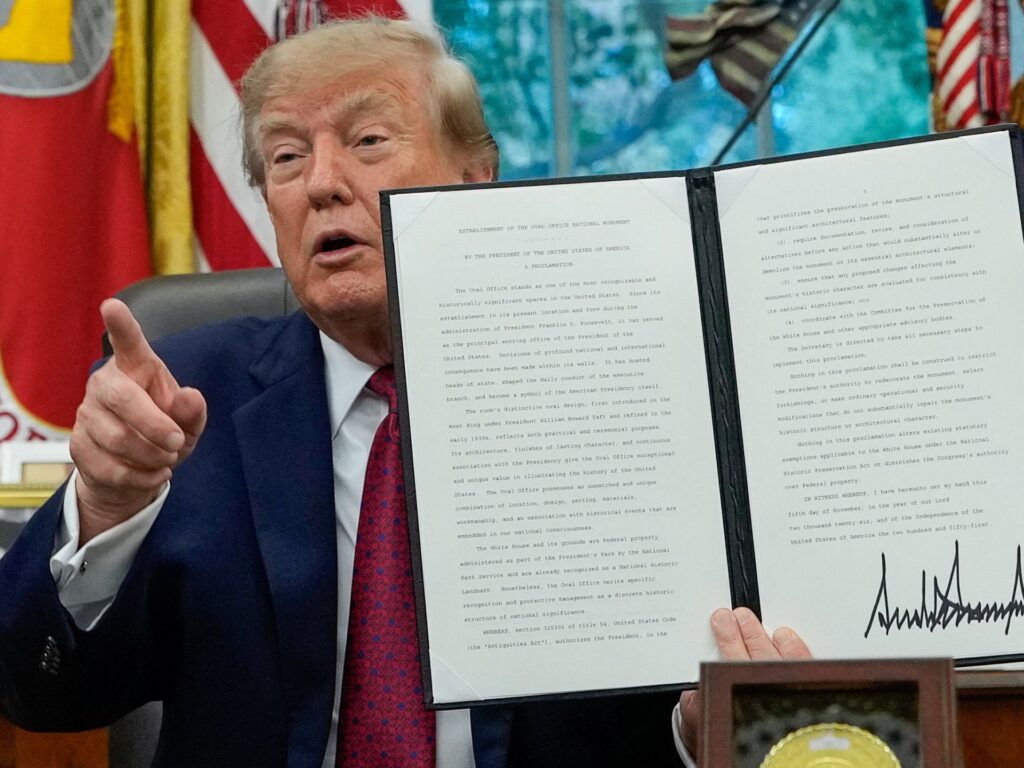
In a significant move following recent election losses, former President Donald Trump has issued a proclamation declaring the Oval Office a national monument. This decision marks Trump’s third major event this week dedicated to emphasizing his administration’s signature renovation projects.
The proclamation aims to recognize the historic and symbolic significance of the Oval Office, the iconic presidential workspace that has been central to American governance for decades. By elevating the Oval Office to national monument status, Trump seeks to preserve its legacy and underscore the importance of the physical space where critical decisions are made.
This announcement comes as part of a broader strategy by Trump to focus public attention on tangible achievements and landmark initiatives undertaken during his tenure. The Oval Office, often regarded as the heart of the presidency, has been the site of numerous presidential addresses, foreign policy decisions, and legislative signings.
Trump’s move to designate the Oval Office as a national monument not only serves to protect the space but also reinforces his connection to presidential history and his role in shaping the nation’s future. It reflects an effort to solidify his impact and legacy amid a challenging political landscape following recent electoral defeats.
Throughout the week, Trump has engaged in multiple events highlighting key renovation and preservation projects, all aimed at showcasing his administration’s commitment to maintaining and enhancing significant national landmarks. These events underscore his dedication to American heritage and the physical embodiments of presidential authority.
The proclamation has garnered mixed reactions. Supporters praise the gesture as a fitting tribute to the presidency and its enduring symbols. They view it as a step toward preserving American history for future generations. Critics, meanwhile, question the timing and motivation, suggesting the move might be politically driven amid electoral challenges.
Despite the debate, the designation of the Oval Office as a national monument expands the narrative surrounding the presidency. It invites reflection on the spaces where American democracy is enacted and the historical continuity of leadership.
By formalizing the Oval Office’s status, Trump aims to leave a lasting mark that transcends electoral outcomes, anchoring his legacy in the nation’s architectural and political heritage. This proclamation integral to his broader efforts to emphasize accomplishments over political setbacks.
As the nation observes this development, conversations about the preservation of presidential landmarks continue to evolve, highlighting the balance between historical reverence and contemporary political dynamics. Trump’s latest proclamation contributes a new chapter to the story of the Oval Office, reinforcing its place in the American national identity.