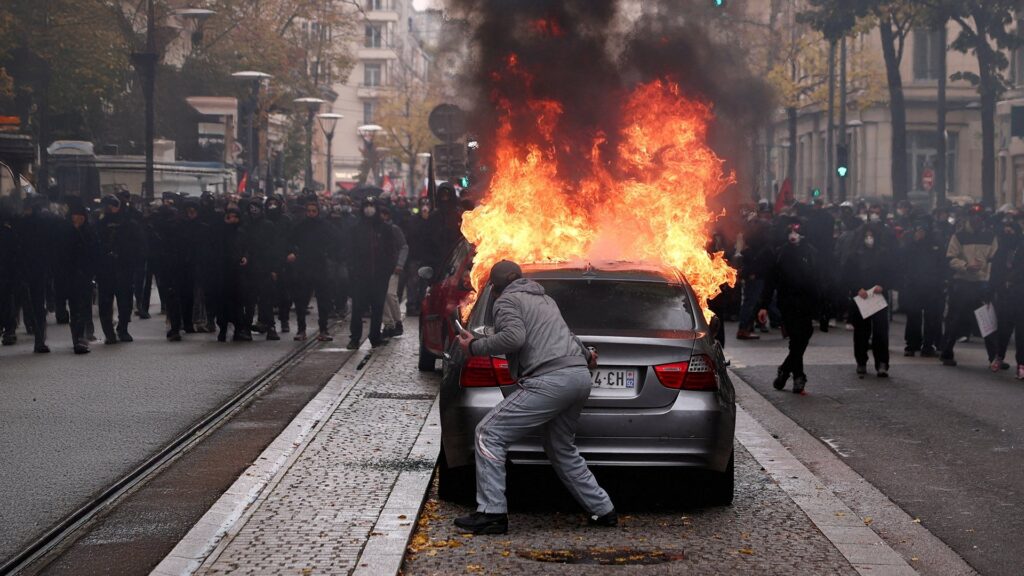
France witnessed a massive wave of protests on Thursday as over 250,000 people took to the streets across the country. This significant mobilization was driven by a nationwide strike organized by five major unions.
The unions called for a day of strike action demanding various reforms and expressing dissatisfaction with current government policies. The participation of such a large number of demonstrators highlights the growing discontent among workers and citizens.
The protests spanned multiple cities, including Paris, Lyon, Marseille, and Bordeaux, indicating the widespread nature of the unrest. Various sectors, including transportation, education, and public services, were affected as unions sought to amplify their demands.
Organizers stated that the strikes and protests aimed to pressure policymakers to reconsider labor laws, pension reforms, and wage policies. Participants carried banners and chanted slogans calling for fair treatment and social justice.
Authorities deployed a significant police presence to maintain order, but the demonstrations remained largely peaceful. The government responded by urging dialogue and emphasizing the importance of addressing citizens’ concerns through conversation rather than confrontation.
The scale of the protests and the union solidarity underscore the challenges the French government faces in balancing economic reforms and maintaining public support. Analysts suggest that these actions are part of a broader trend of labor unrest across Europe amid economic uncertainties.
In conclusion, the mass protests and the nationwide strike in France reflect deep-rooted grievances among workers and citizens, signaling potential ongoing social and political tensions in the country. The outcome of this strike action could influence future government policies and labor relations in France.