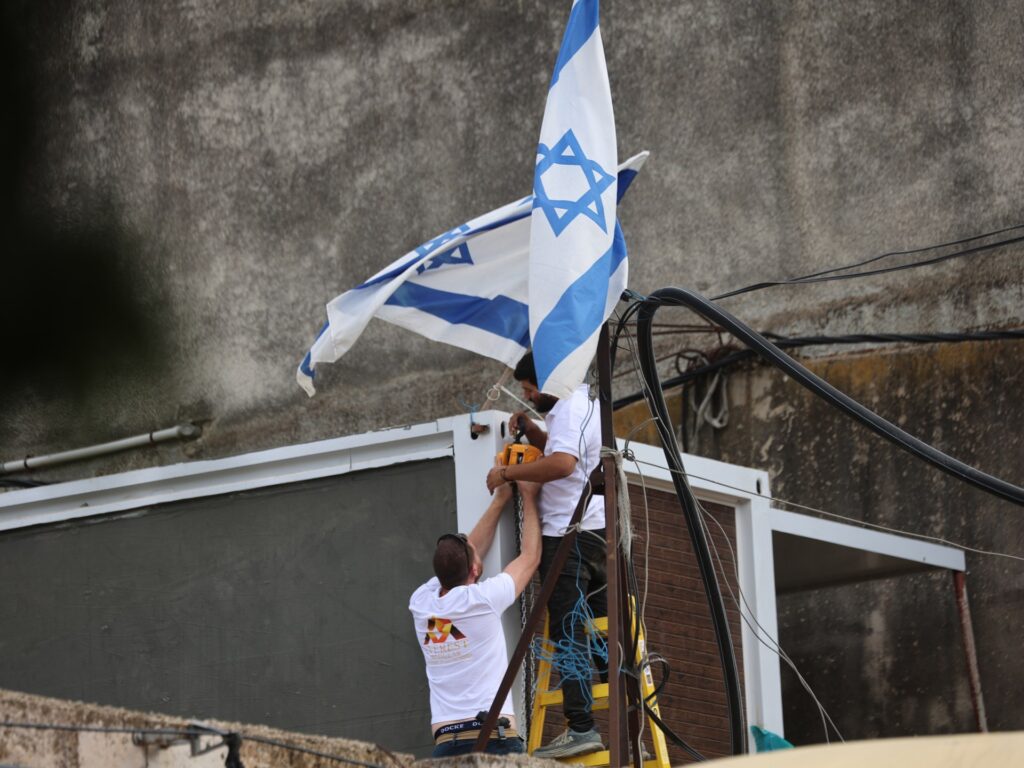
Hebron, a city in the West Bank known for its historical and religious significance, has witnessed significant changes in its demographic and cultural landscape due to the expansion of Israeli settlers in its Old City. Over recent years, Israeli settlers have increasingly occupied rooftops, homes, and public spaces traditionally inhabited by Palestinians. This expansion has led to heightened tensions and threatened the Palestinian identity that has long characterized the city.
The Old City of Hebron holds special importance for both Palestinians and Israelis, featuring sacred sites revered in Jewish and Muslim traditions. Despite this shared heritage, the growing presence of Israeli settlers has created an environment of segregation and conflict. Numerous Palestinian families have been displaced or pressured to leave their homes as settlers claim ownership or receive authorization for expansion from Israeli authorities.
These rooftop settlements are not merely physical structures but symbols of a deeper political struggle. By occupying Palestinian rooftops, settlers not only increase their territorial control but also impose a psychological presence that challenges Palestinian residents’ sense of belonging and security. The presence of settlers often results in restricted movement for Palestinians, increased surveillance, and sometimes direct confrontations or violence.
Human rights organizations and international observers have expressed concern over the impact of these settlements on the social fabric of Hebron. They argue that the steady encroachment undermines peace efforts and contravenes international laws that prohibit the transfer of civilian populations into occupied territories.
The Palestinian community of Hebron has historically been resilient, maintaining its cultural practices and vibrant markets despite adversities. Yet, the pressure from rooftop settlers adds a new dimension of difficulty—transforming communal spaces into contested zones and challenging the city’s historical Palestinian identity.
Local Palestinian leaders have condemned the settlement expansions, calling for international intervention and greater protection for residents. Meanwhile, Israeli settlers justify their actions by citing religious and historical claims to the land, supported by a narrative of reclaiming ancestral heritage.
The Hebron Municipality and various Palestinian organizations continue to document these changes and advocate for preserving the city’s Palestinian character. They emphasize the importance of coexistence and dialogue to resolve disputes peacefully, but the growing physical and social divisions complicate such aspirations.
As tensions escalate, the future of Hebron hangs in a delicate balance. The competing narratives of identity, rights, and power over this historic city challenge efforts toward reconciliation. The expansion of Israeli settlers on Palestinian rooftops is not just an urban development issue but a symbol of the broader Israeli-Palestinian conflict that affects millions.
International stakeholders, including the United Nations and human rights groups, have urged all parties to respect the rights of residents and halt unauthorized settlement activities. Without a negotiated solution that respects the identities and rights of both communities, Hebron’s unique cultural mosaic risks unraveling further.
In conclusion, the expansion of Israeli rooftop settlers in Hebron’s Old City represents a significant threat to the Palestinian identity of the city. It exacerbates longstanding tensions and raises urgent questions about coexistence, justice, and the future of one of the West Bank’s most historically rich urban centers. Efforts to address these challenges must prioritize mutual recognition and respect to safeguard Hebron’s diverse heritage and ensure peace and stability for its residents.