As polls closed across the United States, early results from the midterm elections have started to come in, indicating a strong showing by the Democratic Party. With both the House of Representatives and the Senate control up for grabs, the stakes could not be higher in this pivotal political moment.
Voters nationwide headed to the polls to determine the balance of power in Washington, with the outcome expected to shape the direction of U.S. policy for the next two years. Early returns suggest that Democrats may be gaining ground in key battleground states, which could impact control of Congress.
In many urban and suburban areas, Democratic candidates reported increased voter turnout compared to previous midterms, potentially signaling a more energized base. Meanwhile, Republicans are closely watching early results in traditionally conservative states to assess their hold on the Senate.
Analysts highlight several key races that will likely decide the balance of power, including Senate contests in swing states and competitive House districts. These races are drawing national attention due to their potential to influence legislative agendas, from economic policy to social issues.
While early returns favor Democrats, experts caution that midterm election outcomes can shift as more votes are counted, especially absentee and mail-in ballots that tend to arrive later. As a result, the overall control of the House and Senate remains uncertain at this stage.
The heightened anticipation around these midterm elections reflects broader national concerns, including economic challenges, foreign policy, and the response to recent social movements. Voters appear motivated by a complex mix of local and national issues, which has driven robust turnout in many regions.
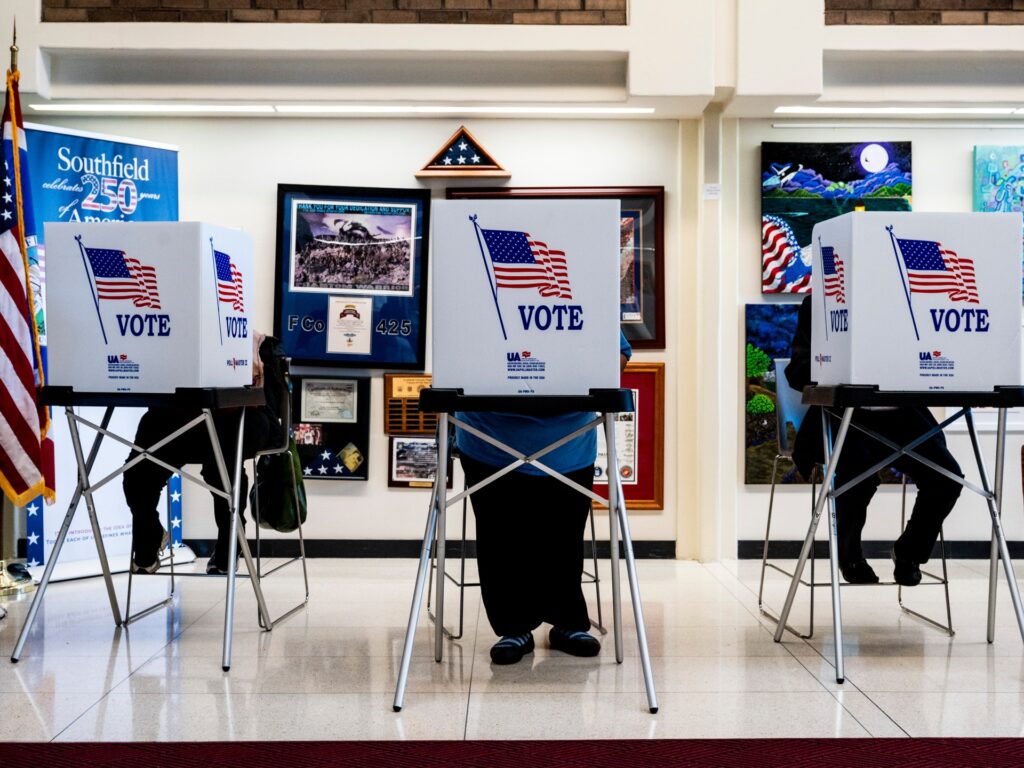
Election officials reported smooth voting processes in most areas, with only minor delays and technical issues. Security measures remain tight amid concerns about election integrity and interference.
The Trump administration’s policies continue to loom large in the campaign narratives, with candidates framing their platforms in relation to the former president’s legacy. Democrats seek to capitalize on areas of public dissatisfaction, while Republicans emphasize economic growth and national security achievements.
As the evening progresses, results from numerous key districts and states will provide a clearer picture of the political landscape heading into the midterm election night. Major networks and analysts are continuously updating their projections as data streams in.
Public sentiment surveys conducted alongside the elections reveal a polarized electorate, with partisan division evident in citizens’ views on governance and the nation’s future direction.
In summary, the early midterm election results indicate a potential shift towards the Democratic Party, but the final outcomes remain too close to call. The nation awaits further reporting to understand how these elections will influence congressional control and policy-making moving forward.