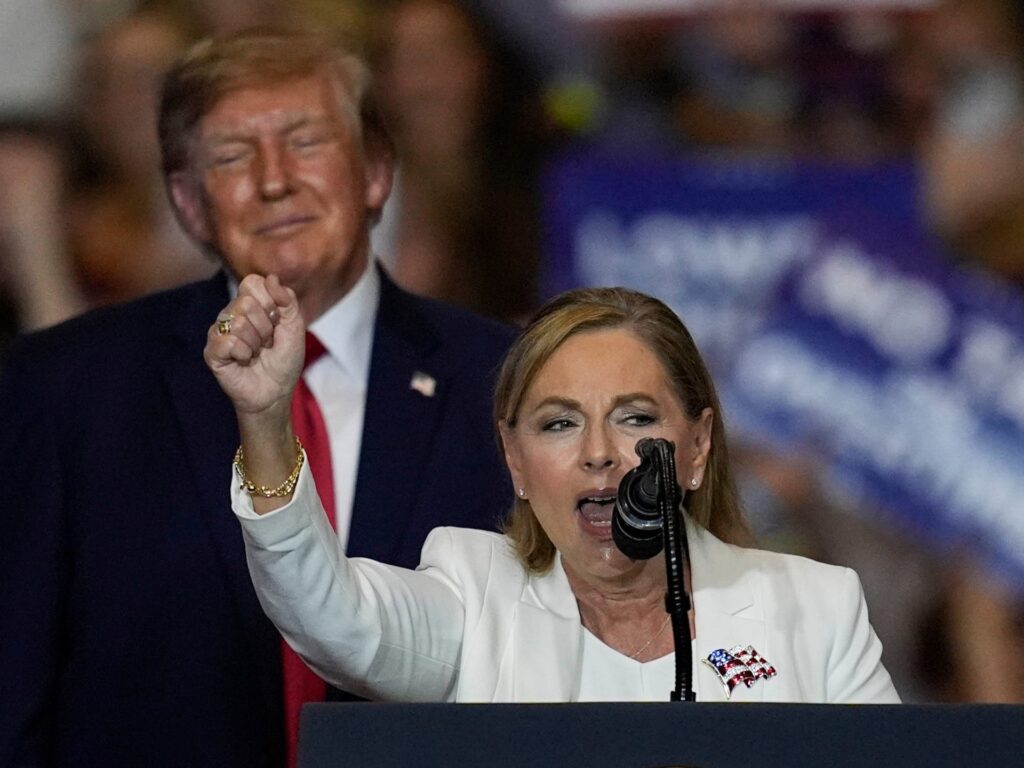
In a surprising twist within South Carolina politics, a faction of Republicans is rallying behind “Write-In Ralph,” an independent candidate challenging the Republican Party’s endorsed Senate candidate, Senator Darline Graham. This development comes as former President Donald Trump has publicly endorsed Graham’s bid for the Senate, aiming to solidify Republican control in the state and support his political agenda.
Senator Darline Graham, a well-established Republican, has been a prominent figure in South Carolina politics, known for her conservative stance and alignment with several of Trump’s policies. Trump’s endorsement was expected to unify the party base and enhance Graham’s chances in the upcoming Senate race.
However, a conservative group within South Carolina has expressed dissatisfaction with Graham’s candidacy, fearing that she may not fully represent the grassroots conservative values they champion. Instead, they have mobilized support for “Write-In Ralph,” a candidate who has not officially qualified on the ballot but is encouraging conservatives to write his name in during the election.
This insurgent campaign underscores the fractured nature of the Republican Party in South Carolina, as internal divisions become increasingly apparent. The group supporting Write-In Ralph argues that their candidate better embodies the principles of small government, fiscal responsibility, and staunch opposition to what they describe as the party establishment’s compromises.
The repercussions of this split could be significant. If Write-In Ralph siphons votes away from Senator Graham, it could jeopardize the Republican hold on the Senate seat, potentially benefiting the Democratic contender. This possibility has raised concerns among party leaders who worry about the long-term implications for Republican unity and electoral success in the state.
Political analysts note that such write-in campaigns are challenging to win due to the obstacles in garnering widespread name recognition and the extra effort required from voters. Yet, the mere presence of a write-in candidate can influence the election dynamics by drawing votes from the official candidate.
Senator Graham has responded to the challenge by reaffirming her commitment to conservative values and highlighting her legislative accomplishments. She has called for party unity to ensure that Republicans can maintain their influence in South Carolina and advance their policy objectives.
Meanwhile, Write-In Ralph’s supporters continue to campaign vigorously, hosting rallies and engaging with voters who feel disenfranchised by the current political establishment. They argue that their movement represents a grassroots resurgence aimed at reclaiming the Republican Party’s conservative identity.
The upcoming Senate election in South Carolina is shaping up to be a closely watched battle, reflecting broader tensions within the Republican Party nationally. Observers will be keen to see whether Trump’s endorsement and establishment support will prevail or if grassroots activists will reshape the party’s trajectory through this unconventional candidacy.
As election day approaches, South Carolina voters are faced with a choice that may redefine the state’s political landscape and signal the future direction of the Republican Party in the evolving American political scene.