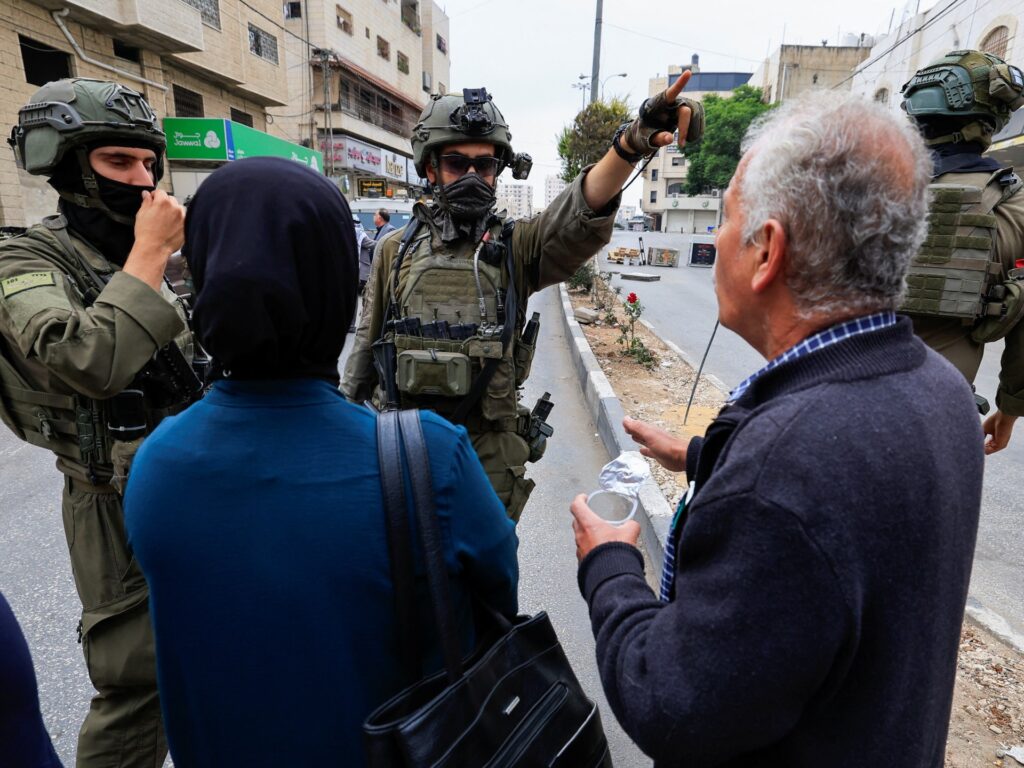
Hebron, a city with deep historical and political significance, witnessed a tense and challenging period over the past ten days as Israeli forces imposed a siege on parts of the city. The siege created a critical situation for residents, many of whom were forced to leave their homes amid the heightened military presence and security operations. However, a significant development has now been announced by Hebron Governor Khaled Dudin, who states that Israeli forces have withdrawn from the city following the prolonged siege. This withdrawal marks an important shift in the situation on the ground and brings a sense of relief to many inhabitants who were displaced during the operation.
Governor Khaled Dudin, a prominent local authority figure, conveyed that families who had been compelled to flee their homes can now safely return. This message serves not only as a reassurance of improving security conditions but also highlights the resilience and steadfastness of the local community. The fact that residents can reclaim their homes is a crucial step toward restoring normalcy in Hebron after a period marked by disruption, tension, and uncertainty.
The ten-day siege, reported to have involved substantial military movement and checkpoints, had a significant impact on daily life, with many families unable to access their properties or conduct their usual activities. The announcement of the withdrawal is therefore a pivotal moment for the city’s population, signaling a potential de-escalation and opening the way for humanitarian relief and reconstruction efforts.
The situation in Hebron has been closely monitored by international observers and human rights organizations concerned about the rights and welfare of civilians caught in the conflict. The governor’s statement provides a hopeful outlook amid ongoing challenges in the region.
While the reasons behind the siege and detailed accounts of the events remain subjects of complex political dialogue and varying perspectives, the immediate concern for residents has been their safety and access to their homes and livelihoods. The lifting of the siege can also be seen as an attempt to ease tensions and foster dialogue that could lead to more durable solutions for peace and coexistence in the area.
This development in Hebron reflects broader dynamics in the Israeli-Palestinian conflict, where periods of tension and military activity are often followed by attempts at stabilization and reassurance. Governor Dudin’s announcement thus holds significance not only for Hebron’s residents but also for observers and stakeholders invested in the prospects of peace and security in the region.
Community leaders and local officials are now tasked with supporting families as they return and work to rehabilitate the affected neighborhoods. The focus will likely be on addressing immediate needs such as housing repair, access to basic services, and psychological support for those who experienced displacement and trauma during the siege.
The withdrawal of Israeli forces is a tangible change on the ground, but the path ahead remains challenging. Continuous efforts are needed to ensure that such episodes do not repeat and that residents of Hebron can live with dignity and stability. The governor’s statement serves as a reminder of the importance of dialogue, understanding, and coordinated efforts to protect civilian lives and uphold human rights.
As the city begins the process of recovery and rebuilding, the international community’s support and attention will be crucial to assist in creating an environment conducive to lasting peace and security. The resilience demonstrated by Hebron’s people is matched by the hopes for a future where such sieges and displacements become a thing of the past.
In summary, the withdrawal of Israeli forces from Hebron after a ten-day siege represents a hopeful development amid ongoing conflict. Governor Khaled Dudin’s assurance that displaced families can return to their homes brings a welcome sense of relief and marks the beginning of a phase focused on recovery and restoration in the city. The coming days and weeks will be critical in shaping Hebron’s path forward as it navigates the challenges of rebuilding, reconciliation, and peace.