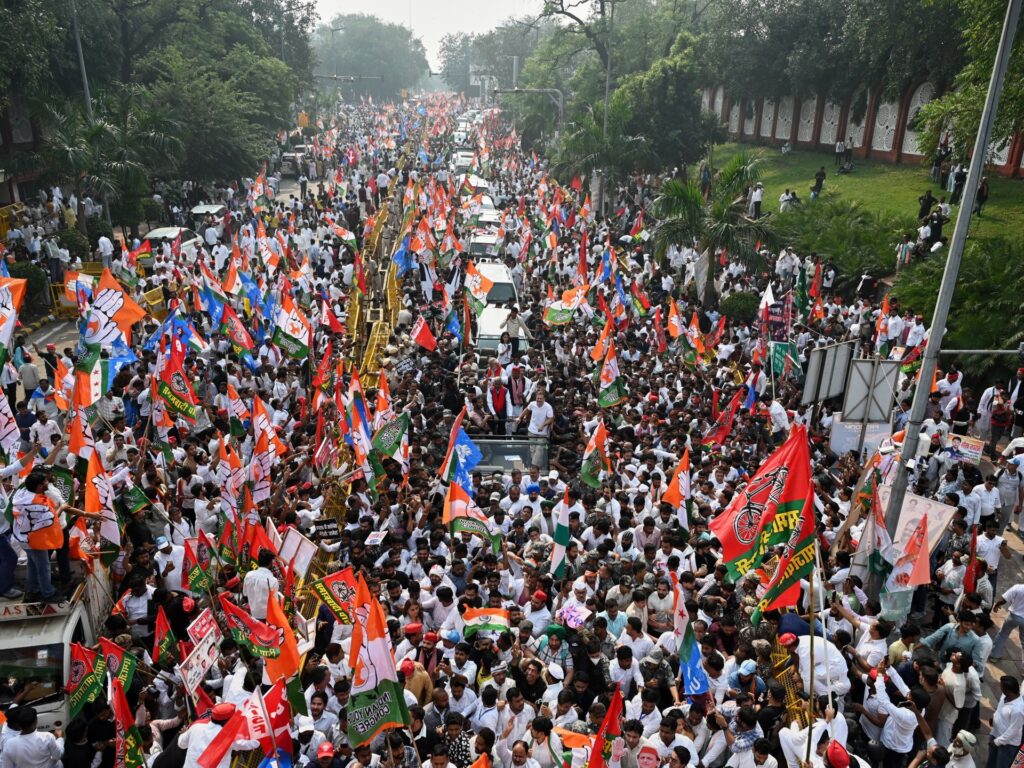
In a significant political demonstration, thousands of protesters gathered in New Delhi to demand the resignation of India’s Election Chief. The rally, which has attracted widespread attention, represents a surge of public discontent and calls for accountability within the country’s electoral system.
The protesters accuse the Election Chief of bias and mismanagement, alleging that recent elections have not met the standards of fairness and transparency expected in a democratic process. These allegations have stirred considerable debate and concern among citizens and political analysts alike.
Authorities have responded to the rally with a substantial police presence. Hundreds of police officers, some equipped with batons and shields, have been deployed around the rally site to maintain order and prevent any outbreaks of violence. The police deployment underscores the sensitivity and potential volatility of the situation.
Organizers of the rally have emphasized that the demonstration is peaceful and a legitimate exercise of democratic rights. They argue that the Election Chief must be held accountable to restore public confidence in the democratic process and ensure free and fair elections in the future.
The Election Commission of India, led by the Election Chief, plays a crucial role in administering elections across the country. Its impartiality and effectiveness are vital for maintaining the integrity of India’s democracy, which is the largest in the world.
This rally highlights the growing political engagement of citizens and their demand for transparent governance. It also puts pressure on government officials and institutions to address the concerns raised and work towards reforms that strengthen electoral oversight.
While the protest remains peaceful so far, the significant police presence indicates the authorities’ readiness to intervene if necessary. The situation is being closely monitored by national and international observers, as it could have wide-ranging implications for India’s political climate.
The calls for resignation are part of a broader discourse on the role of electoral bodies in ensuring democracy. Critics argue that election commissions worldwide must uphold strict neutrality, free from political influence, to safeguard democratic processes.
As the situation develops, it is expected that dialogues between the Election Commission, government representatives, and civil society will be initiated to address the underlying issues prompting the protests.
This rally is a reminder of the vibrant and sometimes contentious nature of democratic expression in India. It serves as an important moment for reflection on the mechanisms that uphold electoral integrity and the continuous efforts needed to protect democratic values.