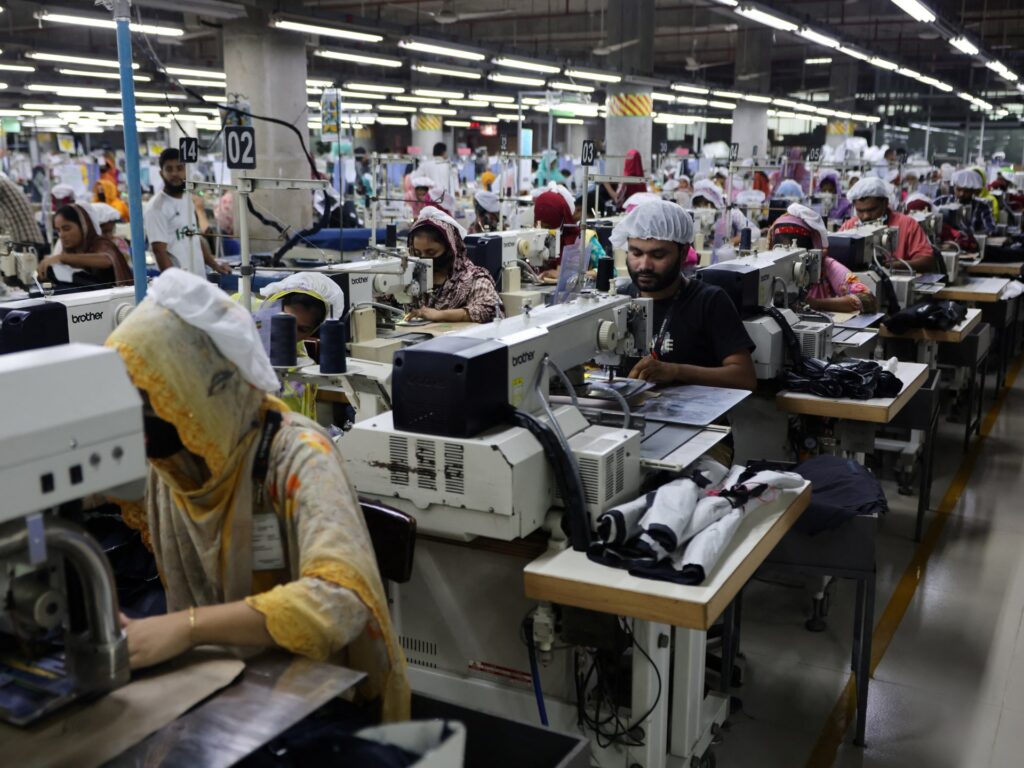
In response to widespread protests by garment workers demanding higher wages to cope with the rising cost of living, the Bangladesh government has announced the formation of a wage board. This development comes after a series of demonstrations took place in major industrial cities, where workers congregated to voice their concerns over stagnant pay despite increasing expenses for basic necessities.
The garment industry, a crucial pillar of Bangladesh’s economy and a major source of export revenue, employs millions of workers across the country. However, many workers have struggled with low wages that have not kept pace with inflation and the escalating cost of everyday goods such as food, housing, and transportation.
Over recent weeks, protests erupted in key industrial zones, including Dhaka and Chattogram, where garment factories are clustered. Workers organized rallies, sit-ins, and marches to press their demand for a minimum wage increase. These demonstrations disrupted production and drew attention to the economic hardships faced by the sector’s labor force.
The government’s announcement of a wage board is seen as a significant step toward addressing these concerns. The board will be tasked with reviewing current wage structures in the garment sector and recommending appropriate adjustments to ensure fair compensation. It will include representatives from the government, factory owners, labor unions, and other relevant stakeholders to ensure a balanced and transparent decision-making process.
Industry experts and labor rights activists have welcomed the move, emphasizing the importance of improving workers’ incomes to sustain Bangladesh’s garment industry competitiveness and social stability. They point out that better wages could lead to increased productivity and reduced labor unrest, benefiting both workers and employers.
However, factory owners have expressed caution, noting that any wage hike must be balanced against the global market pressures and competitiveness of Bangladesh’s garment exports. They warn that sudden or excessive increases could lead to higher production costs and potential job losses.
The wage board is expected to conduct consultations across various industrial zones and gather data on the cost of living and current wage levels. It aims to propose recommendations within a few months to swiftly respond to workers’ grievances.
Beyond the wage issue, the protests have highlighted broader challenges faced by garment workers, including safety conditions, job security, and social protections. These issues may also be addressed as part of government and industry efforts to reform the sector following international scrutiny.
The formation of the wage board marks a critical juncture for Bangladesh’s garment industry, signaling a commitment to dialogue and reform amid growing pressures on workers. As the global economy shifts and consumer demands evolve, the sector’s workforce calls continue to resonate across the country, underscoring the need for sustainable labor policies that ensure fair treatment and decent livelihoods for millions.
The government and stakeholders now face the complex task of balancing economic growth, global competitiveness, and social justice to secure the future of Bangladesh’s vital garment industry and its workforce. The coming months will be closely watched by workers, factory owners, consumers, and international observers invested in the welfare and stability of this key economic sector.