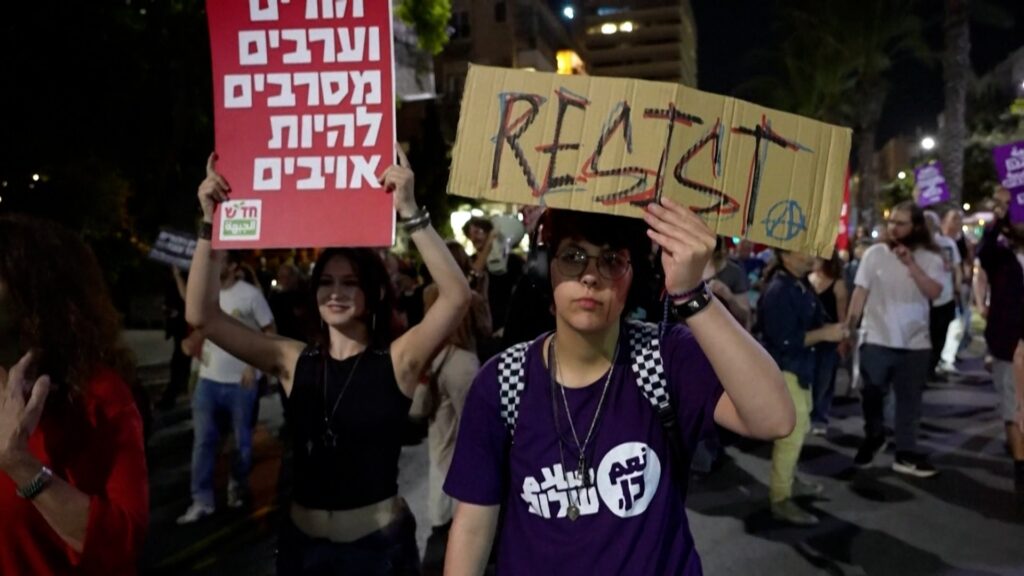
In recent demonstrations across Israel, protesters have been calling for the establishment of a Jewish-Arab coalition government. These protests reflect a growing demand among certain segments of Israeli society for greater political cooperation between Jewish and Arab citizens.
The calls for a Jewish-Arab coalition come amid ongoing political instability in Israel, characterized by a series of elections and difficulty in forming a stable government. Many protesters believe that a coalition including both Jewish and Arab parties could help bridge longstanding divides and promote inclusivity.
Protesters from various backgrounds have gathered in key cities to express their desire for unity and cooperation. They argue that such a government could address social inequalities, enhance security through shared interests, and foster a more peaceful coexistence.
Supporters of a Jewish-Arab coalition emphasize the benefits of diverse representation in tackling Israel’s complex social and political challenges. They highlight the importance of recognizing Arab citizens as equal partners in the democratic process.
However, the idea of a Jewish-Arab coalition government also faces significant opposition. Some factions within Israeli society oppose formal political alliances with Arab parties, citing concerns over national security and ideological differences.
Despite these challenges, the protests signify a notable shift in public discourse, with increased calls for political dialogue and joint governance. Activists argue that collaboration could serve as a foundation for sustainable peace and shared prosperity.
The Israeli government has yet to respond formally to the protesters’ demands, and it remains uncertain whether such a coalition can be realized in the near future. Nevertheless, the protests underscore an important public conversation about the future political landscape of Israel and the role of Jewish-Arab relations within it.
As the political situation evolves, the calls for a Jewish-Arab coalition government may influence policy discussions and electoral strategies in upcoming political cycles. Advocates hope that their voices will contribute to a more inclusive and representative government framework that benefits all citizens of Israel.