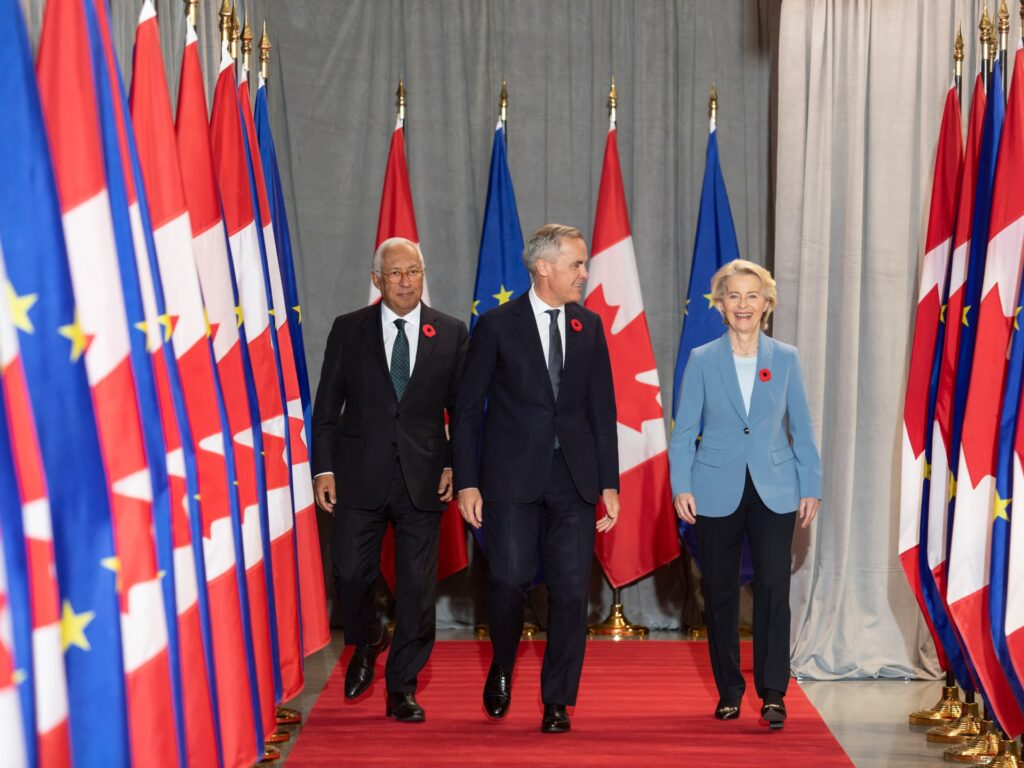
In the midst of escalating global economic and political uncertainties, the European Union and Canada have taken a significant step towards fortifying their bilateral relations. This strategic move comes as both parties aim to shield their economic interests from the unpredictable trade policies emanating from Washington under the previous U.S. administration.
Recently, the EU and Canada signed a comprehensive digital trade agreement, marking a milestone in their partnership. This deal is designed to enhance cooperation in the technology sector, streamline cross-border digital transactions, and promote fair competition in the digital marketplace. It reflects a mutual commitment to foster innovation, protect digital rights, and create new business opportunities within the transatlantic corridor.
The backdrop to this development involves the increasingly volatile trade rhetoric from the United States during the Trump administration, which prompted many of its allies to diversify partnerships and reduce reliance on U.S. markets. As a result, Canada and the EU have accelerated negotiations to deepen economic ties, emphasizing the need for stable and predictable trade relations.
This digital trade pact complements the already existing Comprehensive Economic and Trade Agreement (CETA) between Canada and the EU, further integrating the two economies. It builds on shared values such as data protection, cyber security, and digital innovation, ensuring that both consumers and businesses benefit from safer and more efficient digital exchanges.
Leaders from both sides have expressed optimism that this enhanced cooperation will not only boost economic growth but also set a precedent for future partnerships in the digital era. The agreement is seen as a proactive response to global economic challenges, advocating for rules-based trade and supporting a multilateral approach to international commerce.
Moreover, this move underlines the EU and Canada’s intent to play a more influential role on the world stage by promoting stable and resilient trade networks. By forging stronger ties, they aim to reduce vulnerabilities and enhance their collective competitiveness against emerging global economic shifts.
Industry experts have welcomed this development, highlighting the importance of regulatory alignment and shared standards in digital trade. This alignment is expected to facilitate smoother operations for companies engaging in e-commerce, cloud services, and digital content.
In conclusion, as global uncertainties continue to challenge traditional trade alliances, the EU and Canada’s decision to deepen ties through digital trade cooperation symbolizes a strategic realignment. By focusing on innovation-driven partnerships and mutual support, they are paving the way for a more connected and resilient economic future.