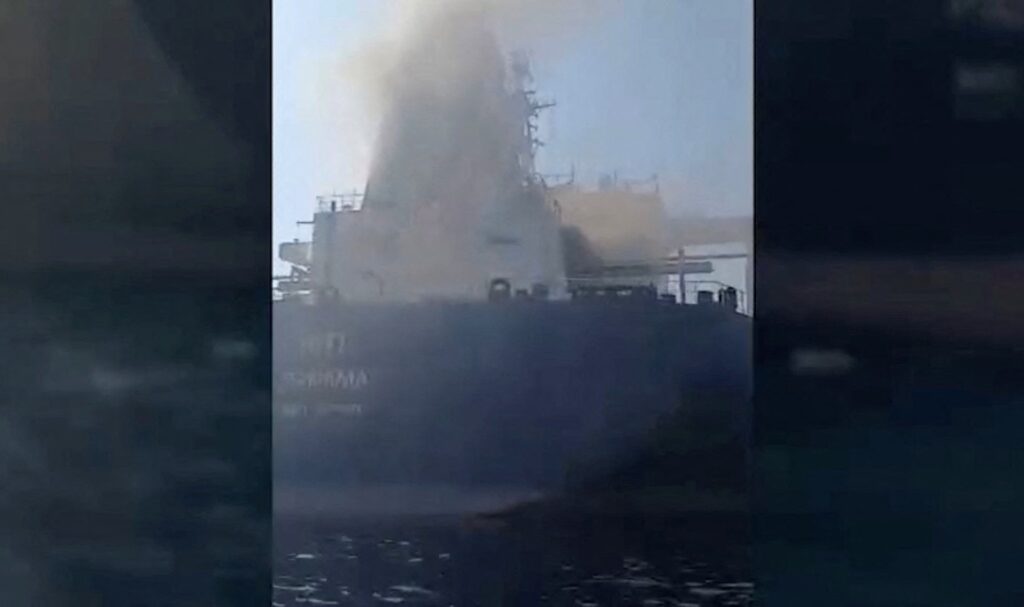
Tensions have escalated sharply in the Persian Gulf as four tankers were reportedly hit in the strategic Strait of Hormuz, according to the Islamic Revolutionary Guard Corps (IRGC) of Iran. This development marks a significant escalation in the ongoing conflict involving Iran and international actors.
The Strait of Hormuz is a vital maritime chokepoint through which a substantial portion of the world’s oil supply passes, making security in this area a critical, global concern. The attack on four tankers has raised fears of a wider conflict and increased volatility in global energy markets.
Details about the nature of the damage to the tankers, the parties responsible, and the nationalities of the vessels targeted have not been fully disclosed. However, the IRGC’s statement confirming the hits adds to the gravity of the situation and the potential for further military escalations in the region.
Amid these developments, former U.S. President Donald Trump has commented on the escalating tensions, expressing optimism that the war involving Iran will “get wrapped up soon.” Trump’s remarks reflect a perspective that, despite the current hostilities, a resolution to the conflict might be imminent.
The conflict between Iran and various international actors, notably the United States, has been characterized by cycles of confrontation and negotiation, often centered around Iran’s nuclear program, regional influence, and economic sanctions.
The recent attacks in the Strait of Hormuz complicate diplomatic efforts aimed at reducing tensions. The international community has called for restraint from all parties involved, emphasizing the importance of maintaining open shipping lanes and de-escalating military postures.
Analysts warn that continued attacks on commercial shipping could provoke a military response, impacting not only regional stability but also global economic interests. Furthermore, the dangers to civilian shipping crews and the potential for miscalculation remain high.
Iran’s strategic location and its capacity to control maritime traffic in the Strait add a significant dimension to the conflict. Controlling this narrow passage effectively gives Iran leverage over one of the world’s busiest oil transit routes.
This latest episode underscores the fragile security situation in the Persian Gulf, where geopolitical rivalries intersect with economic dependencies. The attacks on the tankers could trigger a chain reaction of military and economic repercussions.
International bodies and governments are closely monitoring the situation, urging dialogue and negotiation to prevent further deterioration. Economic sanctions, naval deployments, and diplomatic initiatives are likely to be influenced by how this incident unfolds.
As the situation develops, monitoring communications from Iran, the United States, and other stakeholders will be essential. The global community hopes for a peaceful resolution that avoids further conflict and secures the safety of international maritime routes.
In conclusion, the targeting of four tankers in the Strait of Hormuz marks a dangerous escalation in the Iran conflict. Former President Trump’s comments signal cautious optimism about an impending end to hostility, but the path to peace remains uncertain amid the volatile geopolitical landscape. Continued vigilance and diplomatic efforts are critical to stabilizing the region and protecting vital global interests.