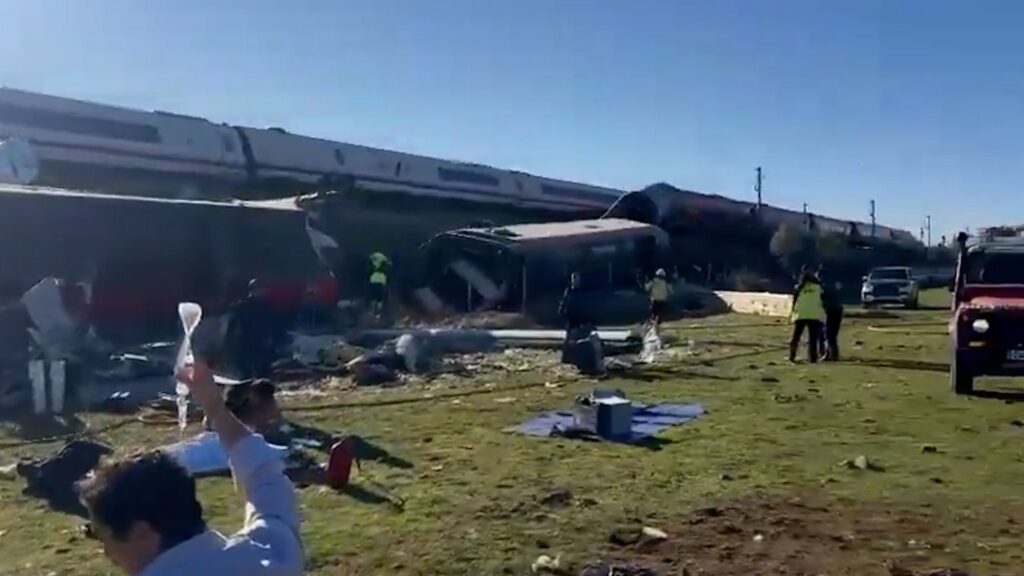
A tragic high-speed train collision near Urda, Spain, has resulted in the deaths of at least 39 people. The accident involved two high-speed trains that collided under circumstances that are currently being investigated by Spanish authorities. Emergency services rushed to the scene to assist survivors and manage the aftermath of the crash.
The collision has sent shockwaves through the nation, leading to widespread mourning and calls for enhanced rail safety measures. Rescue teams worked tirelessly to help passengers and clear the wreckage, highlighting the severity of the incident.
Preliminary reports suggest that one train may have been traveling at an excessive speed or that signal errors could have played a role in the tragedy. Investigators are combing through data, including black box records and eyewitness accounts, to determine the exact cause.
The Spanish government expressed deep condolences to the families of the victims and assured the public that a full inquiry will be conducted to prevent future disasters. Rail operators have temporarily suspended services on the affected route as safety checks are carried out.
Officials also announced the provision of psychological support for survivors and the relatives of those who lost their lives. Hospitals in the nearby regions have been put on alert to handle the injured.
This catastrophe marks one of the deadliest rail disasters in recent Spanish history, stirring debates about infrastructural investment and the modernization of rail networks to ensure passenger safety.
As Spain grieves, international communities have extended their sympathies, underscoring the global impact of such tragedies. The investigation continues, with updates expected as more information becomes available.