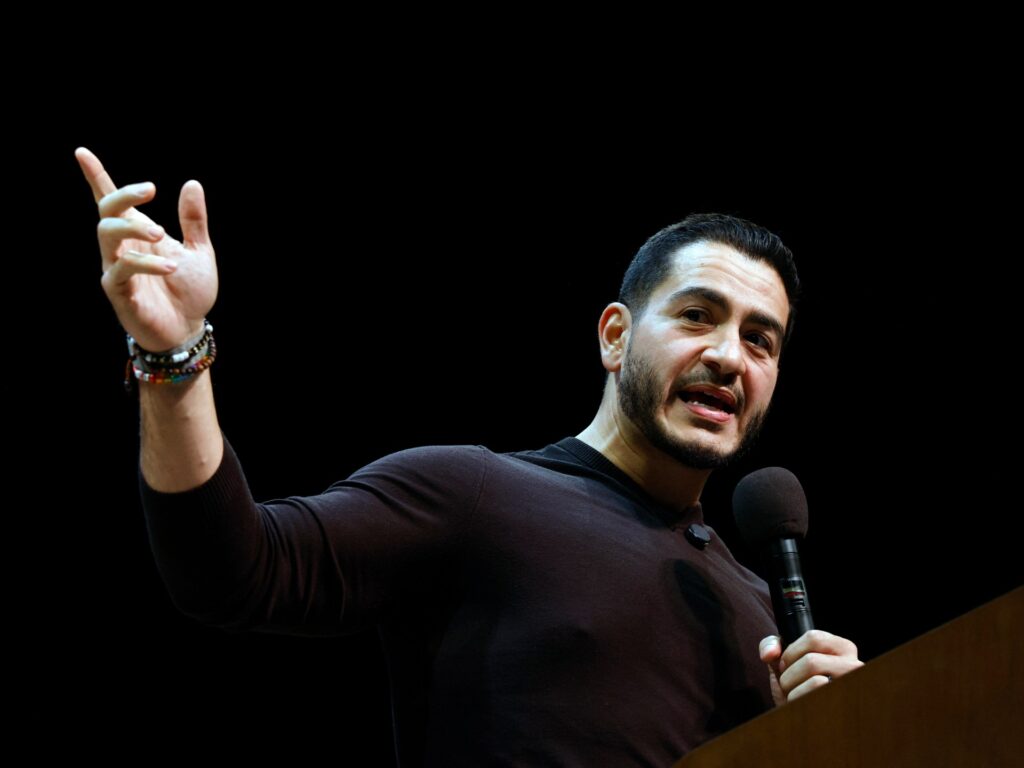
Abdul El-Sayed, the Democratic candidate running for the US Senate, has recently become the target of Islamophobic attacks linked to remarks by former President Donald Trump. El-Sayed, who is Muslim, has faced criticism and negative publicity fueled by anti-Muslim rhetoric that many critics say is politically motivated. These attacks come in the context of a highly competitive Senate race where El-Sayed’s candidacy represents a significant step for diversity and representation in American politics.
El-Sayed has publicly addressed these Islamophobic attacks, refusing to be deterred by what he terms “deflections” aimed at distracting voters from substantive campaign issues. His response emphasizes resilience and the need to confront bigotry head-on. He highlights his commitment to inclusivity, civil rights, and social justice as central pillars of his platform and counters the attacks by focusing on his record and vision for the state.
The use of Islamophobic rhetoric in political campaigns has been a growing concern among civil rights advocates, who argue that such tactics not only harm the targeted individuals but also undermine the values of pluralism and fairness in American democracy. Trump’s previous statements targeting Muslim communities have repeatedly stirred controversy, and El-Sayed’s case has brought the issue back into the spotlight.
Political analysts note that while negative campaigning is a common strategy, attacks based on religion pose serious ethical questions and can polarize communities. El-Sayed’s campaign team has responded by rallying support from diverse community groups and organizations that condemn hate speech and promote unity.
Despite the challenges, El-Sayed remains focused on addressing key policy issues such as healthcare reform, climate change, and economic equality. His commitment to these causes resonates with a broad base of voters who seek progressive change. The candidate’s approach exemplifies a refusal to be sidelined by hate, instead turning adversity into an opportunity to advocate for marginalized voices.
The broader political context includes ongoing debates about immigration, religious freedom, and national security. El-Sayed’s presence in the Senate race brings an important perspective to these issues, challenging prevailing narratives with informed, compassionate dialogue.
Community leaders and activists have expressed solidarity with El-Sayed, recognizing the significance of his stance against Islamophobia. Their support underscores the importance of addressing hate in political discourse and maintaining the dignity of public debate.
In summary, Abdul El-Sayed’s response to the Islamophobic attacks linked to Donald Trump highlights the intersection of identity politics and electoral competition. His experience underscores the challenges that minority candidates may face, as well as the potential for resilience and unity in overcoming divisive rhetoric. As the Senate race progresses, El-Sayed’s campaign serves as a reminder of the ongoing need to combat intolerance and promote a more inclusive political environment.