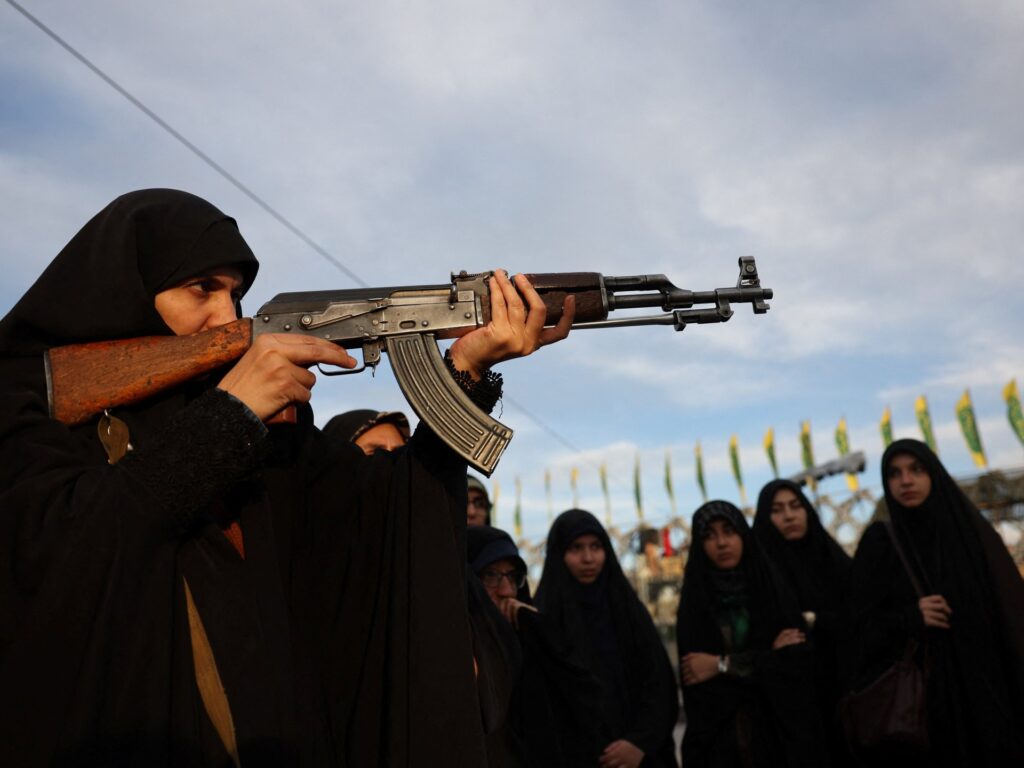
Iranian authorities have initiated a nationwide ‘self-sacrifice’ mobilisation campaign, known as the Janfada campaign, spearheaded by the Islamic Revolutionary Guard Corps (IRGC). The campaign aims to engage the population in a united effort likely focused on national resilience and solidarity, as indicated by its expansive rollout across the country.
The IRGC has announced plans to utilize the main squares in every capital city of Iran’s 31 provinces as key venues for the Janfada campaign activities. This strategic use of central public spaces highlights the campaign’s goal of wide public participation and visibility.
Janfada, which translates roughly to ‘self-sacrifice,’ suggests a call for citizens to contribute personally and collectively for a cause deemed significant to the nation. Though details on the specific objectives and activities involved in the campaign remain limited, the IRGC’s involvement signals its importance in promoting ideological and possibly security-related initiatives.
The campaign reflects Iran’s current emphasis on mobilization and unity, potentially in the context of internal challenges or external pressures. By engaging people in their provincial capitals, the authorities seek to foster a sense of communal responsibility and national pride.
This countrywide initiative follows trends seen in other times where Iran has rallied its populace to face economic hardships, geopolitical tensions, or to reinforce cultural and nationalistic values through state-led programs.
Mobilization campaigns like Janfada typically involve organized events, speeches, public demonstrations, and coordinated media messaging intended to inspire participation and commitment. The choice of main squares as venues suggests that public gatherings and collective ceremonies will be prominent features.
The IRGC, a powerful branch of Iran’s military and ideological structure, continues to play a critical role in shaping public discourse and directing efforts that align with the nation’s strategic interests. Their leadership in the Janfada campaign underscores its significance within the broader framework of national mobilization.
Analysts may view this campaign as a response to recent challenges faced by the Iranian government, whether political, economic, or social, that require enhanced public cooperation and solidarity.
As the campaign unfolds, it remains to be seen how the public will respond to this call for self-sacrifice and what the tangible outcomes of the mobilization will be. The use of provincial capitals as campaign hubs ensures that a vast segment of the Iranian population will be directly engaged.
In summary, the IRGC’s rollout of the Janfada campaign across all provincial capitals in Iran represents a major push for nationwide mobilisation under the banner of self-sacrifice. The campaign highlights the government’s efforts to unify the nation around shared goals during a period of significant internal and external trials.