Serbia is holding a pivotal election that has captured both national and international attention due to its high stakes and closely contested competition. The polls indicate a tight race between the populist incumbent, Aleksandar Vucic, who has been a dominant figure in Serbian politics for years, and a rising anticorruption and anti-authoritarian student movement challenging the established order.
Aleksandar Vucic, known for his strong nationalist rhetoric and significant influence over Serbia’s political landscape, faces unprecedented competition from civic activists and young voters galvanized by calls for transparency, reform, and democratic integrity. This election is being viewed as a referendum not only on Vucic’s leadership but also on the direction Serbia will take amid growing concerns about governance, human rights, and judicial independence.
The student movement, propelled by widespread frustration among the youth over corruption and political stagnation, has transformed from a grassroots protest into a powerful political force. Their platform emphasizes fighting corruption, reducing authoritarian practices, improving media freedom, and instituting democratic reforms that resonate strongly with a generation eager for change.
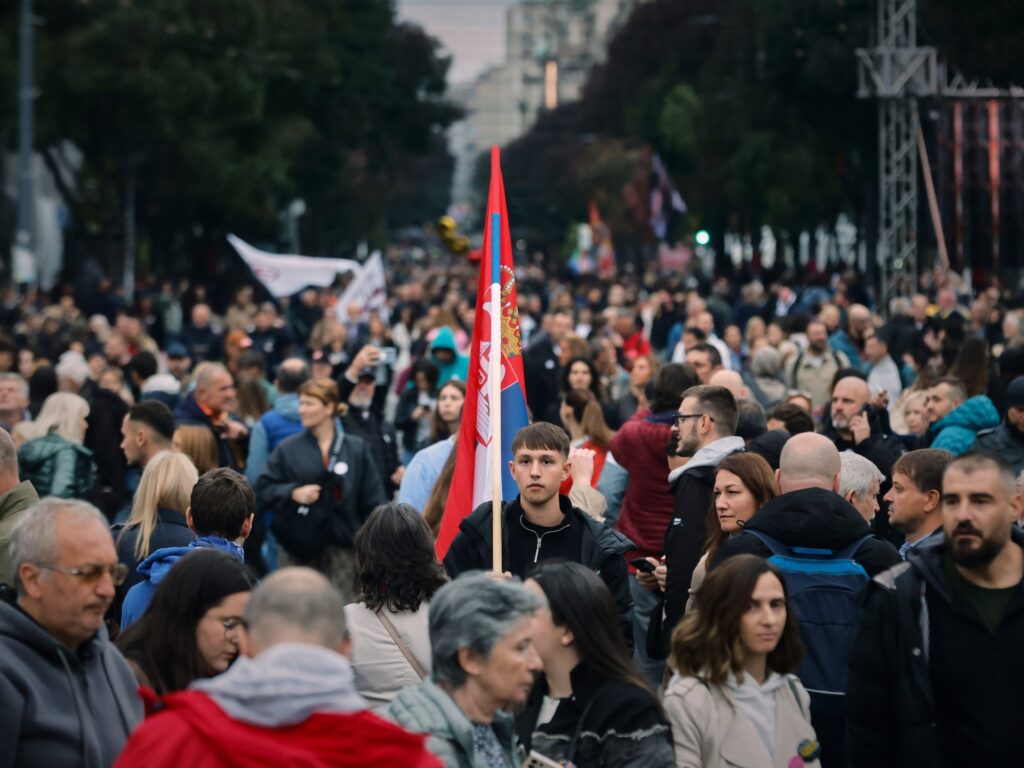
Election day has brought a charged atmosphere to cities across Serbia, with vigorous campaigning in urban centers and rural areas alike. Observers note a high voter turnout, an indication of the election’s significance to the population and the intense polarization between the candidates.
International observers are monitoring the election closely, concerned about the fairness of the electoral process and the potential implications for regional stability. Serbia, a country aspiring to join the European Union, faces intense scrutiny over its commitment to democratic principles and rule of law.
Vucic’s campaign emphasizes continuity, economic development, and maintaining Serbia’s strategic partnerships, especially balancing relations with the European Union, Russia, and China. Conversely, the student movement promises sweeping reforms aimed at dismantling entrenched political networks and instituting a more open and accountable governance system.
The stakes could not be higher. If Vucic secures another term, it would signify continued dominance of his populist agenda and potentially further erosion of democratic norms. Alternatively, a victory for the student movement could herald a new era of political openness and reform, yet it also carries uncertainty about how effectively inexperienced leadership could govern in a complex environment.
As results start to trickle in, Serbia stands at a crossroads. The outcome of this election will not only shape the country’s internal political dynamics but also define its relationship with strong international players and its path towards European integration. Regardless of the immediate winner, the election signifies a significant moment of political mobilization and civic engagement in Serbia, highlighting the growing demand for change and accountability among its people.