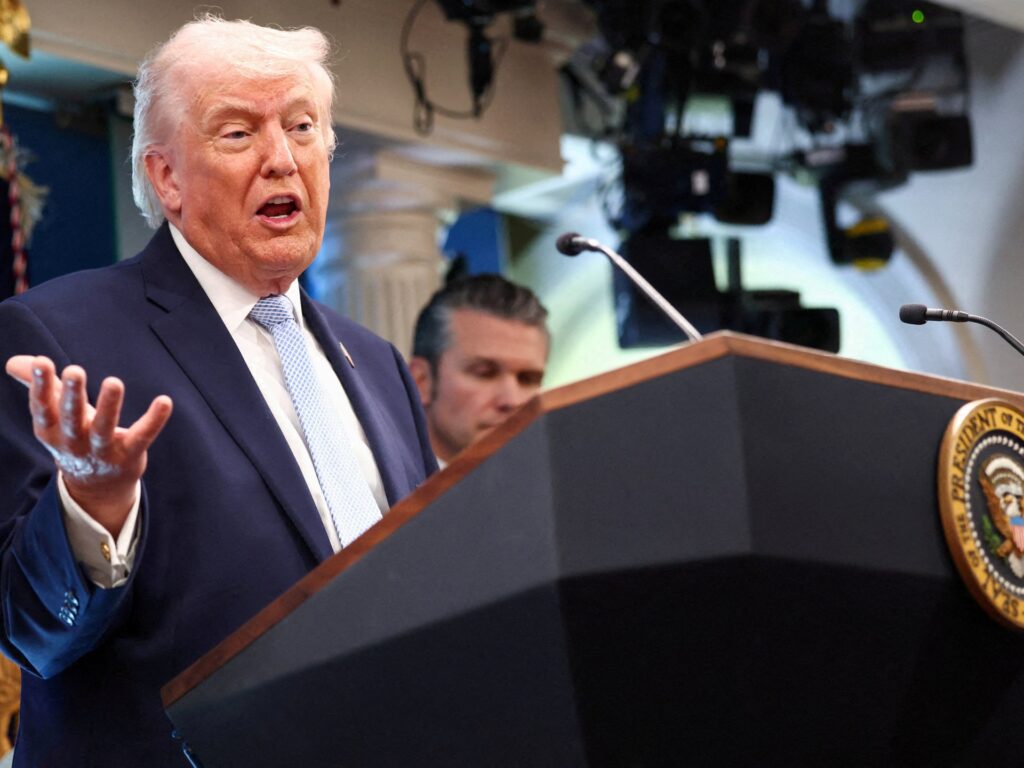
In a recent development, President Donald Trump has indicated that he might relocate the White House press corps to a new location. This statement comes at a time when the relationship between the President and the journalists covering him has become increasingly strained. Trump’s remarks reflect ongoing tensions and a growing dissatisfaction with how the press interacts with his administration.
The White House press corps, a group of journalists who have the responsibility of covering the President and his activities, traditionally operates from a designated area within the White House complex. This arrangement allows for direct interaction and timely reporting on presidential news and events. However, Trump’s suggestion to move the press corps signals potential changes to this longstanding setup.
Observers believe that this move may be an attempt by the President to exert greater control over media access and coverage. The relationship between Trump and the press has been marked by frequent conflicts, with the President often criticizing the media for what he describes as biased reporting. The idea of relocating the press corps could be seen as a way to manage or mitigate these conflicts.
Journalists have expressed concern that such a change might limit their ability to effectively cover the President and the administration’s activities. Proximity to the White House facilitates prompt coverage and access to information, which could be compromised if the press corps is situated further away. Media advocates emphasize the importance of maintaining an independent and accessible press to uphold transparency and accountability in governance.
The exact details of the proposed new location, and how logistics would be handled, are not yet fully disclosed. It remains to be seen how this decision, if implemented, will impact the dynamic between the White House and the press. The current atmosphere of mistrust highlights broader issues regarding media freedom and the role of the press in American democracy.
Analysts note that this move could have implications for how news is gathered and disseminated from the nation’s political center. The press corps plays a crucial role in shaping public understanding of government actions, and any reduction in their access could lead to challenges in reporting accuracy and comprehensiveness.
In recent months, the Trump administration has faced various criticisms over its communication strategy, including the handling of press briefings and information distribution. The proposed relocation of the press corps might be another element in the administration’s broader approach to control narratives and manage media interactions.
Ultimately, this development underscores the complexity of the relationship between the presidency and the media. It raises important questions about the balance between security, information access, and freedom of the press. As this situation evolves, both the White House and the journalists covering it will likely face new challenges in maintaining effective communication channels.
The press corps, journalists, and media organizations closely monitor these changes, advocating for arrangements that uphold the principles of transparency and open communication in government affairs. The outcome will significantly influence how presidential coverage is conducted in the future, affecting public engagement and democratic discourse.