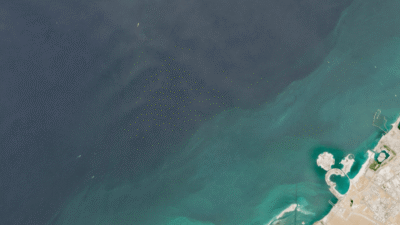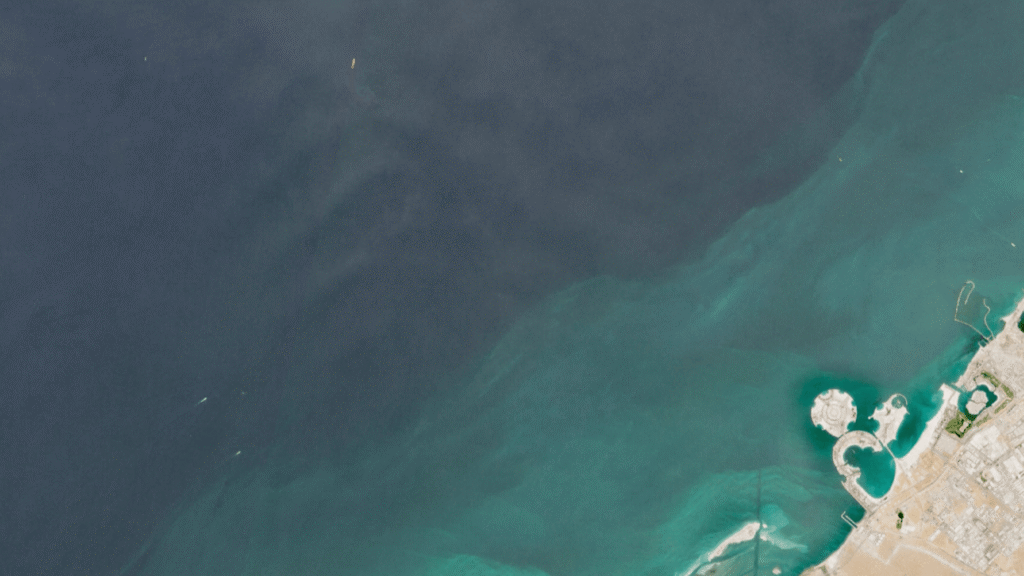
A significant environmental incident has unfolded off the coast of the United Arab Emirates, where a massive oil slick has been observed weeks after a vessel reportedly struck a naval mine. This event took place in early October and has since raised considerable concerns among local authorities and environmentalists alike.
The tanker involved in the incident reportedly hit a naval mine, resulting in a substantial spill of oil into the surrounding waters. This spill has caused a dramatic impact on the marine environment and has forced the closure of several popular beaches as precautionary measures are taken to protect public health and safety.
Officials from the UAE have been quick to respond, deploying cleanup crews and containment booms in an effort to mitigate the environmental damage. However, the scale of the spill has presented significant challenges, especially given the delicate nature of the marine ecosystems in the region.
The affected areas have seen a decline in water quality, and the slick has reportedly spread over a wide area, threatening marine life and local fisheries. Authorities are working in coordination with international experts to assess the full impact of the spill and to devise a long-term remediation plan.
The closure of beaches has affected local tourism, a vital industry in the UAE, with visitors being urged to avoid the impacted coastal areas until further notice. Environmental groups have called for increased scrutiny of shipping activities near critical naval zones to prevent similar incidents from occurring.
This incident has also raised concerns about maritime safety and the potential dangers posed by unexploded ordnance such as naval mines in busy shipping lanes. The UAE government has pledged to investigate the circumstances surrounding the mine and to enhance safety protocols to prevent future accidents.
Marine biologists and environmental scientists have warned that the ecological consequences of oil spills can persist for years, affecting biodiversity and the health of marine habitats. Continuous monitoring efforts are planned to track the recovery of affected areas.
The incident underscores the need for heightened vigilance and cooperation between maritime authorities, environmental agencies, and the shipping industry to safeguard coastal and marine environments.
As cleanup efforts continue, the focus remains on minimizing damage, protecting local communities, and ensuring that such ecological disasters are prevented in the future. The UAE’s experience serves as a critical reminder of the environmental risks associated with maritime navigation and the importance of preparedness in responding to such emergencies.