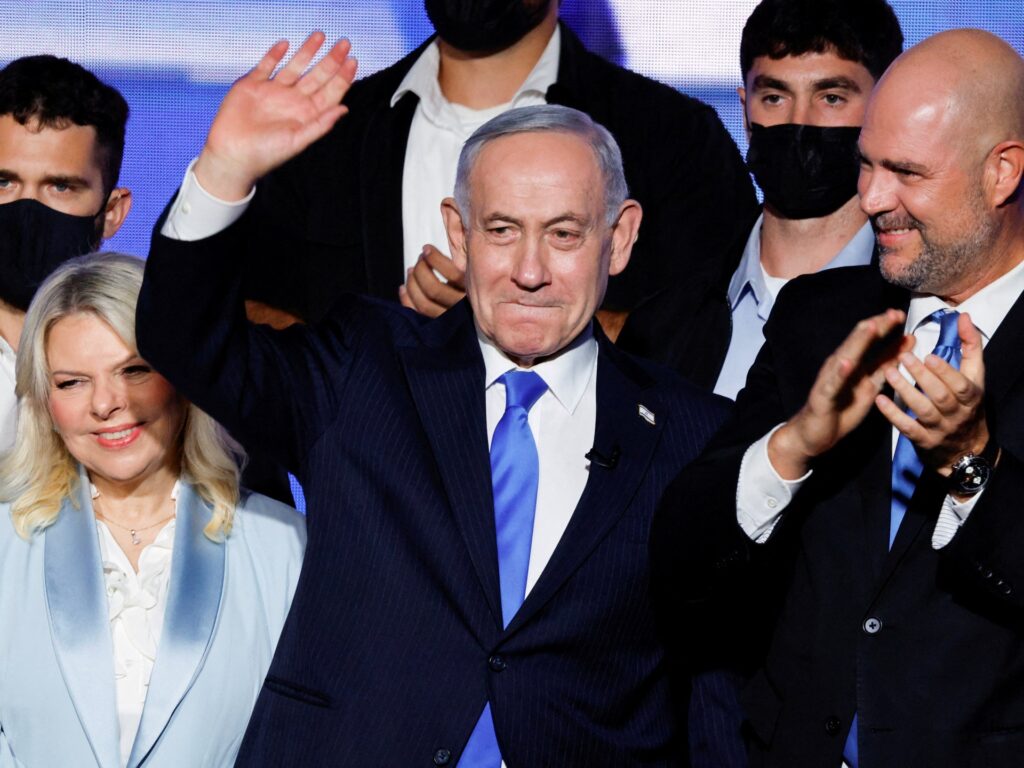
As Israel prepares to head to the polls on October 27, the spotlight is firmly on Benjamin Netanyahu, the country’s longest-serving and most polarizing prime minister. Netanyahu’s tenure has been marked not only by his political longevity but also by profound changes to Israel’s institutions, changes that have shaped the nation’s political landscape and governance.
Benjamin Netanyahu first served as Prime Minister from 1996 to 1999 and then from 2009 onward, making him Israel’s longest-serving leader. His time in office is characterized by a strategic reshaping of Israel’s political and legal frameworks, aimed at consolidating power and steering the country in his desired direction.
One of Netanyahu’s significant impacts has been on the judiciary. Over recent years, his government has pushed for reforms that critics say weaken judicial independence. These reforms aim to increase legislative and executive control over judicial appointments and limit the Supreme Court’s power to overturn laws. Supporters argue these steps are necessary to restore balance among branches of government and reduce what they see as overreach by the courts.
Netanyahu’s influence also extends to the electoral system. His fluctuating fortunes at the polls have spurred debates and legislative maneuvers around voting laws, coalition-building processes, and electoral thresholds. These adjustments often serve the ruling coalition’s interests, influencing how political power is distributed in the Knesset and beyond.
Furthermore, Netanyahu has reinforced the role of security and defense in Israel’s institutional framework. His hardline stance on security matters and conflict-related issues has led to expanded powers for security agencies and a reassertion of national priorities focused on defense, often at the expense of civil liberties.
Through strategic appointments within key institutions, Netanyahu has embedded loyalists who share his vision and policy priorities. This has had the effect of cementing his political agenda and limiting the influence of opposition voices within government structures.
Economic institutions have also felt Netanyahu’s imprint. His tenure featured liberal economic reforms promoting privatization, deregulation, and free markets, which reshaped Israel’s economy and institutional frameworks. However, these changes have also intensified social inequalities and prompted public debate about the role of government in economic life.
Netanyahu’s polarization of Israeli society is reflected institutionally as well, with a growing divide between secular and religious factions, left and right political spectrums, and Jewish and Arab citizens. These divides influence legislative priorities, institutional access, and the broader social contract.
As the October 27 elections approach, Netanyahu’s reshaping of Israel’s institutions stands as a testament to his enduring influence. Whether Israelis choose to continue under his leadership or seek new direction, his legacy of institutional transformation will continue to define the country’s political and social fabric for years to come.