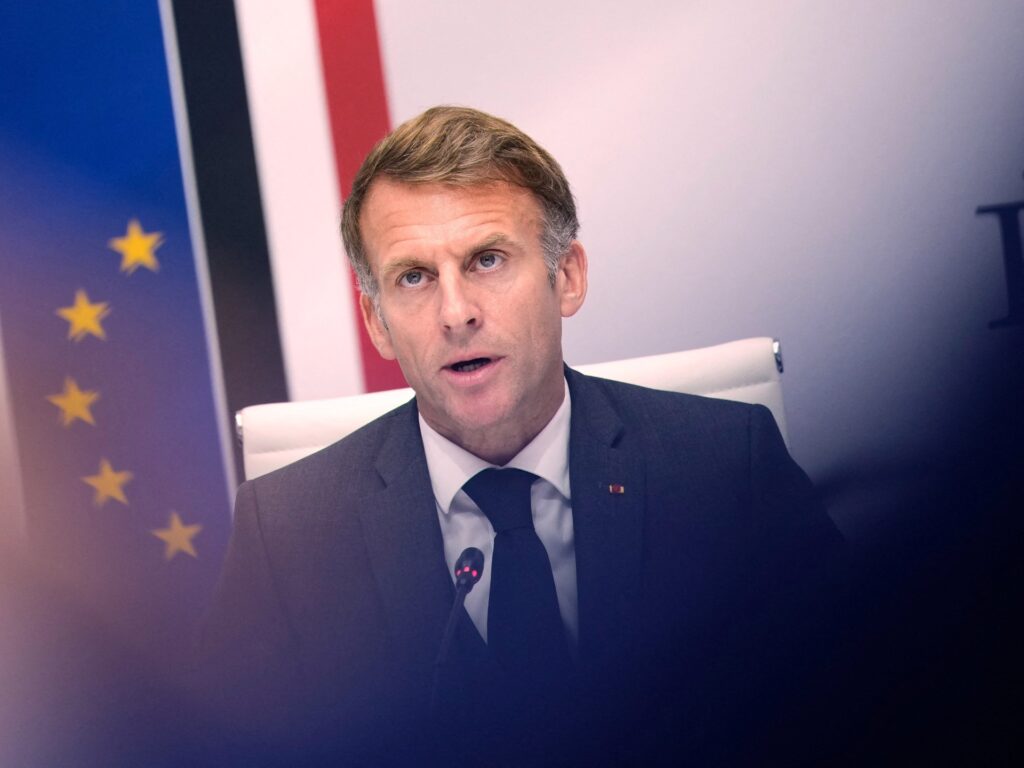
In a significant development amidst mounting civil unrest, French President Emmanuel Macron has attributed recent disturbances to the “seditious” far-left factions. His comments come as the government takes a firm stand by imposing bans on Thursday’s planned demonstrations in several key cities, including parts of Paris, Lyon, Lille, and Grenoble.
The unrest that has gripped various French cities is reportedly fueled by protests from left-wing groups opposing government policies. President Macron’s administration has labeled these groups as “seditious,” suggesting that their activities threaten public order and national stability.
In response to escalating tensions and in an effort to maintain peace, French authorities have prohibited protests in certain urban areas known to be hotspots for demonstrations. These restrictions are intended to curb the potential for violence and disruption that have marred previous protests.
The decision to ban protests has sparked debate among civil rights advocates and political commentators. Supporters argue that the measures are necessary to prevent chaos and protect citizens, while critics contend that such bans could infringe on freedoms of assembly and expression.
The ban covers designated zones in major cities, where law enforcement will enforce the prohibition rigorously. Officials have warned that violations could lead to arrests and legal action against organizers and participants.
This move highlights the challenges faced by the French government in balancing public order with democratic rights. The growing polarization between the government and far-left activists underscores the complexities of managing dissent in contemporary France.
Observers note that the government’s strong stance may either quell the unrest or further inflame tensions, depending on how the situation unfolds in the coming days.
As Thursday approaches, all eyes will be on France’s streets to see how demonstrators and authorities navigate this charged atmosphere. The outcome could have lasting implications on the country’s political landscape and the government’s approach to handling protests going forward.