In recent years, Albania has witnessed a significant youth uprising, characterized by a series of protests often referred to as the ‘Horizontal Revolt.’ This movement, primarily led by young, disenchanted citizens, is challenging the long-standing leadership of Prime Minister Edi Rama, calling for his resignation amid growing dissatisfaction.
The roots of this unrest trace back to the so-called ‘Flamingo Revolution,’ an early wave of resistance that encapsulated the frustration among Albanian youth towards political stagnation and corruption. Unlike traditional protests which often have clear leadership, this movement is notable for its leaderless structure, reflecting a horizontal and collective approach to activism.
Young Albanians argue that the current government under Edi Rama has failed to address critical issues such as unemployment, weak rule of law, and social inequality. The youth, representing a large portion of the country’s population, feel sidelined in political discourse and economic opportunities, which has fueled their motivation to take to the streets.
The protests began with small gatherings but soon amplified into larger demonstrations, spanning various cities across Albania. Social media has played a pivotal role in organizing and spreading messages, enabling rapid mobilization without centralized leadership. This has also made it challenging for authorities to negotiate or suppress the movement effectively.
The participants, often labeled as the ‘horizontal revolt,’ stress inclusivity and collective decision-making. They advocate for systemic reforms, transparency in governance, and an end to what they perceive as authoritarian tendencies by Rama’s administration.
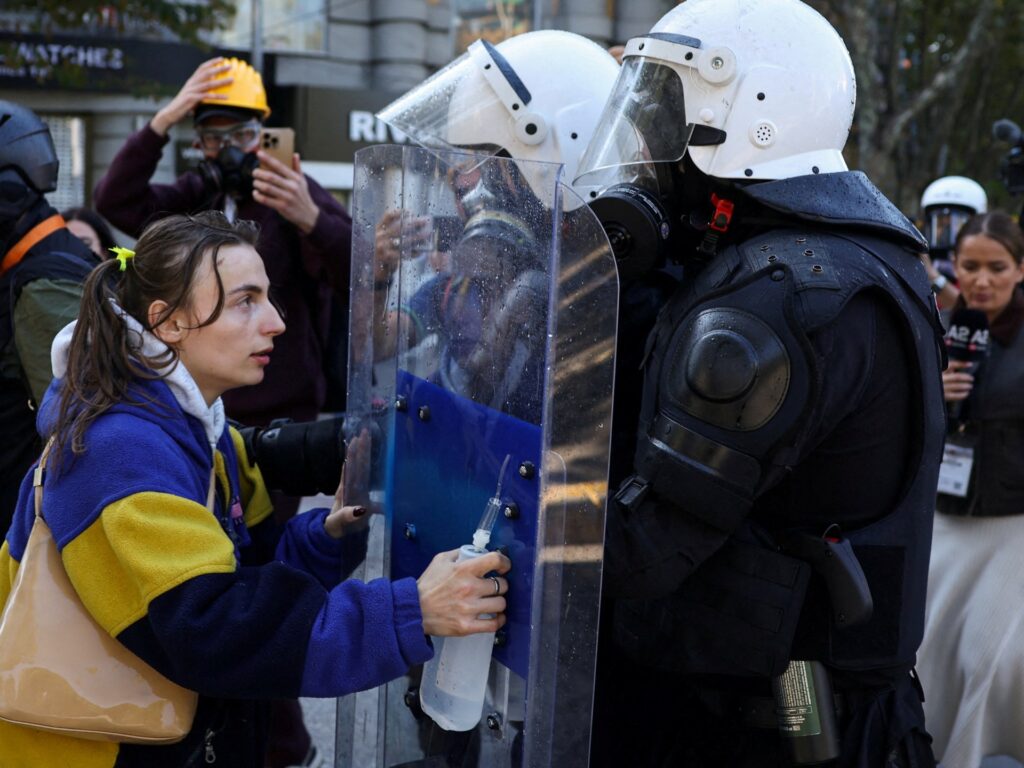
Despite occasional clashes with law enforcement, the protesters maintain a generally peaceful stance, emphasizing dialogue and structural change over violence. Their demands include electoral reforms, anti-corruption measures, and greater governmental accountability.
Prime Minister Edi Rama, in response, has denounced the protests as politically motivated and has called for stability and unity. However, critics argue his administration has been dismissive of genuine youth concerns and resistant to meaningful change.
International observers have expressed concern over Albania’s political climate, warning that prolonged unrest and government resistance to reform could hamper the country’s aspirations for European Union integration.
The ‘Horizontal Revolt’ represents more than just a call for Rama’s ousting; it is a manifestation of a generational shift demanding a more participatory democracy and equitable development. The youth’s unified yet leaderless opposition highlights an evolving political culture in Albania, where grassroots movements challenge traditional power structures.
As this uprising continues, it remains to be seen how the government and political institutions will respond to this unprecedented challenge. The outcome could redefine Albania’s political landscape and the role of its youth in shaping the nation’s future beyond Edi Rama’s tenure.