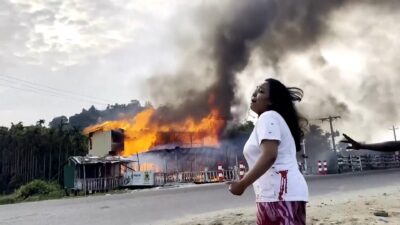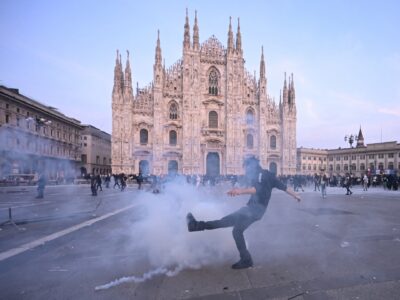
In the heart of Albania, a wave of unrest has surged as protesters clashed violently with riot police outside the nation’s Education Ministry. The demonstrations, initially sparked by public discontent with recent policy changes, have escalated in intensity, bringing to light serious allegations of police brutality from those involved.
The unrest began earlier this week when a group of protesters gathered to express their opposition to new government measures affecting the education sector. What started as a peaceful assembly quickly devolved into chaos as tensions between the demonstrators and law enforcement escalated.
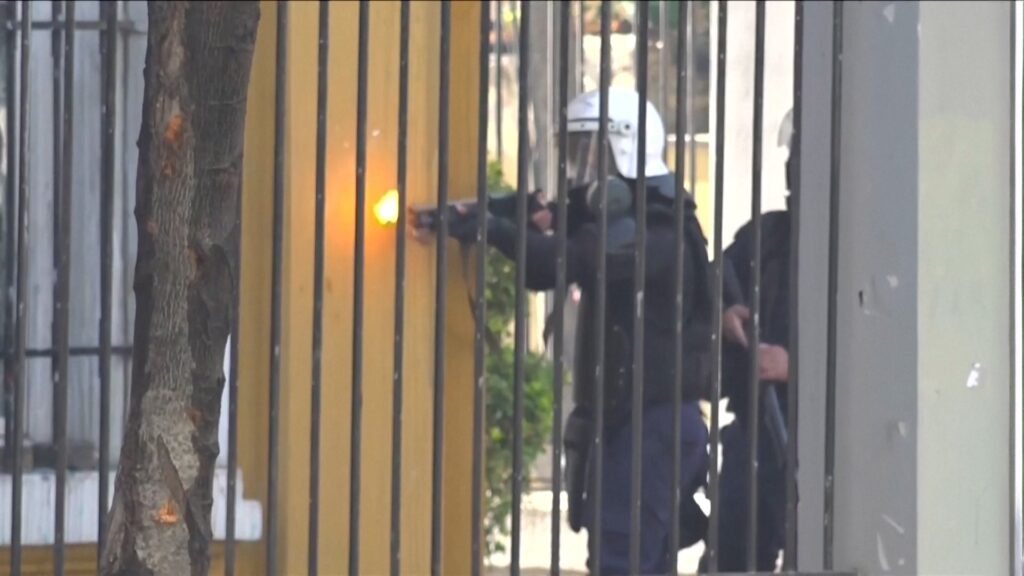
Reports from eyewitnesses describe scenes of aggressive tactics employed by riot police, including the use of tear gas, rubber bullets, and physical confrontations. Protesters have accused the authorities of using excessive force and failing to respect the rights of citizens exercising their freedom of assembly.
Authorities, meanwhile, have defended their actions, asserting that they acted in self-defense to prevent property damage and maintain public order. Officials have emphasized their commitment to peaceful dialogue but maintained that any threats to security would be met with appropriate measures.
The Education Ministry building, the focal point of the protests, has sustained minor damage but remains operational. Security forces have increased their presence in the area to deter further violence.
Human rights organizations have called for an independent investigation into the alleged police brutality and for restraint from both protesters and law enforcement to prevent further escalation.
The Albanian Prime Minister has urged calm and dialogue, stressing the importance of addressing the protesters’ concerns through negotiation rather than conflict.
As the situation develops, the international community watches closely, concerned about the stability of the region and the protection of democratic freedoms.
This unrest highlights the ongoing challenges faced by Albania in balancing governmental authority with citizen rights, and the critical need for transparency and accountability in law enforcement practices.
Residents in the capital have expressed mixed reactions, with some supporting the protests as a legitimate expression of dissent, while others fear the violence could destabilize the country further.
Efforts to restore peace continue, with mediators working to bring both sides to the negotiating table. The government has also proposed a review of public order policies to address concerns raised by the recent clashes.
As the situation unfolds, attention remains focused on ensuring that the fundamental rights of the Albanian people are upheld, and that violence does not hinder progress toward a more just and equitable society.