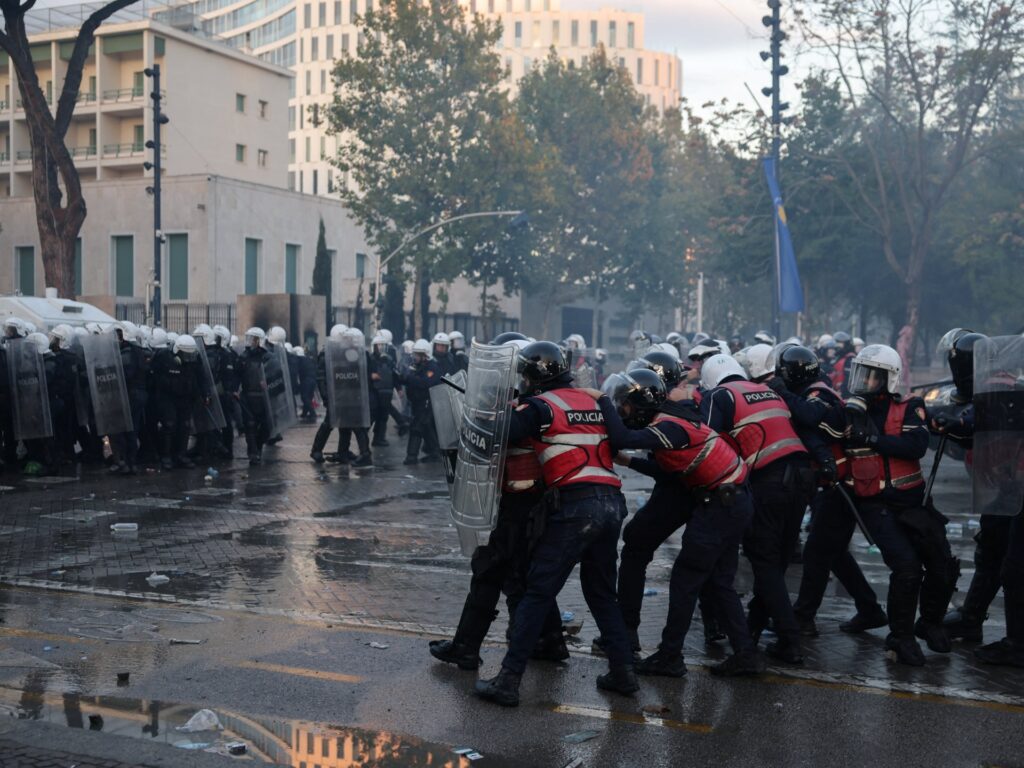
Tirana, Albania – The capital city has witnessed five consecutive days of intense clashes between protesters and police, as a widespread movement demands the resignation of Prime Minister Edi Rama. The protests, which began as a student-led initiative, have grown to involve various sectors of society dissatisfied with Rama’s administration. On the fifth day, Albanian police resorted to firing rubber bullets to disperse demonstrators, signaling an escalation in tensions.
The origins of the protests trace back to university students frustrated by political issues, economic hardships, and government policies perceived as corrupt and unresponsive. Their initial peaceful demonstrations quickly expanded as other groups and ordinary citizens joined, amplifying the demands for substantial political change.
Prime Minister Edi Rama’s government has been criticized for alleged corruption, lack of transparency, and slow economic progress, issues that protesters argue undermine Albania’s democratic development. The demonstrators are calling not only for Rama’s resignation but also for reforms in governance, judicial independence, and greater accountability.
Police responses during the protests have been forceful, with authorities invoking crowd control measures including tear gas and rubber bullets to manage the large and increasingly aggressive crowds. Human rights organizations have expressed concern over the police tactics, urging restraint and dialogue.
The demonstrations have disrupted daily life in Tirana, causing traffic disruptions, school closures, and heightened security presence. Businesses in the central areas have also felt the impact due to the ongoing unrest.
Observers note that the protests reflect deeper issues within Albanian society related to governance, corruption, and the effectiveness of political institutions. The accountability and responsiveness of leadership remain central concerns.
Analysts suggest that unless the government engages constructively with protesters and addresses underlying grievances, the unrest may continue or escalate further. Political opposition groups have expressed solidarity with the movement and are calling for comprehensive reforms.
The international community has watched the situation closely, with some diplomatic figures encouraging peaceful resolution and respect for democratic processes.
As the protests enter their sixth day, the situation remains volatile with no immediate resolution in sight. Both protesters and authorities face significant challenges in balancing demonstration rights with public order.
The crisis underscores Albania’s ongoing struggle to strengthen democracy and governance amid social and political pressures. The outcome of this movement could significantly impact the nation’s political landscape moving forward.