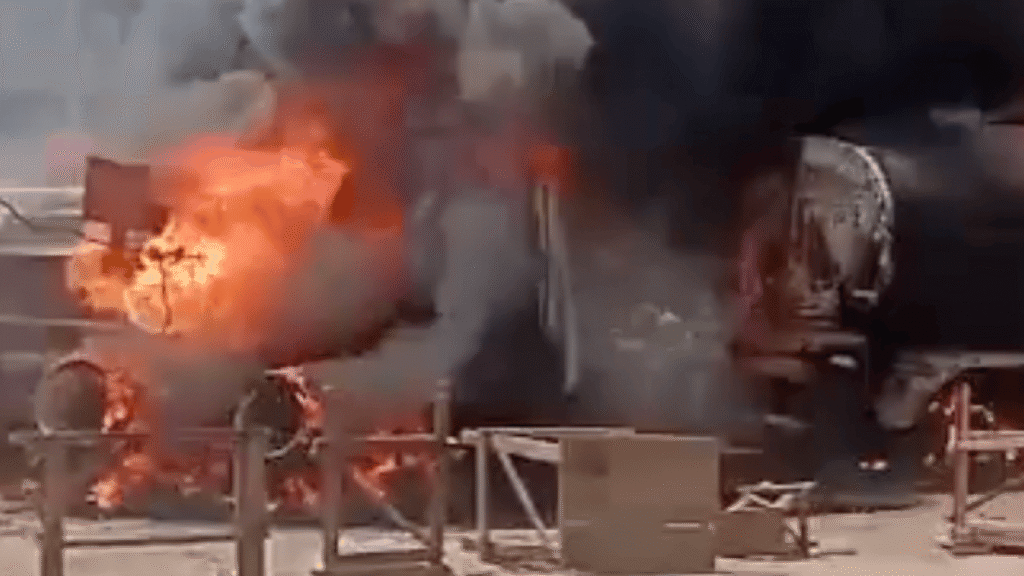
A devastating fire erupted in Oluku market, located in Benin City, southern Nigeria, following the overturning and subsequent explosion of a fuel tanker. The incident caused widespread panic among vendors and shoppers, leading to chaos as people scrambled to escape the rapidly spreading flames. Eyewitnesses reported a loud explosion that shook the market area, igniting nearby stalls and causing significant damage.
The tanker, which reportedly lost control while navigating a busy road adjacent to the market, spilled its fuel after overturning. The spilled fuel ignited almost immediately, feeding the fire and making containment efforts challenging for the first responders. Firefighters were dispatched to the scene promptly, but the dense concentration of flammable goods in the market accelerated the spread of the fire.
Local emergency services worked tirelessly to bring the blaze under control, deploying multiple fire engines and rescue personnel. Evacuations were conducted swiftly to prevent casualties, although there were reports of a few injuries among vendors and customers who suffered burns or were caught in the panic.
The market, a vital economic hub for the city, suffered extensive physical damage, with many shops reduced to ashes. Traders have voiced their concerns over the significant loss of goods and livelihood, awaiting government intervention to aid recovery efforts.
Authorities have launched an investigation into the cause of the tanker’s overturning and the subsequent explosion. Initial findings suggest possible driver error or mechanical failure, but a thorough probe is underway to ascertain the root causes.
Local officials have promised support for the victims and measures to prevent such disasters in the future. They also urged the public to remain calm and cooperate with emergency services as recovery and cleanup efforts continue.
This tragic fire highlights the dangers posed by transporting hazardous materials through densely populated commercial areas and underscores the need for stringent safety regulations and emergency preparedness to protect lives and property in such regions.