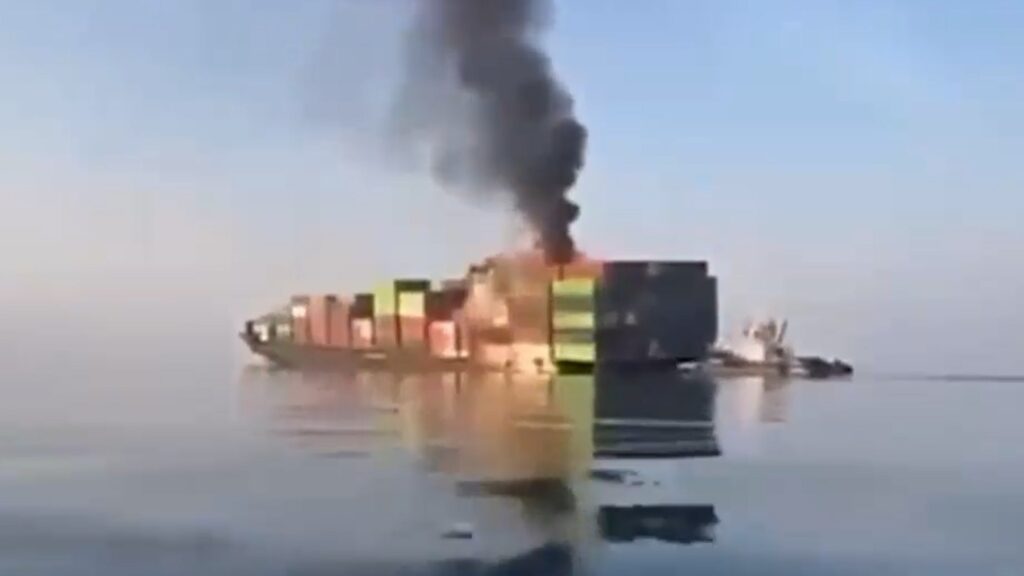
The Strait of Hormuz, a vital waterway for global oil transportation, has recently been seen strewn with containers and debris floating across its waters. This situation has arisen following a series of attacks on vessels navigating this strategic passage, raising concerns about maritime safety and security in the region.
Recent footage released by maritime monitoring sources reveals numerous containers and assorted debris scattered on the surface of the sea, drifting with the current. These floating objects are believed to be remnants from the vessels damaged or destroyed during the attacks, disrupting the otherwise busy shipping lanes.
The Strait of Hormuz connects the Persian Gulf with the Gulf of Oman and is a crucial chokepoint through which a significant portion of the world’s oil supply passes. Any disruption in this corridor can have broad implications for international markets and fuel prices.
Maritime authorities, along with local governments, are actively involved in cleanup and secured navigation measures to prevent further environmental damage and navigational hazards caused by the floating debris. Efforts to investigate the origins and perpetrators of the attacks are ongoing, with international stakeholders closely monitoring the evolving situation.
Experts have pointed out that the presence of such debris not only poses immediate risks to other vessels passing through the strait but also endangers the marine ecosystem in this sensitive region. Hazardous materials from damaged containers could contaminate the waters, affecting marine life and local fishing communities.
Shipping companies have been advised to exercise heightened caution when navigating through the Strait of Hormuz until the waters can be cleared and security measures tightened. The international maritime community has called for collaborative efforts to ensure the safety of these critical sea routes.
In conclusion, the sight of containers and debris floating in the Strait of Hormuz underscores the tangible impacts of regional conflicts on global maritime security and environmental health. The situation remains dynamic, with authorities prioritizing restoration of safe passage and environmental remediation to mitigate the aftermath of these recent attacks.