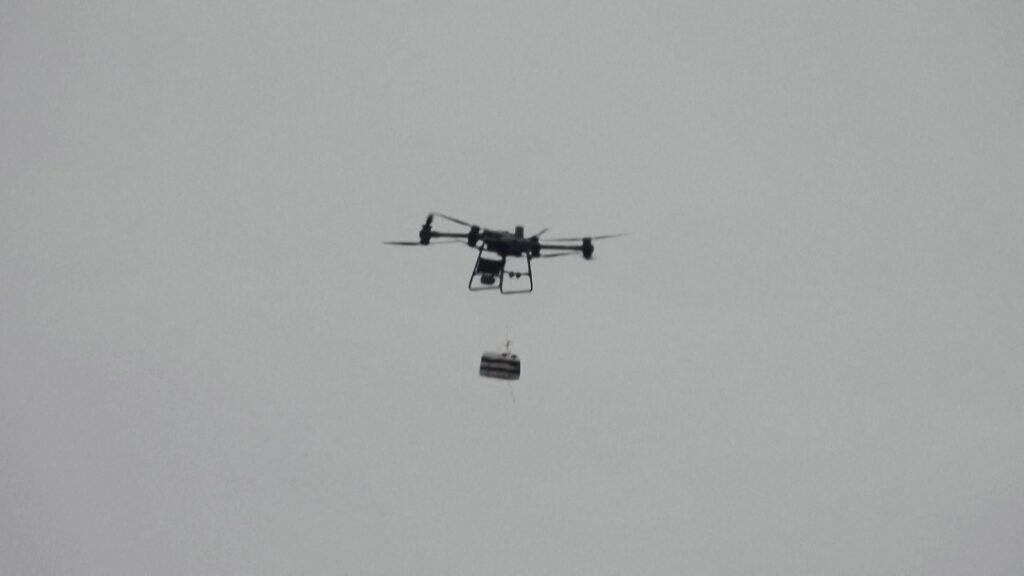
An Israeli quadcopter drone was recently filmed dropping a bomb on the outskirts of the village of Zibqin in southern Lebanon. This incident highlights the ongoing tensions in the region, where the use of unmanned aerial vehicles (UAVs) for military operations has become increasingly common. The deployment of drone technology by Israel in this context underlines the evolving nature of modern warfare, where precision strikes can be carried out without direct involvement of manned aircraft.
Zibqin, a small village located in the southern part of Lebanon, has experienced several such incidents as part of the broader conflict dynamics between Israel and Lebanon. The use of a quadcopter drone, which is a type of UAV deployed for surveillance and tactical strikes, indicates a tactical shift towards more covert and targeted military actions.
Israeli security forces have not officially commented on the event, which is consistent with their typical approach to covert drone operations. The bomb dropped by the quadcopter reportedly caused damage to a specific target near the village, although the scale of casualties or destruction has not been fully disclosed.
The incident raises concerns about escalating violence and the potential for further destabilization in the region. Drones offer a strategic advantage by allowing forces to conduct strikes without risking pilot lives and with increased operational flexibility. However, their use also intensifies the risks of civilian casualties and collateral damage, as distinguishing between combatants and non-combatants can be challenging in densely populated areas like southern Lebanon.
This latest use of drone technology by Israel could be interpreted as a message or warning to various militant groups operating in Lebanon, signaling the capability and willingness to conduct precise strikes across the border. It also reflects the broader security challenges Israel faces regarding cross-border threats and its ongoing efforts to prevent attacks on its territory.
Meanwhile, Lebanese authorities and local residents have condemned the strike, calling it a violation of Lebanon’s sovereignty and a dangerous escalation. The Lebanese government has historically lodged diplomatic protests against such incursions and bombardments, demanding respect for national borders and calling for restraint from military actions that might inflame tensions.
International reactions to drone strikes in Lebanon vary, with some countries emphasizing the need to maintain peace and stability in the volatile Middle East region, while others reiterate Israel’s right to defend itself against perceived threats. The use of drones complicates traditional military diplomacy and conflict resolution efforts, prompting debates about the legality and ethics of remote warfare.
In conclusion, the incident involving an Israeli quadcopter drone dropping a bomb near Zibqin village marks a significant development in the ongoing Israeli-Lebanese conflict. It underscores the growing prominence of drone warfare in the region and the delicate balance between military necessity and humanitarian concerns. The situation remains fluid, with the potential for further escalations depending on the responses from both sides and international stakeholders.