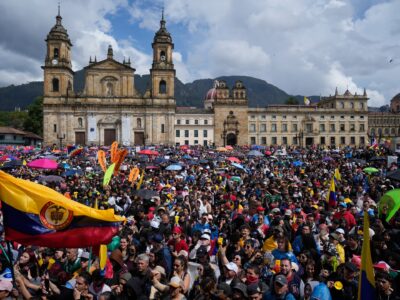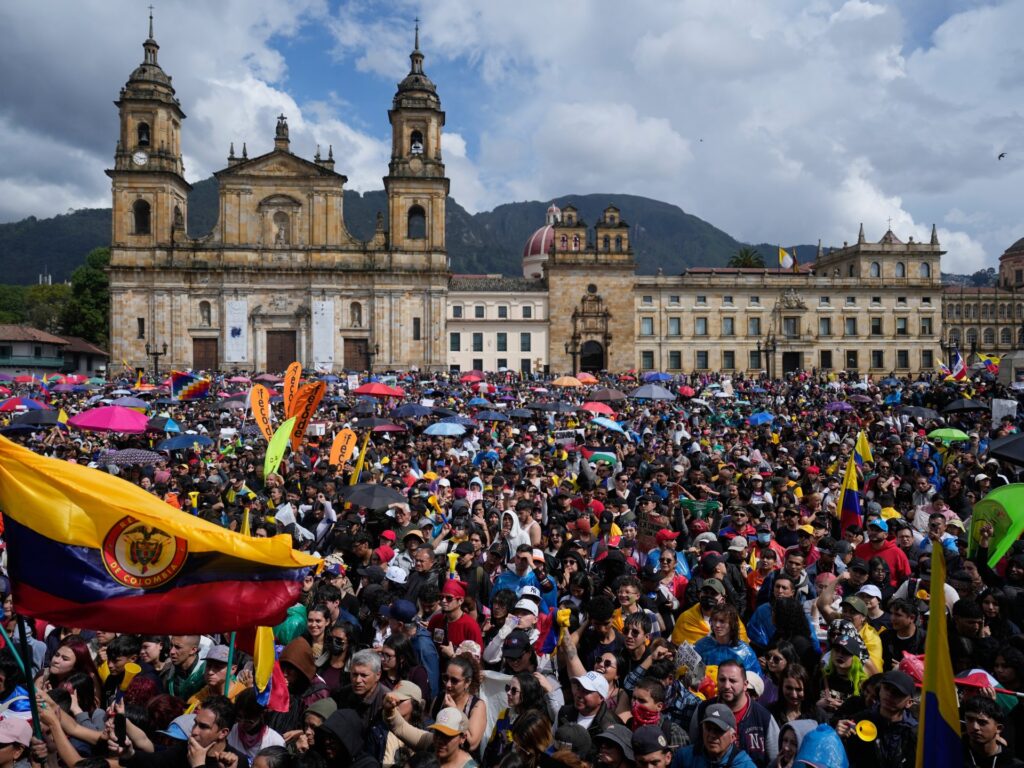
In a powerful demonstration of political dissent, opposition groups in Colombia have orchestrated significant protests against the austerity measures introduced by President Alfonso de la Espriella. Marking a critical moment in Colombian politics, thousands gathered in Bogota, voicing their concerns and opposition to the government’s fiscal policies and international alignments.
The protests, held in the heart of the capital city, saw a wide range of participants from various political, social, and economic backgrounds. Among the most prominent figures to join the public outcry was former President Gustavo Petro. His presence underscored the seriousness of the opposition and added considerable weight to the demonstrations.
The core grievance of the protesters revolves around recent budget cuts that many believe disproportionately affect vulnerable populations and critical public services. These austerity measures are seen by opponents as a threat to social stability and economic equity, igniting widespread apprehension and disapproval.
Moreover, the protestors also expressed strong opposition to Colombia’s recent ties with Israel, a foreign policy move that has sparked debate and controversy. Many advocacy groups argue that this relationship could entangle Colombia in complex geopolitical conflicts and shift its traditional diplomatic priorities.
Analysts see this wave of protests as indicative of deeper issues within Colombian society, including dissatisfaction with economic inequality and the government’s approach to international alliances. The government’s stance on austerity, while aimed at financial restructuring and economic stability, clashes with public sentiment and social welfare concerns.
Throughout the day, protestors marched through major avenues of Bogota, chanting slogans, carrying banners, and engaging in peaceful demonstrations. The atmosphere was marked by a mix of determination and urgency, reflecting the public’s desire for change and dialogue with the authorities.
In response to these events, officials have reiterated the necessity of the austerity measures for fiscal health and international cooperation. However, they have also called for continued dialogue and efforts to address the concerns raised by the opposition.
The protests highlight the vibrant democratic spirit of Colombia’s populace, emphasizing the importance of civic engagement in shaping the nation’s future. With the involvement of high-profile political figures like Petro and widespread grassroots support, these demonstrations are likely to influence upcoming policy decisions and the broader political landscape.
As the situation develops, stakeholders both within Colombia and internationally are closely monitoring the dynamics, aware that the outcomes of these protests could have significant implications for governance, economic policy, and diplomatic relations in the region.
This large-scale mobilization against De la Espriella’s austerity cuts and foreign policy underscores the challenges facing Colombia as it navigates complex internal and external pressures in pursuit of sustainable development and social harmony.