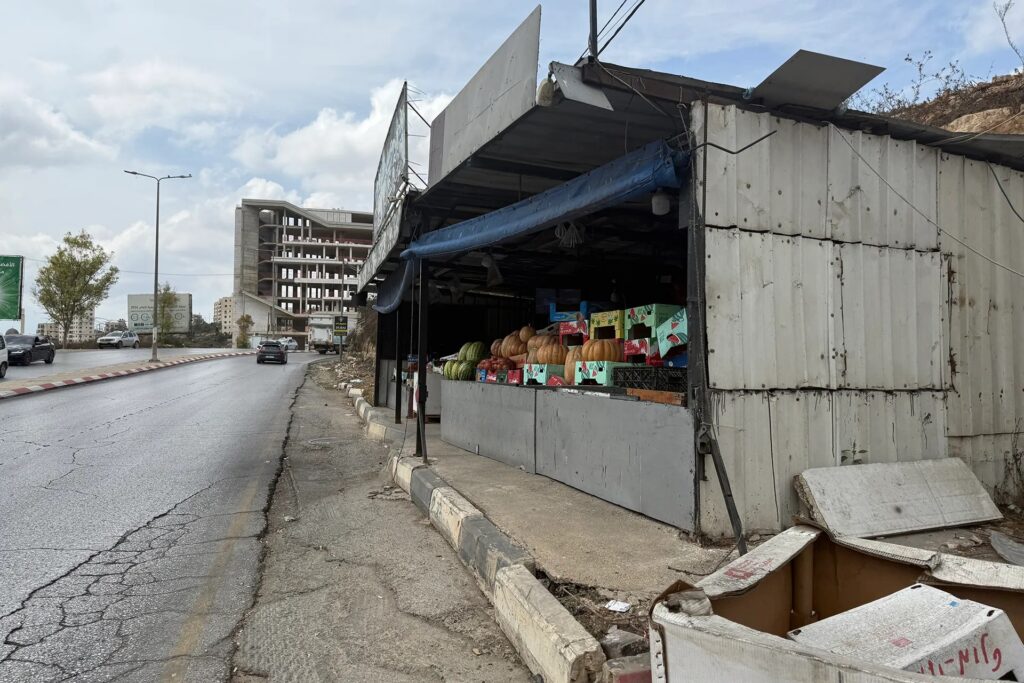
The Israeli government’s plan to reopen Route 463, a road primarily used by settlers, has sparked significant concerns about its impact on Palestinian communities, particularly those near Ramallah. This move is perceived as a strategic effort that could further isolate Palestinian villages and fragment the urban fabric of Ramallah, a key city in the West Bank.
Route 463 runs through the West Bank and has been a critical artery for Israeli settlers. Its reopening is likely intended to facilitate settler movement and improve access between settlements. However, for Palestinians, this development could mean restricted mobility, increased segregation, and limitations on economic and social activities.
Ramallah, serving as the administrative capital of the Palestinian Authority, is already under various movement restrictions due to Israeli checkpoints and roadblocks in the West Bank. The reopening of this road could exacerbate these limitations, effectively cutting off Palestinian neighborhoods from one another and from essential services.
Residents and local authorities have voiced concerns that the reopening could lead to the physical and social fragmentation of Ramallah. Palestinian villages surrounding the city might find themselves encircled or marginalized, with access routes diverted or closed to circumvent the settler road.
Human rights organizations have also raised alarms, suggesting that such infrastructure projects may be part of broader efforts to entrench Israeli control over the occupied territories and undermine Palestinian territorial contiguity.
Critics argue that the reopening of Route 463 could undermine future prospects for peace by deepening divisions and making a contiguous Palestinian state more challenging to achieve. They call on international stakeholders to intervene and urge Israel to reconsider plans that risk further isolating Palestinian communities.
Meanwhile, Israeli officials insist that the road is being reopened primarily to improve security and transportation efficiency for all residents in the area. They claim that the project is necessary to accommodate population growth and infrastructure needs but have faced strong opposition from Palestinians and some international actors.
The situation highlights the ongoing complexities and tensions in the West Bank, where infrastructure development is deeply intertwined with the broader Israeli-Palestinian conflict. The reopening of Route 463 serves as another flashpoint in the struggle over territory, rights, and sovereignty in the region.
As the plan moves forward, it remains to be seen how it will affect the daily lives of Palestinians in Ramallah and whether it will prompt further international scrutiny and diplomatic efforts to address concerns about fragmentation and isolation.