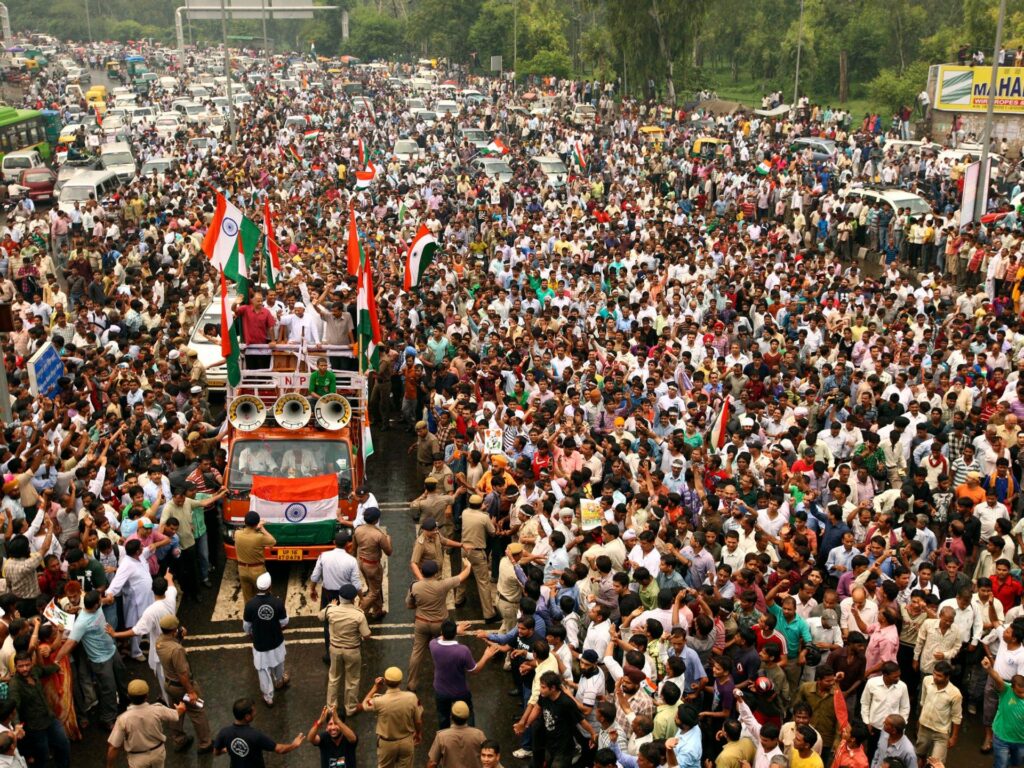
India’s history is deeply marked by a rich tradition of protest movements that have played a pivotal role in shaping the nation’s political and social landscape. From linguistic movements like the anti-Hindi agitation to contemporary debates over farm laws, protests have been instrumental in voicing public dissent and influencing government policies.
One of the earliest significant protests was the anti-Hindi agitation, which took root in southern India during the 1930s and resurged in the 1960s. This movement opposed the imposition of Hindi as the sole official language, fearing it would marginalize non-Hindi-speaking populations, particularly in Tamil Nadu. The agitation saw massive mobilizations, demonstrations, and even self-immolations, which underscored the intensity of linguistic identity and regional pride. Ultimately, the government relented, allowing for the continued use of English and other regional languages in official capacities.
The Indian independence movement itself was a colossal series of protests against British colonial rule, ranging from non-cooperation and civil disobedience to mass marches like the Salt Satyagraha led by Mahatma Gandhi. These movements galvanized mass participation, unified diverse groups, and ultimately led to India’s freedom in 1947.
Post-independence, protest continued to be a vital democratic tool. The Emergency period (1975-1977) saw widespread suppression of civil liberties, yet protests and resistance continued underground and in exile, eventually contributing to the restoration of democracy.
More recent protests demonstrate the ongoing tradition of civic activism. The anti-corruption movement led by Anna Hazare in 2011 captured national attention, demanding stronger legal measures to fight corruption in politics and bureaucracy. This movement mobilized citizens across socio-economic strata and amplified demands for transparency and accountability.
The farmer protests against the three controversial farm laws in 2020-2021 marked another significant chapter. Farmers, predominantly from Punjab and Haryana, organized mass sit-ins at Delhi’s borders, highlighting concerns over the laws’ impact on agricultural pricing and market freedom. Their prolonged protest not only forced government negotiations but also led to the eventual repeal of the laws, illustrating the power of sustained civic action.
Electoral roll controversies, which involve allegations of voter list inaccuracies or exclusions, have also sparked protests, reflecting the vigilance of civil society in safeguarding democratic processes. Activists have a long legacy of challenging governmental decisions through protests, thereby ensuring more inclusive and transparent governance.
In conclusion, protests have been an essential component of India’s democracy, giving voice to marginalized groups and catalyzing change. From linguistic rights to anti-corruption, from farmers’ rights to electoral fairness, the legacy of protest continues to shape India’s evolving democratic ethos, affirming that citizen activism is central to governance and policy-making in the world’s largest democracy.