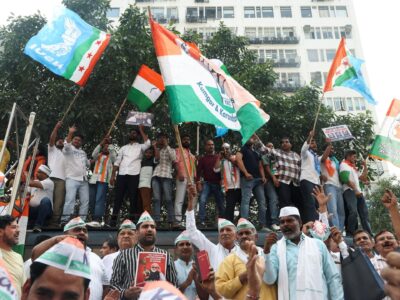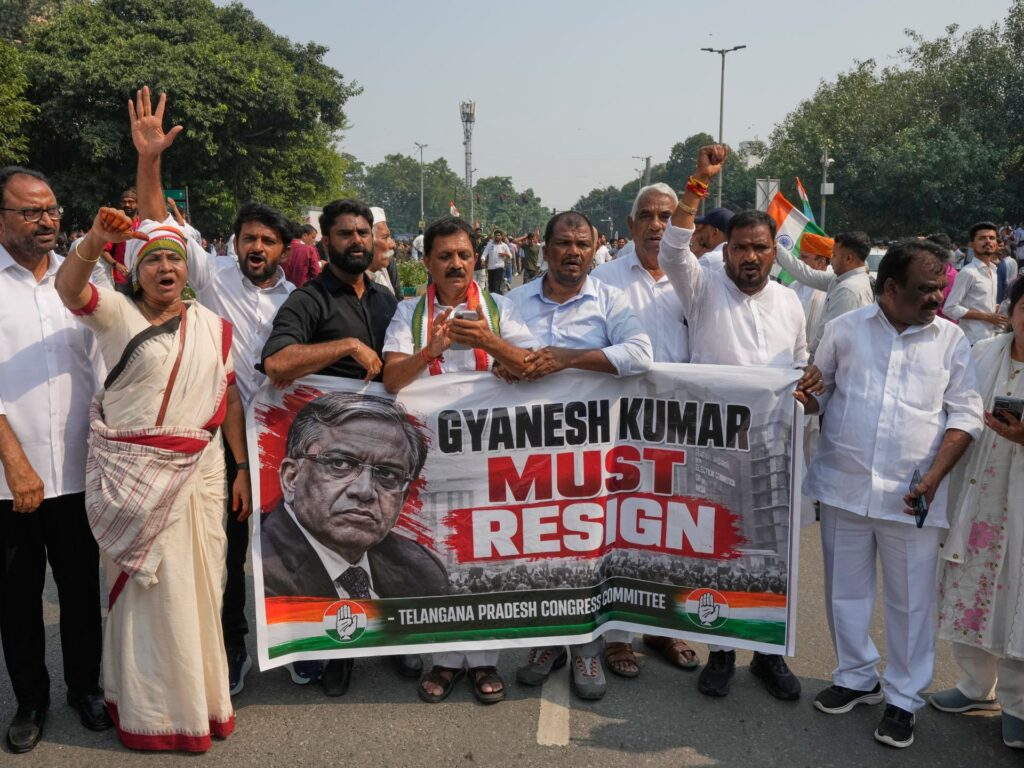
In a significant development in Indian politics, the main opposition party, the Congress, has led a massive rally titled the ‘March for Democracy’ directly to the Supreme Court. The protest is aimed at demanding the removal of the Chief Election Commissioner (CEC), reflecting deep concerns about the perceived impartiality and credibility of the Election Commission under his leadership.
The March for Democracy has gathered widespread attention across the nation, drawing thousands of political activists, party leaders, and supporters who emphasize the sanctity of democratic processes. The Congress party, along with several other opposition groups, contends that the current Chief Election Commissioner has acted in ways that compromise the neutrality of the Election Commission, calling into question the fairness of upcoming elections.
The protestors marched with placards and banners, chanting slogans to uphold the independence and integrity of India’s democratic institutions. The party leaders articulated their demand with clarity, asking the Supreme Court to intervene and remove the CEC to restore faith in the electoral system.
This march comes amid growing political tension in the country, where the role of the Election Commission has increasingly come under scrutiny from opposition parties. The Congress claims that multiple actions and decisions by the CEC have favored the ruling government, thus undermining the democratic ethos that the election commission is meant to safeguard.
The protest also highlights broader concerns relating to democratic governance in India, where opposition voices are becoming increasingly assertive about electoral transparency and accountability. The demonstrators reiterated their support for a free and fair democratic process, stressing that any erosion of the Election Commission’s independence would be detrimental to the country’s political stability.
The Supreme Court, known for its role as the guardian of constitutional rights, received the marchers and acknowledged the seriousness of the demand. Legal experts believe the Court may now consider petitions questioning the CEC’s role and decisions, potentially setting a precedent for judicial intervention in electoral body matters.
Throughout the march, security arrangements were robust, ensuring the protest remained peaceful despite the large turnout and heightened emotions. Authorities monitored the event closely, maintaining law and order to prevent any untoward incidents.
This demonstration marks one of the most prominent recent public displays of dissatisfaction with the Election Commission and signifies a crucial moment in India’s democratic dialogue. It underscores the vital role that electoral institutions play in maintaining the trust of the citizenry and the functioning of democratic governance.
As the nation watches, the outcome of this protest and any subsequent legal action by the Supreme Court will be pivotal. It could lead to reforms in the election commission or changes in the appointment and accountability mechanisms of the Chief Election Commissioner.
This march for democracy by the opposition not only highlights current political challenges but also serves as a reminder of the enduring power of citizen activism in shaping India’s democratic future. The situation remains fluid, and all eyes are on the Supreme Court’s next steps in addressing these critical democratic concerns.