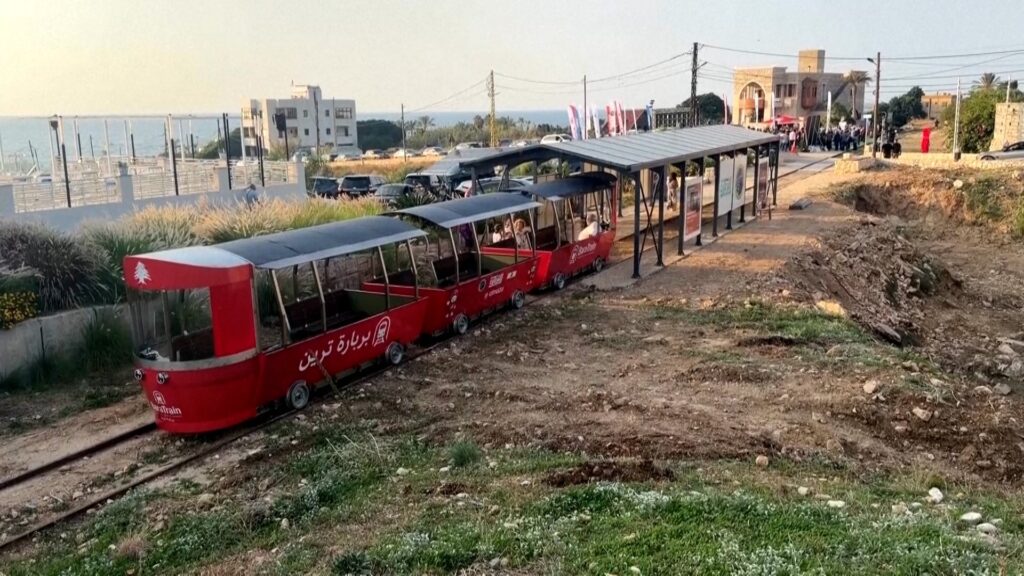
Lebanon has taken a historic step forward with the introduction of its first electric train, signaling a hopeful revival for the country’s once-thriving railway system. This innovative solar-powered model train has made its journey onto a segment of Lebanon’s longstanding railway lines, showcasing the potential for a modern and sustainable transport solution in the region.
The railway in Lebanon has been dormant for decades, plagued by years of conflict, neglect, and infrastructural damage. The return of this electric train, powered by solar energy, not only reflects a commitment to reviving national transport infrastructure but also highlights Lebanon’s aspirations towards greener energy and environmentally friendly technology.
This project has garnered enthusiasm from both government officials and the public, who see it as an opportunity to reconnect communities, ease traffic congestion, and promote tourism through revived rail routes. The solar-powered train exemplifies a shift from traditional fossil fuels towards renewable energy sources, aligning with global trends to combat climate change and reduce carbon emissions.
The new model train is currently operating on a limited track to demonstrate its functionality and efficiency. Its successful operation could pave the way for expanding Lebanon’s rail network with more electric trains, creating a comprehensive, efficient railway system capable of serving both urban and rural areas.
Stakeholders involved in this initiative emphasize the importance of maintaining and upgrading the railway infrastructure to support the new technology. Investment in the modernization of tracks, stations, and signaling systems is critical to realize the full potential of Lebanon’s railway revival.
The project is also expected to generate economic benefits by creating jobs in construction, maintenance, and operation of the rail system. Additionally, improved rail connectivity could stimulate trade and mobility, enhancing overall economic development.
Challenges remain, including securing adequate funding and ensuring political stability to sustain long-term development. Nonetheless, the successful introduction of the solar-powered electric train represents a beacon of hope and progress for Lebanon’s transportation future.
In summary, Lebanon’s first solar-powered electric train marks a historic milestone, aiming not only to revive the country’s railway but also to promote sustainable development and regional connectivity. This pioneering step could inspire other Middle Eastern nations to explore similar green transport initiatives, contributing to a cleaner and more connected future for the region.