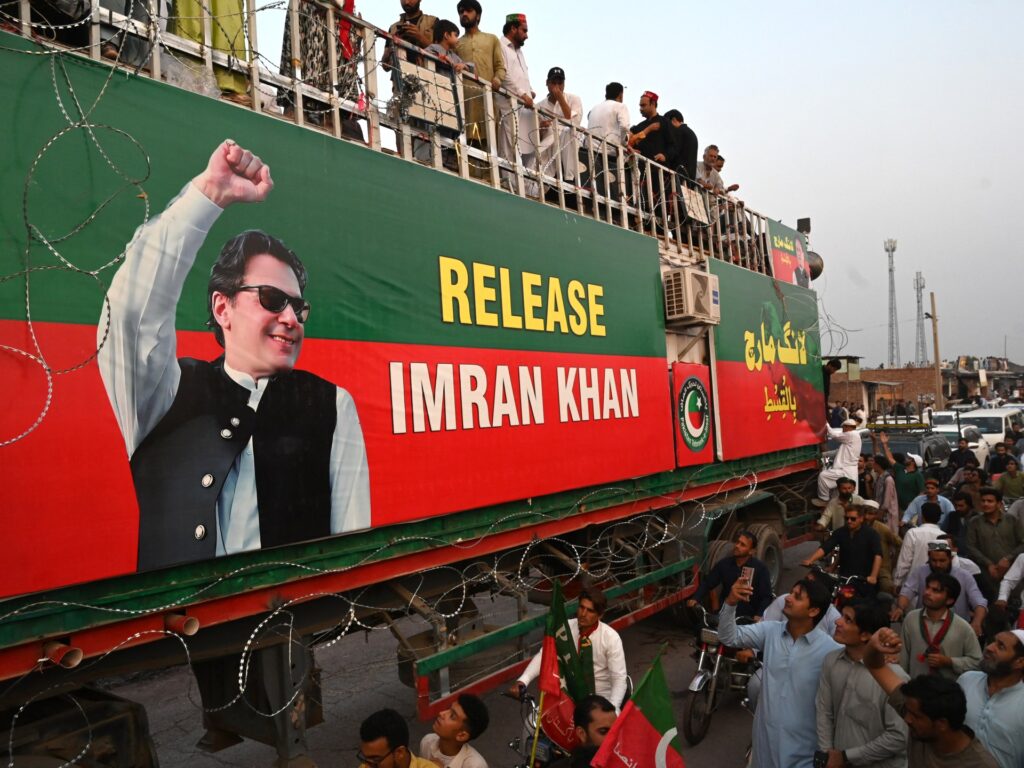
The government of Pakistan has imposed emergency rule in the Khyber Pakhtunkhwa province, which is governed by Imran Khan’s Pakistan Tehreek-e-Insaf (PTI) party. This dramatic move came from the Prime Minister’s office, which explained that the decision to enforce emergency governance was a direct response to the provincial government’s deliberate disengagement from combating terrorism.
This step is unprecedented in recent times and represents a significant escalation in the federal government’s approach towards the security situation in Khyber Pakhtunkhwa, a province that has historically been vulnerable to militant activities. The Prime Minister’s office accused the provincial administration of failing to cooperate in the national fight against terrorism, prompting the need for direct federal intervention.
Emergency rule typically involves the suspension of regular provincial governance mechanisms and the assumption of administrative control by federal authorities or appointed officials. In this case, it signals a serious breakdown in trust and coordination between the provincial government led by Imran Khan’s party and the federal government.
The move has sparked widespread debate and concern across Pakistan. Supporters of Imran Khan and the PTI party have criticized the federal government’s action as political interference designed to undermine the provincial government. They argue that such an imposition destabilizes the democratic process and infringes on provincial autonomy.
On the other hand, proponents of emergency rule contend that the federal government has a responsibility to ensure national security and that any provincial government unwilling to participate actively in anti-terrorism efforts cannot be allowed to operate independently. They believe the federal intervention is necessary to stabilize the situation and protect citizens from the ongoing threat of terrorism.
Khyber Pakhtunkhwa has long been at the frontline of Pakistan’s counterterrorism efforts due to its geographical location near the Afghan border, where extremist groups have historically taken refuge. The region has seen numerous attacks and security incidents over recent years, making effective coordination between provincial and federal authorities critical.
The imposition of emergency rule has also raised questions about the future political landscape in the region, as it could potentially weaken the position of the PTI party in Khyber Pakhtunkhwa ahead of upcoming elections. Analysts suggest that this development could lead to increased political tensions and instability in the province.
The federal government has pledged to restore normalcy and lift the emergency measures once a robust security framework is established and effective collaboration with provincial entities is ensured. However, the exact duration of the emergency rule remains unclear.
International observers have expressed concern over the situation, urging all parties involved to prioritize dialogue and cooperation to prevent further escalation. They emphasize the importance of maintaining democratic norms and the rule of law during this challenging period.
In conclusion, Pakistan’s imposition of emergency rule in the Khyber Pakhtunkhwa province governed by Imran Khan’s party marks a critical moment in the country’s ongoing struggle with terrorism and political discord. Balancing the demands of national security with respect for provincial autonomy and democratic governance remains a complex and urgent challenge for the government and all stakeholders involved.