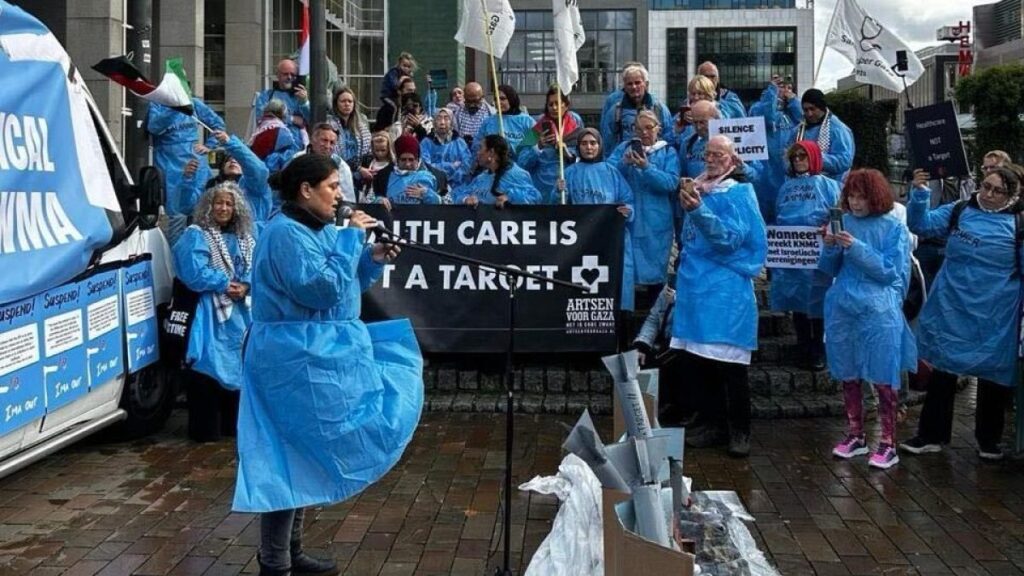
In a significant and urgent development within the global medical community, hundreds of doctors worldwide have called for the suspension of the Israeli Medical Association (IMA) by the World Medical Association (WMA). The demand arises from serious allegations that the IMA has remained silent amid the ongoing systematic destruction of Palestinian healthcare facilities and infrastructure.
The physicians, representing a broad international coalition, have expressed deep concern regarding the impact of the conflict on healthcare services in Palestine. They accuse the Israeli Medical Association of failing to uphold its ethical responsibilities by not speaking out against the disruptive actions that have severely undermined medical care in the region.
Healthcare professionals stress that the principle of medical neutrality — where healthcare workers and institutions must not become targets or complicit in conflict — is being blatantly violated. The continuous damage to hospitals, clinics, and ambulances, combined with restricted access to medical supplies and personnel for Palestinians, has led to a critical humanitarian crisis.
Medical experts highlight that the destruction and deprivation of healthcare services contribute not only to immediate health emergencies but also to long-term public health disasters, including the spread of disease, increased mortality rates, and chronic health conditions left untreated.
The international group of doctors calls on the World Medical Association to intervene decisively by suspending the Israeli Medical Association as a form of accountability and to signal the importance of medical ethics in times of conflict. They emphasize that silence and inaction undermine the credibility and integrity of medical professional bodies.
This campaign has gained momentum in various countries, with medical associations and human rights organizations joining the call for urgent action. Advocates argue that suspending the IMA would be a critical step in pressuring for the protection and restoration of Palestinian healthcare services.
The situation reflects broader concerns about the role of professional organizations during conflicts and the necessity for international solidarity to protect vulnerable populations. The call to the WMA also serves as a reminder of the vital role that medical organizations play beyond medicine alone — as advocates for human rights and justice.
As the situation continues to unfold, the medical community worldwide watches closely, urging all parties involved to prioritize the preservation of healthcare infrastructure and to adhere strictly to humanitarian principles. The hope remains that through collective action and international pressure, the ongoing violations against Palestinian healthcare can be addressed and stopped, ensuring access to medical care for all individuals regardless of nationality or political context.
This emerging global stance highlights a crucial intersection between healthcare provision and global ethics, setting a precedent for medical associations worldwide to uphold their responsibilities in conflict zones with transparency, courage, and compassion.