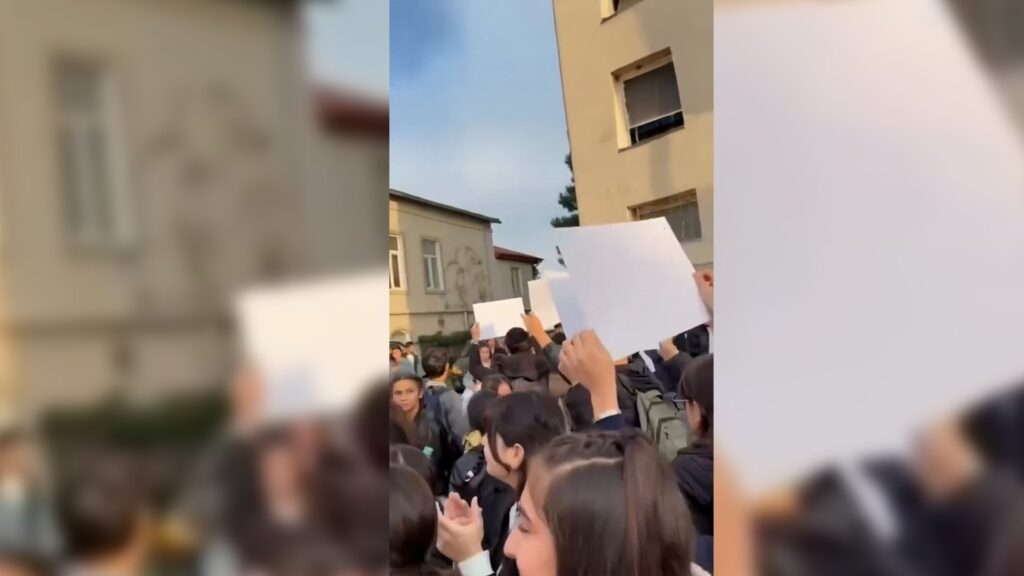
In recent times, school pupils across Azerbaijan have taken to the streets in protest against the newly implemented dress code regulations that impose restrictions on the wearing of the hijab in schools. This move has sparked significant unrest and debate in the country, highlighting the ongoing tension between cultural, religious expression and state policies on dress codes.
The new dress code policy reportedly restricts the hijab, a traditional headscarf worn by many Muslim women as part of their religious practice, within the school environment. This restriction has been met with backlash from students and families who view it as an infringement on their religious freedoms and personal rights.
Protesters, primarily school-aged girls, have voiced their opposition in various cities, demanding the right to wear their hijabs without facing penalties or discrimination. The demonstrations have drawn attention to the broader issues of religious expression, secularism, and educational policies in Azerbaijan.
The government has yet to provide detailed commentary on the restrictions or the protests, leaving many questions about the future of these regulations and their enforcement in schools.
The reported hijab restrictions come amid a wider context of balancing secular state principles with a diverse population that includes significant Muslim communities who see the hijab as an essential part of their identity.
Advocates for the pupils argue that the restriction on hijabs not only affects students’ religious rights but also impacts their education by creating a divisive environment. Critics of the protests, however, insist that school uniforms and dress codes are necessary to maintain uniformity and discipline in educational institutions.
The situation reflects a common challenge faced in many countries where the integration of religious attire in public institutions is contentious and politically sensitive.
International human rights organizations have started to observe the developments closely, expressing concerns over the potential violation of freedoms related to religion and expression.
The Azerbaijani school hijab protests emphasize the need for dialogue between authorities, educators, families, and students to find a balanced approach that respects cultural and religious diversity while maintaining educational standards.
As the protests continue, the future of the dress code and its impact on Azerbaijan’s educational landscape remain uncertain, signaling a critical moment for freedom of expression and religious tolerance within the nation.