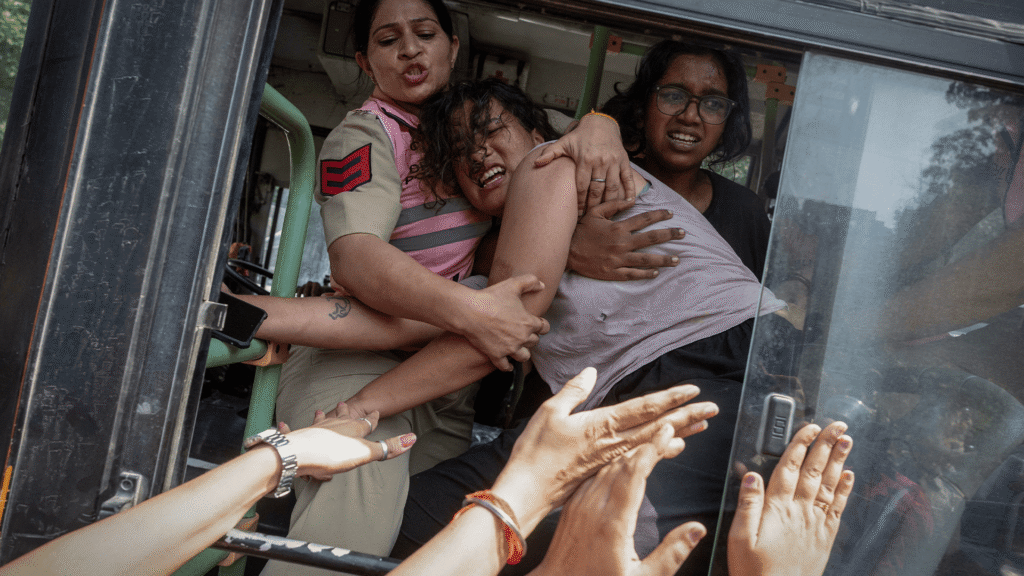
In a significant move ahead of a planned anti-government march, New Delhi police have detained dozens of protesters, including leaders from the ‘Cockroach’ party. The preemptive crackdown comes amid rising tensions between the government and opposition groups rallying against certain policies.
The authorities have cited concerns over maintaining law and order as the primary reason for the detentions. Police officials explained that the action was necessary to prevent any potential violence or disruption during the scheduled march.
The ‘Cockroach’ party, known for its vocal criticism of the current administration, has been at the forefront of mobilizing citizens against the government’s recent measures. Several senior members were taken into custody in early morning raids across different parts of the city. Supporters and other activists have pledged to continue protesting despite these arrests.
The upcoming march was planned to be a large-scale demonstration aimed at expressing public dissent and calling for policy changes. Organizers insist that their protests are peaceful and fundamental to democratic expression, while authorities remain cautious about the potential for escalation.
Human rights organizations and political analysts have expressed concerns regarding the detentions, urging the government to respect citizens’ right to peaceful protest. They emphasize the importance of dialogue and transparency in addressing the grievances voiced by the protesters.
This crackdown highlights the ongoing political friction in India, where protests and government responses often reflect deeper socio-political challenges. The situation remains fluid, with many eyes on New Delhi as events unfold in the coming days.
Citizens are advised to stay informed and exercise caution while navigating the city amid the heightened security measures. The government has assured that any action taken is in line with maintaining public safety and democratic order.
In summary, the New Delhi police’s recent crackdown signals escalating tensions before an anticipated anti-government march, spotlighting the fragile balance between state authority and citizens’ right to protest in India.